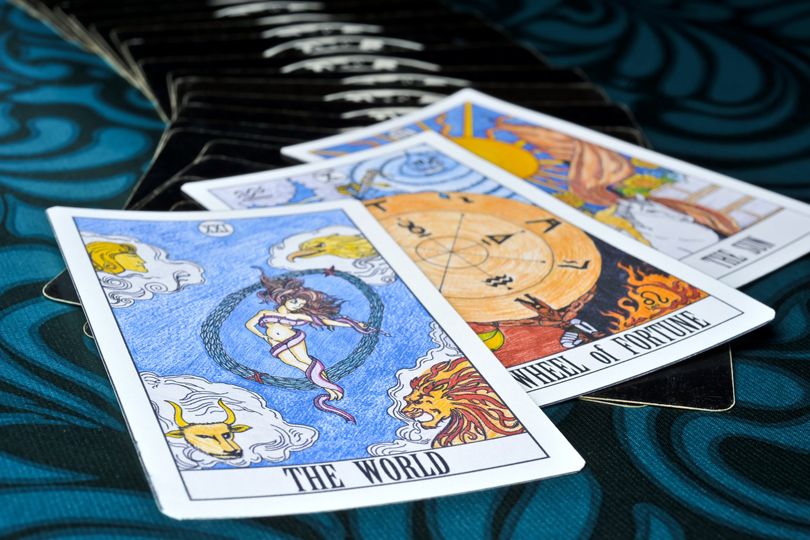
Tarot is gaining renewed interest as more people turn to reflective and symbolic tools during uncertain times in life. Often misunderstood as purely mystical or predictive, tarot is increasingly being viewed by practitioners as a method of self-reflection and personal clarity rather than fortune-telling.
Tarot author and spiritual practitioner Claire Stone describes tarot as a reflective practice rather than a fixed prediction system.
“Tarot is a mirror,” Stone explains. “It’s a tool for reflection, clarity and conscious choice, rather than a way of predicting a fixed future.”
According to Stone, anyone can begin exploring tarot without professional training or psychic ability. A deck is helpful but not essential at the very beginning, and the practice is accessible to complete beginners.
Choosing a Tarot Deck
With thousands of tarot decks available, beginners are often unsure where to start. Stone recommends the Rider-Waite-Smith deck as an ideal first choice due to its clear imagery and widely used symbolism.

“The artwork speaks to you,” she says. “You just have to think, ‘What’s happening in this picture?’ You can understand it through the colours, the feeling, and the scene.”
She also challenges the common belief that a tarot deck must be gifted before use.
That idea, she explains, comes from older traditions when cards were rare and often passed down. Today, she encourages individuals to choose their own deck, noting that different decks carry different energies.
Understanding the Meaning of the Cards
Stone emphasizes that tarot is based on archetypes rather than fixed predictions, and even traditionally “difficult” cards can carry positive meaning depending on context.
Cards such as Death or The Tower are often misunderstood, she notes.

Even Death, she explains, can represent closure and transition, while The Tower may signal sudden insight or realization rather than destruction.
Building Confidence and Reducing Fear
For those hesitant about tarot, Stone suggests grounding practices before starting.
She recommends connecting with a sense of guidance or protection—whether through spiritual beliefs or personal reflection—to build confidence and ease.

However, she stresses that tarot itself is not linked to external forces or spirits.
“There are no spirits attached to tarot,” she says. “It’s a mirror. It’s your higher self that guides the process. You shuffle the cards. You choose the cards.”
Asking the Right Questions
One of the most important aspects of tarot, according to Stone, is intention.
She advises always beginning with a clear question to guide interpretation.
A simple starting point for beginners is: “What do I need to know today?”
Without a question, she warns, readings can feel unclear or difficult to interpret.
Using Tarot for Reflection and Manifestation
Beyond guidance, tarot can also be used as a tool for visualization and personal goals. Stone describes the cards as symbolic archetypes that can be used in meditation or daily reflection practices.
She suggests incorporating tarot imagery into everyday life as a reminder of intentions, such as placing meaningful card images in visible spaces or using them as motivational visuals.
This symbolic approach, she says, helps reinforce focus and subconscious alignment with personal goals.
A Modern Approach to an Ancient Practice

Stone’s approach emphasizes simplicity and accessibility, encouraging beginners to explore tarot without fear or overcomplication.
“You don’t need prior knowledge or experience,” she says. “Anyone can learn to read tarot in a simple and practical way.”
As interest in tarot continues to grow, its modern interpretation increasingly focuses on self-awareness, intuition, and personal development rather than prediction.
The post Beginner’s Guide to Tarot Reading: Expert Shares Simple Ways to Start Without a Deck appeared first on Owink.
Source: Owink