

DP: Date Published: 10.08.2026 11:43 10 August 2026 11:43
~ MO: Modified On: 10.08.2026 12:44 10 August 2026 12:44
Read Read: 1 minute
The two finds, one depicting the Roman-era healing god and the other a tomb believed to have belonged to a wrestler, were uncovered days apart.

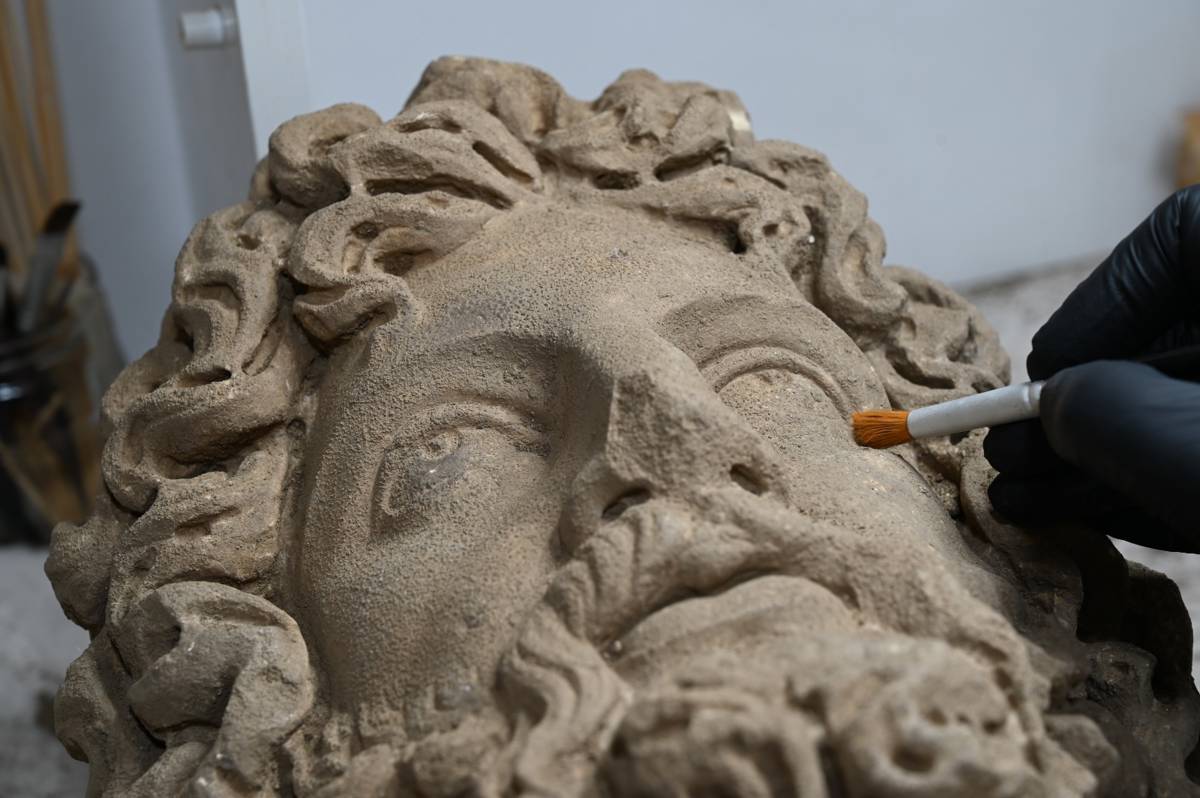
Archaeologists at the ancient city of Aspendos have uncovered a roughly 2,400-year-old tomb believed to have belonged to a wrestler, days after finding a 1,800-year-old marble sculpture depicting the healing god Asklepios and his son Telesphoros, the Culture and Tourism Ministry has announced.
Aspendos is located in the Mediterranean resort city of Antalya in southern Turkey.
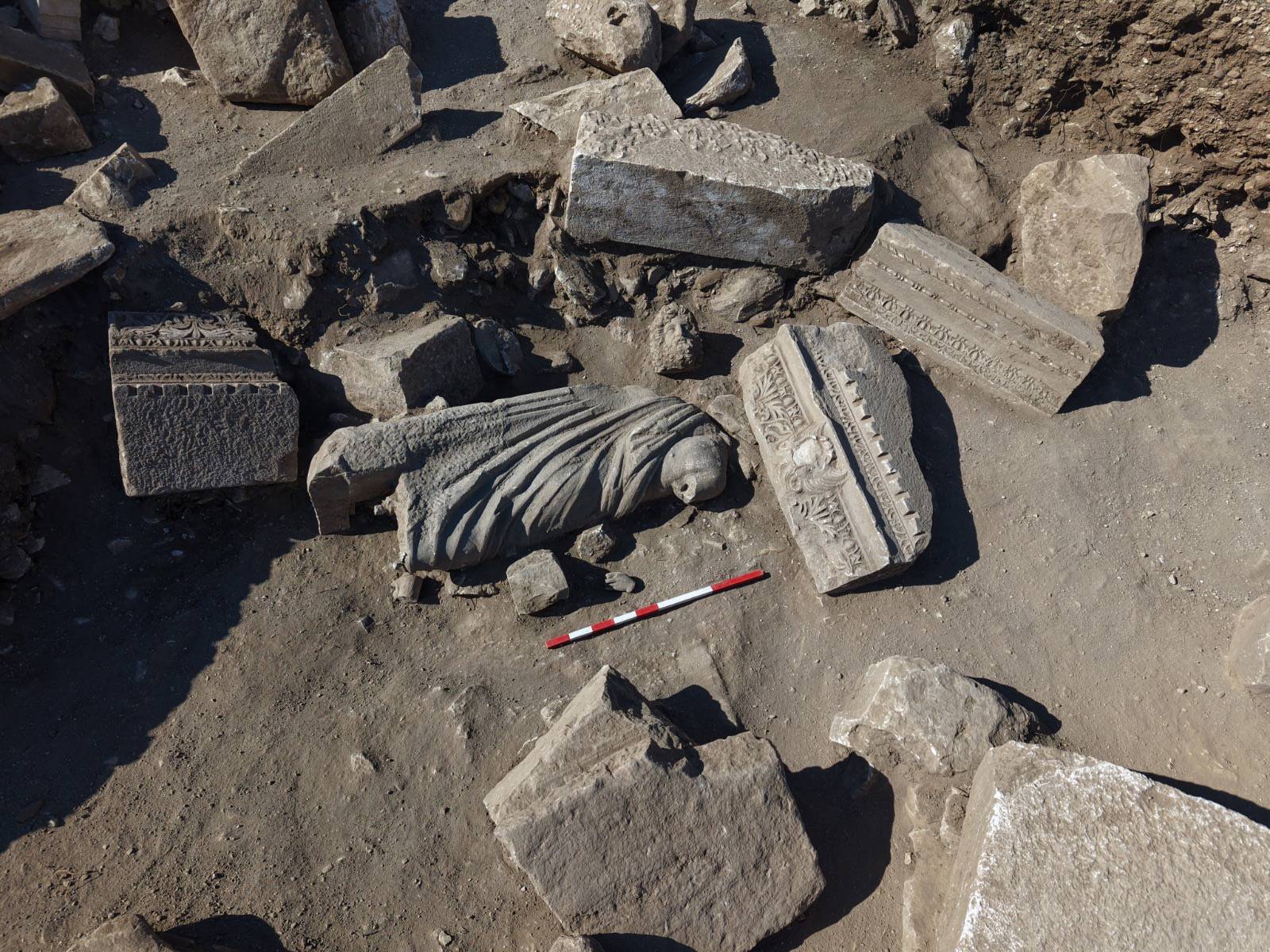
The initial finding was made on Aug 6, as Minister Mehmet Nuri Ersoy announced the excavation of a 2.2-meter marble sculpture group depicting Asklepios, the ancient god associated with medicine and health, alongside his son and assistant Telesphoros.
The sculpture, dating to the final quarter of the 2nd century AD during the Roman Imperial period, was found among the remains of the northern wing of a monumental gate on the western side of the Eastern Square along Theater Street.
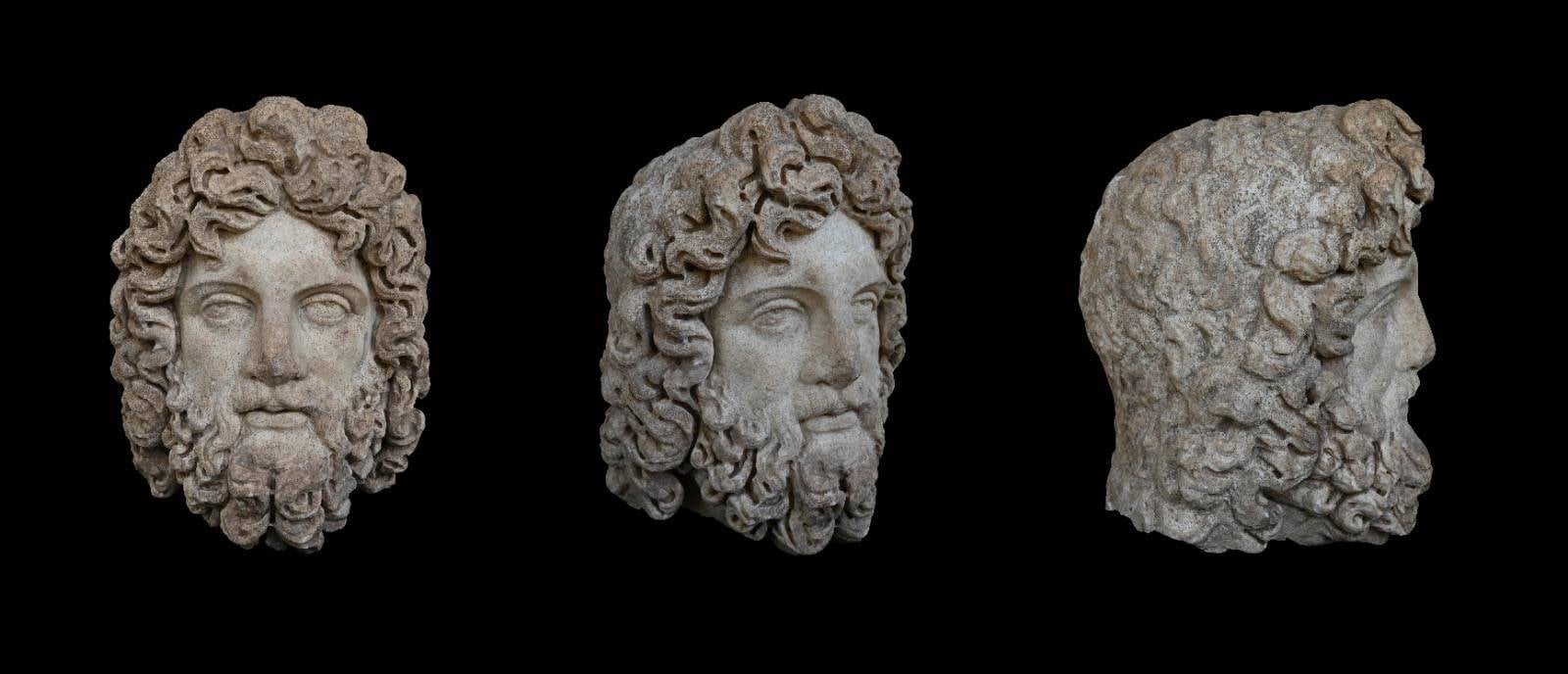
The figures’ postures, the folds of Asklepios’ himation and the detailed treatment of his face, hair and beard reflect the sculptural style of the period, noted the minister.
“In antiquity, Asklepios symbolized medicine, treatment and the protection of health, while Telesphoros, depicted in a long, hooded garment, symbolized the completion of treatment, recovery and convalescence,” Ersoy added.
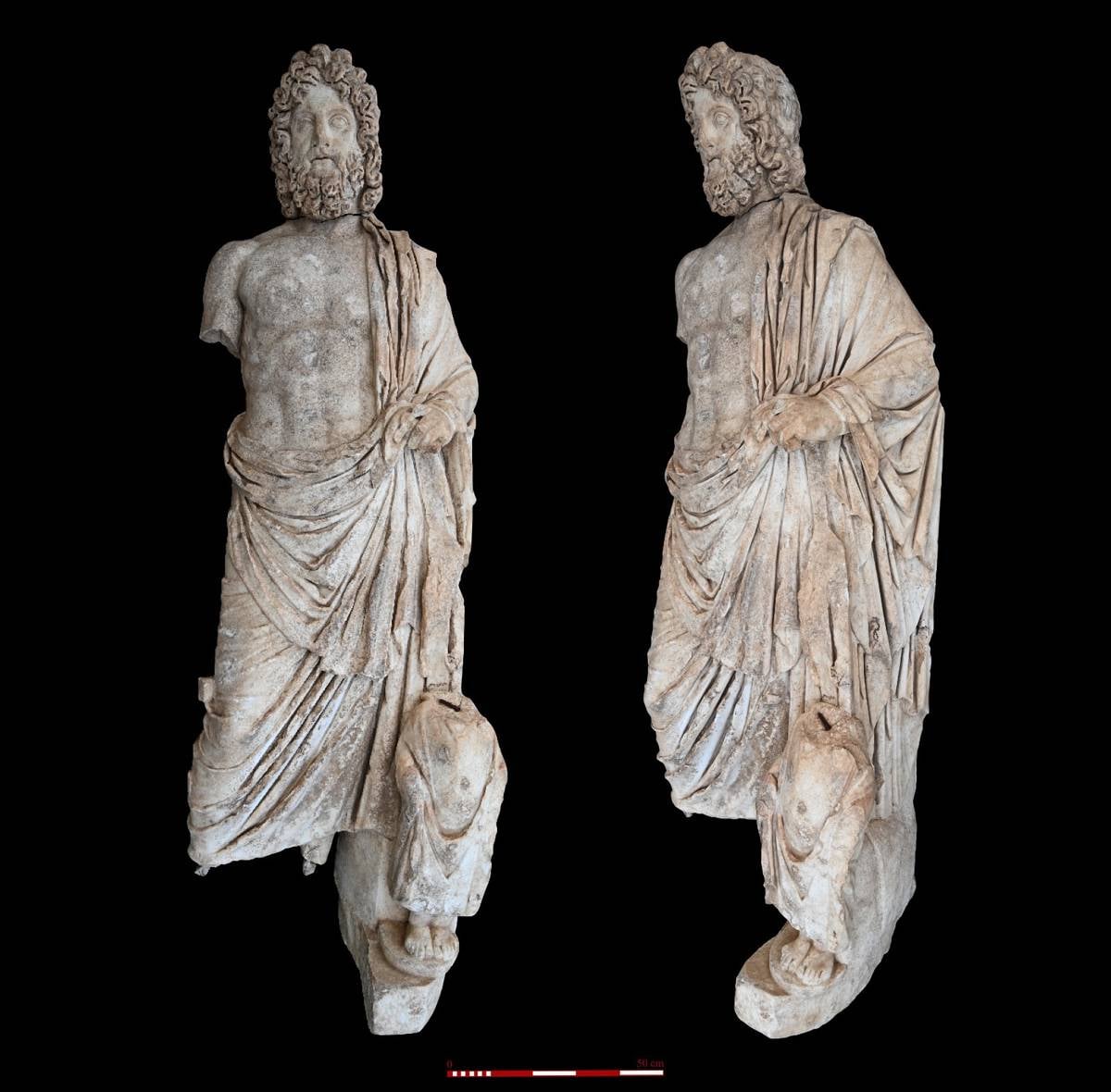
Asklepios is depicted standing frontally as a mature, bearded man with long, thick hair. Telesphoros appears beside his left foot on a much smaller scale, wearing a long hooded garment that covers most of his body.
The sculpture group’s location among the remains of the monumental gate indicates that it was displayed in an area of the city used for public and ceremonial purposes, according to the ministry.
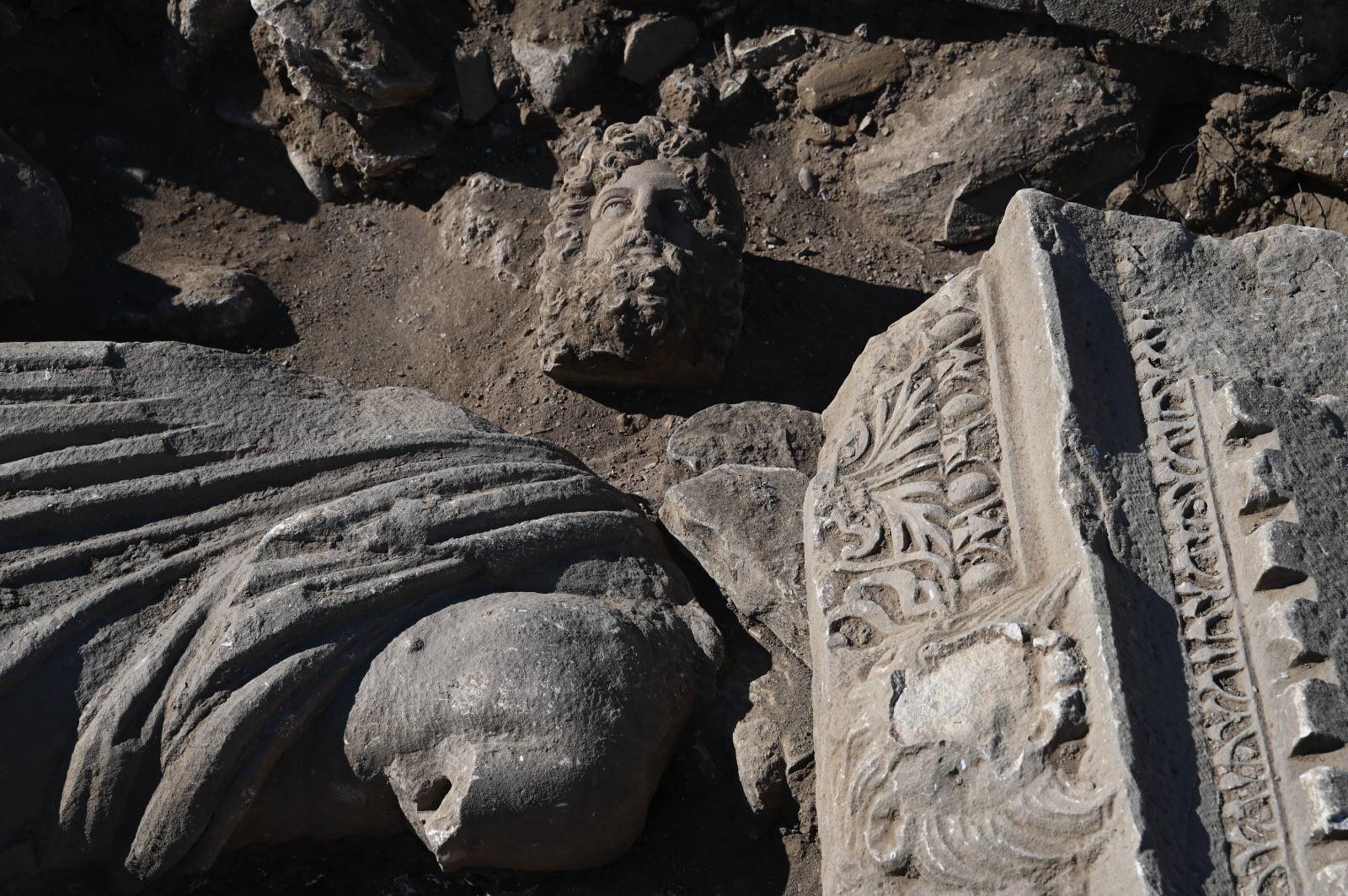
The find also provides archaeological evidence of the presence of the Asklepios cult and the role of beliefs surrounding health in Roman-era Aspendos.
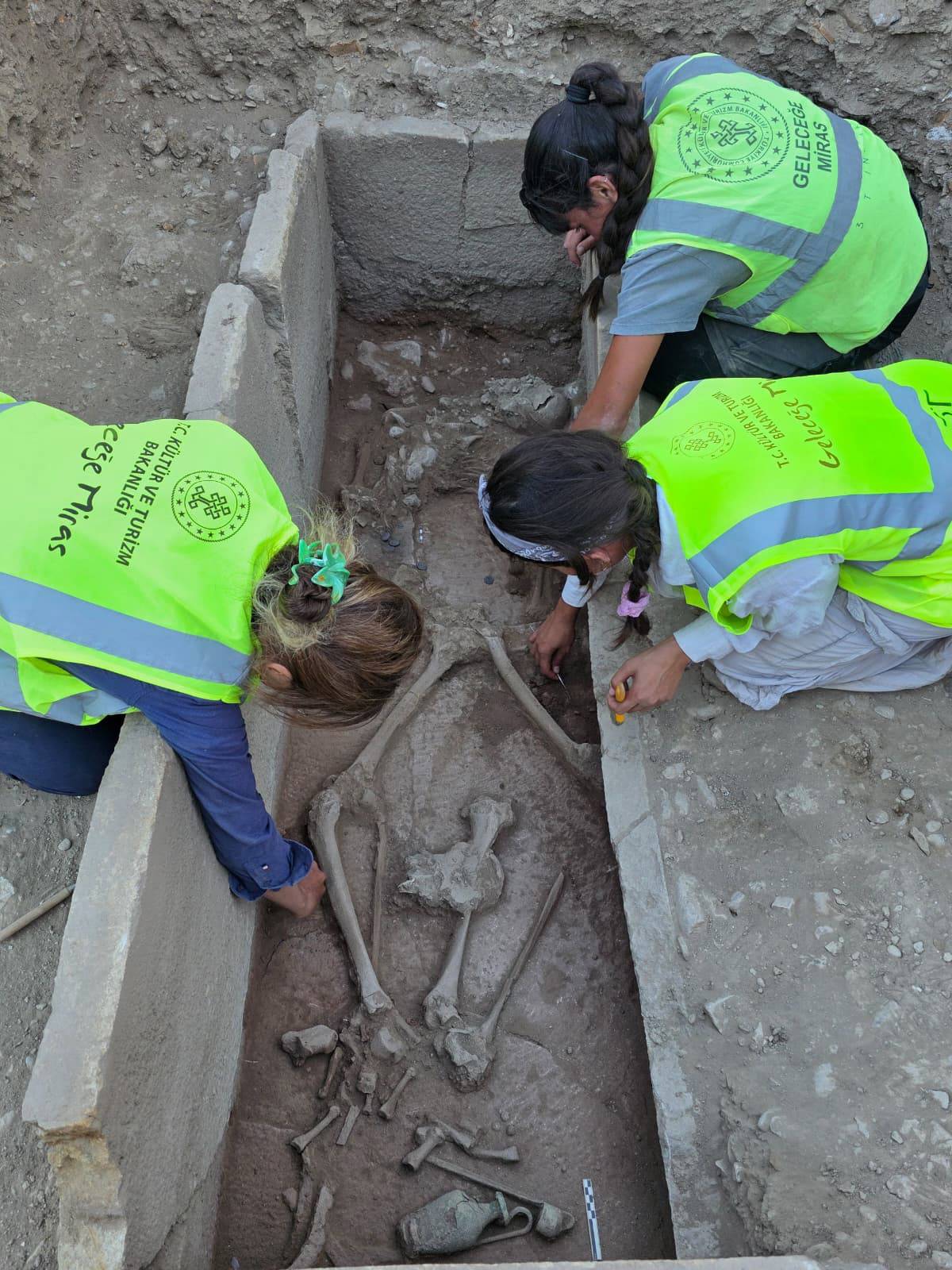
Coins depicting wrestlers found in tomb
Ersoy said today that a cist-type tomb was discovered in the Eastern Necropolis, the first burial ground of its kind identified within the city. The tomb dates from the last quarter of the 5th to the 4th century BC.
Coins from Aspendos depicting wrestlers and other objects found in the tomb suggest the person buried there was involved in sports and may have been a wrestler from the city, the minister noted.
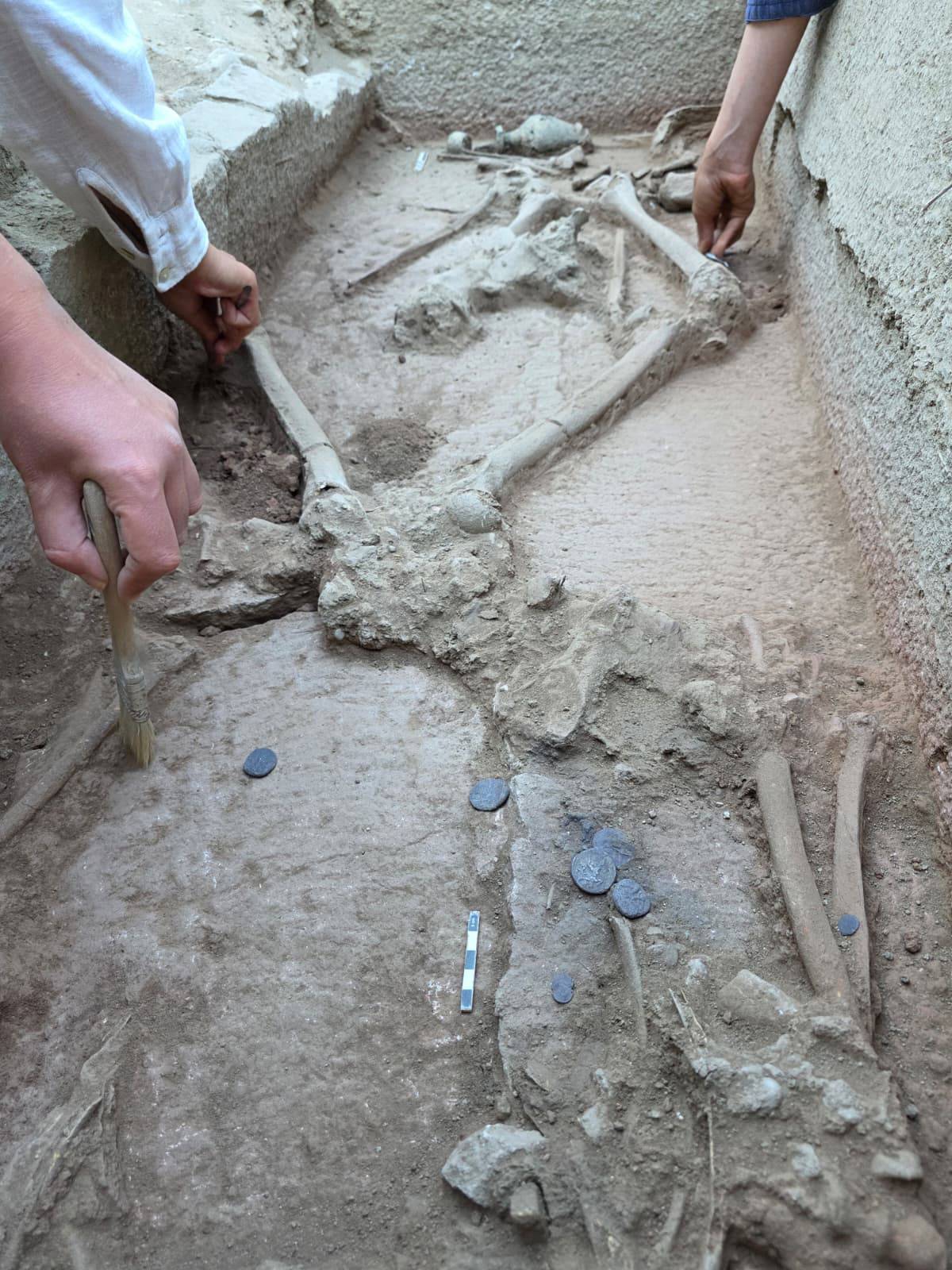
“We have made a very important discovery that sheds light on the city’s Classical-period history,” Ersoy said.
“The Aspendos coins bearing depictions of wrestlers and other finds discovered in the tomb indicate that the person buried here may have been associated with sports, and may even have been a wrestler from Aspendos.”
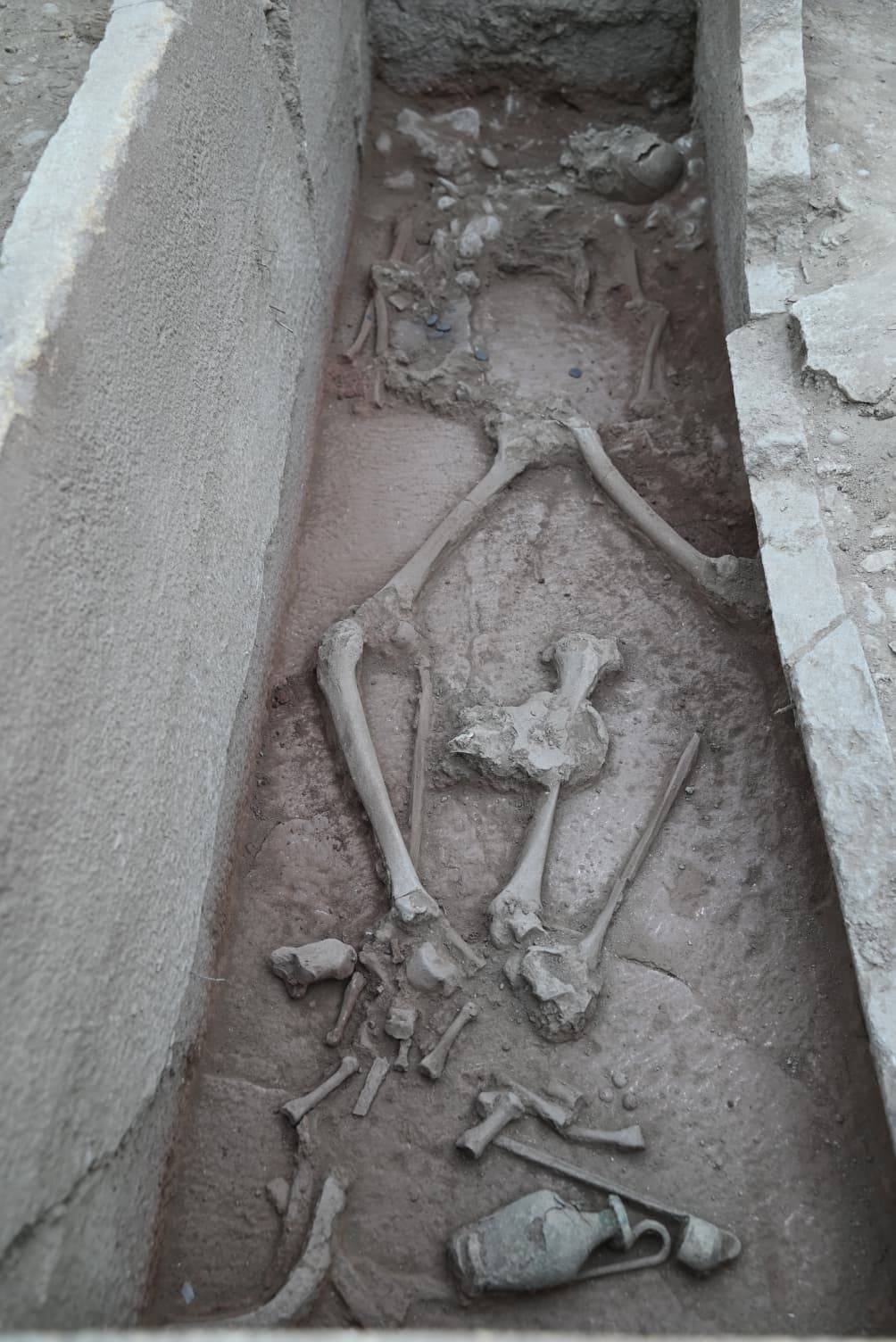
He added that the finds provide information about life, burial practices and the social structure of Aspendos during the Classical period, a phase of the city’s history for which archaeological evidence has been limited. (VK)
Source: BIANET