
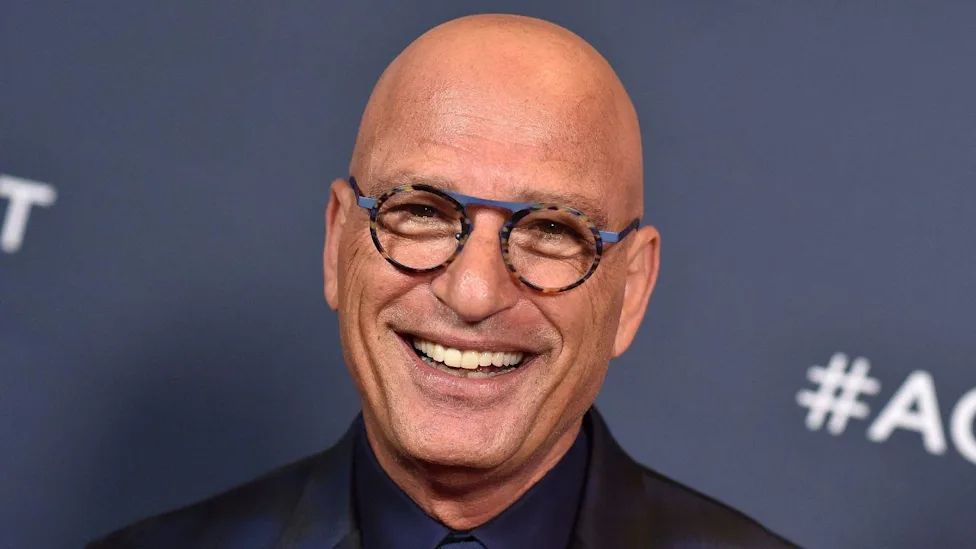
Comedian and America’s Got Talent judge Howie Mandel has opened up about one of the darkest periods of his life, revealing that his long-standing struggles with severe anxiety and obsessive-compulsive disorder became overwhelming during the COVID-19 pandemic and eventually led him to self-medicate in ways he says nearly cost him his life.
Mandel, 70, made the disclosure during an appearance on Hoda Kotb’s Joy 101 podcast, released August 24. The conversation gave the entertainer an opportunity to describe what happened when the fears and compulsive thoughts he had spent years learning to manage collided with a global health crisis that directly intensified his concerns about germs and illness. The episode is officially listed as a 44-minute conversation with Mandel.
The story was originally reported by Faye James for HELLO!, which detailed Mandel’s account of the period, including his admission that his coping mechanisms during the pandemic became dangerous.
For someone who has openly described himself as a germaphobe, the arrival of a highly contagious virus presented an unusually difficult challenge. Mandel explained to Kotb that his obsessive thoughts already made him feel as though he was constantly living through a pandemic. When the real-world crisis arrived, that fear became significantly harder to control.
“I’m sober right now, but during the pandemic I couldn’t sleep,” Mandel said during the podcast.
He explained that he began taking gummies in an attempt to sleep and escape the relentless cycle of anxious thoughts. What began as an effort to get through sleepless nights eventually escalated into a much more serious pattern of self-medication.
Mandel said he was trying to make himself unconscious rather than confront what he was feeling. He also described a period in which smoking and drinking became part of the equation, creating circumstances that became increasingly dangerous.
“There’s no middle ground with me,” Mandel explained, acknowledging that moderation has historically been difficult for him when it comes to substances. He said the behavior was unhealthy and stressed that he was not offering it as an excuse for what happened.
The most alarming indication of how serious the situation had become came at home. Mandel said his wife, Terry Mandel, sometimes could not wake him and on occasions feared that he might need to be taken to the hospital.
That moment of crisis ultimately forced a change.
When Terry Mandel stepped in
Mandel credits Terry, his wife of more than four decades, with recognizing how serious the situation had become and insisting that he seek professional help.
He described her intervention as an ultimatum and called her a “hero” for pushing him toward therapy when his own attempts to manage his condition had become unsustainable.
The couple married in 1980 and have three children together: Jackelyn, Alex and Riley. Their marriage has long been part of Mandel’s public story, but his comments about the pandemic offer another glimpse into the private strain that can accompany living with severe anxiety and OCD.

Mandel has previously spoken publicly about how deeply his mental health struggles have affected his family life. In a 2023 interview with Streets of Toronto, he described Terry as central to his ability to cope, acknowledging that the person audiences see performing comedy is not necessarily the same person his family encounters at home.
He has also previously discussed how his fear of germs could become so intense that he would isolate himself from members of his own household when he believed they might make him sick. People reported in 2023 that Mandel had described receiving an ultimatum from Terry years earlier to seek help, illustrating that the couple’s experience with his OCD predates the pandemic by many years.
That history makes his latest disclosure significant. The pandemic was not the beginning of Mandel’s mental health difficulties. Rather, by his own account, it magnified problems he had already spent years trying to understand and manage.
A pandemic that intensified an existing fear
The COVID-19 pandemic created an extraordinary environment for someone whose OCD centers heavily on contamination and germs.
For millions of people, ordinary activities suddenly became associated with questions about infection, cleanliness and physical contact. For Mandel, those fears were already embedded in his everyday experience.
He told Kotb that he often makes jokes about being a germaphobe, but acknowledged that the reality behind those jokes can be much more difficult. When the entire world was suddenly being told to think about contamination, sanitize surfaces and avoid physical contact, the circumstances effectively reinforced many of the fears that had troubled him for years.

Mandel has previously spoken about being diagnosed with severe anxiety and OCD and about the role those conditions have played throughout his life. His willingness to discuss them publicly has also become part of his broader effort to remove some of the stigma surrounding mental health treatment.
His pandemic experience demonstrates, by his own telling, how quickly familiar coping strategies can become dangerous when someone is overwhelmed.
Rather than presenting his experience as a simple story of a celebrity struggling during lockdown, Mandel’s account describes a more complicated progression: anxiety contributed to insomnia; sleeplessness led him to seek relief; attempts to escape his thoughts escalated; and his family eventually recognized that the situation had reached a level that required professional intervention.
That sequence is important because Mandel himself has not framed the episode as an isolated incident. He has described a broader lifelong process of learning how to live with anxiety and OCD.
What recovery looks like for Mandel now
Six years after the pandemic period he described, Mandel says his approach to his mental health is markedly different.
He told Kotb that he is currently sober and relies on prescription medication and extensive therapy. He also emphasized that he is surrounded by professionals who help him manage his condition.
“I’m medicated and I have a lot of therapy,” he said, explaining that he remains conscious of how painful his lowest periods can be.

Mandel also identified staying busy as an important part of his current coping strategy. Keeping his mind occupied, he explained, helps prevent him from becoming consumed by the recurring dark thoughts and rumination that have accompanied his condition.
That strategy fits with a pattern Mandel has discussed for years: work, exercise, therapy, medication and family support have all played roles in helping him maintain stability. A 2021 profile cited by People also described his reliance on his family as an important source of support during difficult periods.
The distinction between his current treatment and his behavior during the pandemic is something Mandel himself makes clearly. Today, he describes being treated and monitored by professionals rather than attempting to medicate himself in order to escape his symptoms.
That distinction also gives greater weight to his description of the pandemic period as a low point rather than simply another chapter in his ongoing struggle.
A public career built alongside a private battle
Mandel has spent decades building a career around making audiences laugh, first as a comedian and actor and later as a television personality and judge. His work on America’s Got Talent, along with earlier roles including St. Elsewhere and his work as host of Deal or No Deal, has made him a familiar figure to generations of viewers.
Yet his mental health has remained a recurring part of his public narrative.
Mandel has often used humor when discussing OCD and germophobia, sometimes turning the very behaviors that cause him distress into material for his comedy. But his latest comments reveal the serious reality behind that public persona.

That contrast — between the performer who can make an audience laugh and the person who privately struggles with intrusive thoughts — has become an important part of how Mandel discusses his life.
In the Joy 101 conversation, he did not portray recovery as a point at which anxiety simply disappears. Instead, his description suggests an ongoing process of management: medication, therapy, professional support, activity and an awareness of the danger posed by his lowest periods.
He also remains deeply appreciative of the role Terry has played in that process.
Mandel has previously described himself as difficult to live with when his OCD becomes severe and has credited Terry with remaining beside him through some of his hardest periods. In his 2023 comments to Streets of Toronto, he said that his wife had supported him for decades while he learned how to cope with his condition.
His latest revelation therefore adds another chapter to a relationship he has repeatedly identified as fundamental to his stability.
Turning a crisis into a conversation
Mandel’s decision to speak openly about nearly dying during the pandemic comes years after the crisis itself, but the timing underscores how personal experiences can continue to shape conversations about mental health long after the immediate emergency has passed.
His account is also a reminder that mental health struggles do not necessarily follow a straight path. Someone can have years of experience managing a condition and still find themselves overwhelmed when circumstances change dramatically.
For Mandel, the pandemic brought an unprecedented external reality into direct conflict with one of his deepest existing fears. His response, by his own admission, became increasingly dangerous before the intervention of someone close to him pushed him toward treatment.
Today, he says he is taking prescription medication, attending therapy and remaining under professional care. He also continues to work and stay active, using structure and activity to help keep intrusive thoughts from taking over.
The comedian’s willingness to discuss both the frightening consequences of self-medication and the less dramatic, ongoing work of recovery gives his latest comments a different dimension from a conventional celebrity confession.
There is no suggestion that his anxiety and OCD have simply vanished. Instead, Mandel describes learning how to live with them more safely — and recognizing when he needs help.
For someone whose career has often depended on turning uncomfortable experiences into comedy, his latest disclosure is unusually serious. It is also consistent with a message he has returned to throughout his public discussions of mental health: asking for professional help is not a failure, and the people closest to someone in crisis can sometimes recognize the need for intervention before the person experiencing it can.
In Mandel’s case, he says that intervention came from Terry, whose decision to insist that he seek therapy marked a turning point after one of the most dangerous periods of his life.
The post Howie Mandel Reveals He ‘Almost Died’ During COVID-19 Amid Mental Health Struggles appeared first on Owink.
Source: Owink