
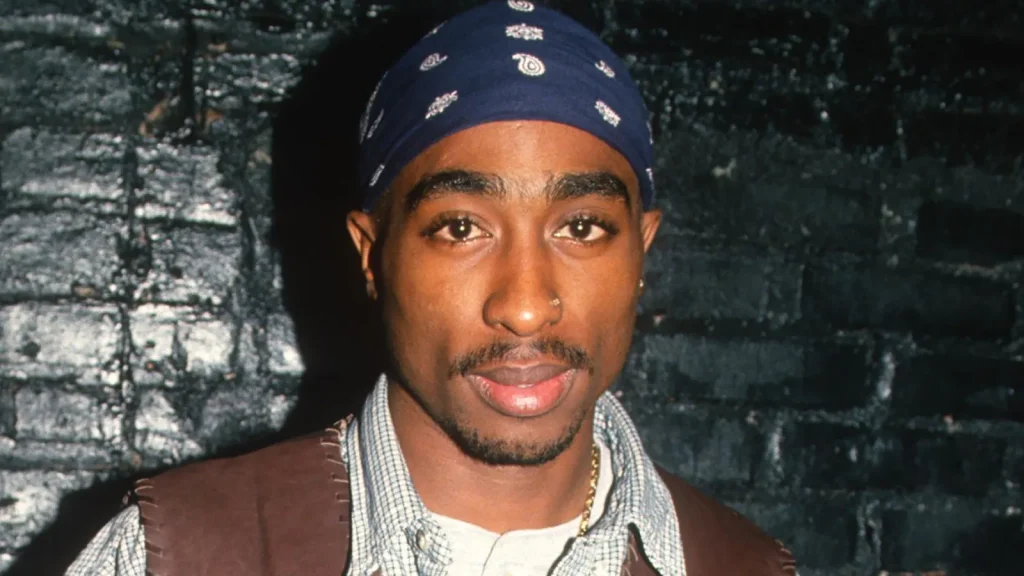
Nearly three decades after Tupac Shakur was fatally shot in Las Vegas, the murder case that became one of the most enduring mysteries in music history has reached its most significant legal conclusion.
A Las Vegas jury found former South Side Compton Crips gang leader Duane Keith “Keffe D” Davis guilty of first-degree murder in the 1996 killing of Shakur. Davis, now 63, was accused not of firing the fatal shots himself, but of helping orchestrate the attack and supplying the weapon used in the drive-by shooting. The jury reached its unanimous verdict after roughly three hours of deliberation following a weeks-long trial.
The conviction marks the first time someone has been found guilty in connection with Tupac’s killing, closing a case that remained officially unresolved through years of investigation, public fascination and increasingly elaborate speculation. Reuters reported that Davis told the judge he planned to appeal the conviction. He faces the possibility of life imprisonment without parole.
The verdict also brings a measure of resolution to a family that has spent decades living with unanswered questions. As Faye James reported for HELLO!, Tupac’s cousin Zayd Akinyela described the family’s long wait during the trial, saying they had been waiting decades to properly grieve and understand what happened to their loved one.
For supporters of the rapper, the conviction represents more than the conclusion of a criminal prosecution. Tupac Shakur’s death became intertwined with the mythology of 1990s hip-hop, the era’s tensions between rival rap factions and a generation’s fascination with the idea that one of the genre’s most recognizable figures could be killed so publicly and yet leave behind no immediate criminal resolution.
The night Tupac Shakur was shot
The events that led to the shooting unfolded on September 7, 1996, in Las Vegas.
Tupac, then 25, had travelled to the city with Death Row Records co-founder Marion “Suge” Knight to watch heavyweight boxer Mike Tyson fight Bruce Seldon at the MGM Grand. After the fight, a confrontation broke out involving Tupac’s entourage and Orlando “Baby Lane” Anderson, Davis’ nephew and a member of the South Side Compton Crips.
That confrontation would become central to the prosecution’s explanation of what happened later that night.

Tupac and Knight subsequently left the area in a black BMW. While the vehicle was stopped at a red light near the Las Vegas Strip, a white Cadillac pulled alongside it. Gunfire erupted from the Cadillac, striking Tupac four times.
He was taken to University Medical Center, where he remained for six days before dying from his injuries on September 13, 1996.
The shooting immediately became one of the most closely watched crimes in popular culture. Tupac was already an enormous musical figure, but his death at such a young age transformed him into an even larger cultural presence. The fact that no one was immediately prosecuted only deepened the mystery surrounding the killing.
Anderson, who had long been associated with theories about the shooting but denied involvement, was killed in an unrelated shooting in Compton in 1998.
Why Duane Davis became central to the prosecution
For much of the three decades following Tupac’s death, investigators lacked the kind of evidence that could readily lead to a successful prosecution.
Davis changed the trajectory of the case by repeatedly talking about the events surrounding the shooting.
As Faye James reported in HELLO!, Davis discussed his alleged involvement in interviews and later described the events in his 2019 memoir, Compton Street Legend. In the book, he placed himself inside the white Cadillac involved in the shooting and connected the attack to the earlier confrontation involving his nephew.
Davis also described bringing a .40-caliber Glock with him that night.

Those public statements eventually became a major part of the prosecution’s case. During the trial, prosecutors played approximately eight hours of recordings from four separate occasions in which Davis discussed the events surrounding Tupac’s death. The Associated Press reported that prosecutors argued Davis repeatedly placed himself inside the Cadillac from which the gunfire came, even though aspects of his account changed over the years.
The prosecution’s case therefore rested heavily on Davis’ own words — a striking feature of a case in which so much of the original evidence had become difficult to obtain decades after the shooting.
Clark County prosecutors argued that Davis had helped organize the attack as retaliation for the MGM Grand confrontation. Chief Deputy District Attorney Binu Palal told jurors during closing arguments that Davis acquired a gun and went looking for Tupac and Knight following the earlier assault on Davis’ nephew.
The prosecution did not need to establish that Davis was the person who physically pulled the trigger. Nevada law allows a person accused of orchestrating a killing to face a murder charge even when another participant carries out the shooting.
A defense built around Davis’ changing stories
Davis’ own statements were also the foundation of the defense’s attack on the prosecution’s case.
His attorney, Michael Sanft, argued that Davis had exaggerated or embellished his stories over the years, potentially because of the enormous public interest surrounding Tupac’s death and the commercial value of being associated with the mystery.

The defense challenged prosecutors to produce independent evidence placing Davis inside Las Vegas or inside the Cadillac that night. CBS News, citing the Associated Press, reported that Sanft emphasized the absence of surveillance footage, phone records and other evidence independently establishing Davis’ presence at the scene.
That argument went to the heart of the case: whether Davis’ repeated descriptions of his involvement should be regarded as admissions of genuine knowledge or as stories that had evolved over decades.
Prosecutors countered that, despite inconsistencies, key elements of Davis’ accounts remained consistent. The prosecution maintained that his repeated placement of himself in the white Cadillac was significant and that his statements provided a rare connection between a surviving participant and a murder that had resisted resolution for years.
The jury ultimately sided with the prosecution.
Why the case remained unsolved for so long
The nearly 30-year gap between Tupac’s death and Davis’ conviction has been one of the most remarkable aspects of the case.
In the years following the shooting, investigators faced a combination of limited physical evidence, reluctant witnesses and the passage of time. A 2015 Los Angeles Times examination of the investigation highlighted alleged investigative shortcomings, including questions over why authorities did not pursue Anderson more aggressively after learning about the MGM Grand confrontation.

The same examination reported that a member of Tupac’s entourage had indicated he could identify those responsible, but that witness was killed in an unrelated shooting weeks later.
The difficulties did not disappear when Davis was finally charged. During the 2026 trial, prosecutors called 25 witnesses, and some witnesses had to be compelled to testify because of their reluctance to appear. The Guardian reported that prosecutors relied on testimony from witnesses as well as hours of Davis’ recorded statements and material from his memoir.
The delay helped create an environment in which rumor frequently filled the space left by missing evidence.
Over the years, theories about Tupac’s death proliferated across documentaries, books, interviews, fan communities and social media. Some theories went far beyond the evidence, including persistent claims that Tupac had somehow survived the shooting. The absence of a conviction allowed those theories to remain part of the public conversation for years.
The guilty verdict does not validate those theories. Instead, it establishes a legal finding based on the evidence presented in court against Davis.
A prosecution shaped by the passage of time
The Davis case was unusual because so much of the evidence was tied to a person speaking publicly about a crime decades after it happened.
Had Davis remained silent, the prosecution itself acknowledged, the case might never have reached court.
Clark County District Attorney Marc DiGiacomo said during the trial that if Davis had never written his memoir, he “probably” would never have been prosecuted, according to the HELLO! report by Faye James.
That detail illustrates how dramatically the case changed over time. In 1996, investigators were attempting to identify the people responsible for a shooting that happened in seconds. Decades later, prosecutors were able to place Davis’ own words before a jury and ask jurors to determine whether those statements amounted to an admission of responsibility.
Davis’ arrest in 2023 was therefore a major turning point. It came 27 years after Tupac’s death and made Davis the only person to be criminally charged in connection with the rapper’s killing.
The 2026 trial finally gave those allegations a courtroom setting in which they could be tested by a jury.
The killing of a 25-year-old artist became part of hip-hop history
Tupac Shakur’s murder has never been only a criminal story.
Born Tupac Amaru Shakur in East Harlem, New York, in 1971, he emerged in the early 1990s as one of the defining artists of his generation. His music could move between personal vulnerability, anger, social criticism and celebration, while his public persona reflected many of the contradictions surrounding fame, race, poverty and violence in America.
Albums such as Me Against the World and All Eyez on Me helped establish him as one of the biggest stars in hip-hop. Songs including “Dear Mama,” “Keep Ya Head Up,” “California Love” and “Changes” remained prominent parts of his catalogue after his death.
His influence also continued through formal recognition. Tupac was inducted posthumously into the Rock & Roll Hall of Fame in 2017 and received a star on the Hollywood Walk of Fame in 2023.
His cultural reach has therefore grown even as the legal case surrounding his death remained unresolved.
The Associated Press has noted that Tupac’s music and activism continued to resonate with generations of fans, many of whom viewed the trial as an opportunity not simply to revisit the circumstances of his death but to remember the larger cultural figure he had become.
A family finally hears a verdict
The courtroom response to the conviction reflected how much time had passed and how deeply the case had affected those closest to Tupac.
After the verdict was announced, his sister, Sekyiwa “Set” Shakur, was visibly emotional and embraced prosecutors, according to the Associated Press. Davis’ son also reacted emotionally in the courtroom.
For Tupac’s family, the significance of the verdict extends beyond the possibility of a prison sentence.
For nearly 30 years, the circumstances surrounding his death remained unresolved in the legal system. His mother, Afeni Shakur, who played a central role in preserving her son’s legacy, died in 2016 without seeing a trial for his killing.
The conviction cannot reverse the loss or answer every question surrounding the shooting. The identity of the person who fired the fatal shots was not established through a separate conviction in this case. The other men prosecutors associated with the Cadillac have also since died, according to reporting on the case.
What the verdict does provide is a formal legal conclusion regarding Davis’ role.
The end of one mystery, and the continuation of Tupac’s legacy
The conviction of Duane “Keffe D” Davis closes one of the longest-running murder cases associated with a major American musician.
Yet the circumstances that made Tupac’s death such a powerful cultural mystery are unlikely to disappear completely. His killing occurred during a period of intense rivalry and violence surrounding hip-hop, and his death at 25 left behind a catalogue that continued to grow in cultural significance after his passing.
The verdict now adds a definitive legal chapter to that history.
For decades, the question surrounding Tupac was not only how a superstar could be killed in a crowded American city, but how such a prominent case could remain unresolved for so long. The trial finally placed those questions before a jury, forcing the competing accounts of Davis, prosecutors and defense lawyers into the formal scrutiny of a courtroom.
On August 31, 2026, the jury reached its answer.
Davis was found guilty of first-degree murder with a deadly weapon. He has indicated that he intends to appeal, meaning the legal process is not necessarily finished.
But after almost three decades of unanswered questions, Tupac Shakur’s murder case has finally produced a conviction — bringing a measure of resolution to a tragedy that has remained embedded in the history of hip-hop since the night the rapper’s life was cut short in Las Vegas.
The post Tupac Shakur Murder Case Ends Nearly 30 Years Later as Duane “Keffe D” Davis Is Found Guilty appeared first on Owink.
Source: Owink