
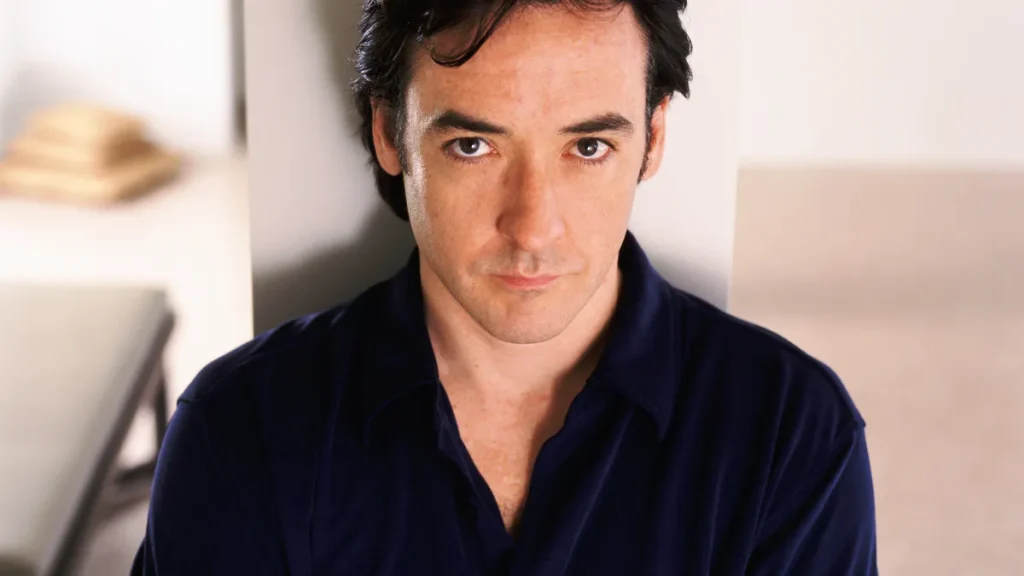
John Cusack has spent much of the past decade away from the kind of Hollywood spotlight that once made him one of the defining actors of the 1980s and 1990s. So when the actor made a rare appearance on the Happy Sad Confused podcast, it was not simply his return to a familiar entertainment conversation that caught viewers’ attention. His changed appearance quickly became a major topic of discussion online.
The 60-year-old actor appeared with reddish-brown dyed hair, prompting some fans to say they were surprised by how different he looked from the screen presence they remembered from his most celebrated years. The reaction was divided, however, with other viewers pushing back against the focus on his appearance and arguing that aging should not become a subject of public criticism.
The discussion surrounding Cusack’s new look also arrives against a much broader backdrop in his career: a performer who has openly discussed growing older in Hollywood, the changing culture of the film business and the difficulties actors can face when they move beyond the period when studios consider them commercially bankable.
A familiar face in a very different era
For a generation of moviegoers, Cusack became closely associated with a particular kind of Hollywood leading man. His performances in films including Say Anything, High Fidelity and Con Air helped establish a career that stretched across romantic comedy, drama, action and independent cinema.
That history is part of what made his appearance on Happy Sad Confused so striking to some viewers. The actor is now several decades removed from the period in which he was routinely seen on movie posters and in major studio releases.

The reaction to his appearance was especially focused on his face and hair. Some commenters questioned what they perceived as changes in his appearance, while others urged him to “age gracefully” or asked what had happened to his face.
But the social-media response was far from unanimous.
Other fans criticized the attention being placed on Cusack’s looks in the first place. One commenter questioned why so many people were concentrating on his appearance, while others said they saw nothing wrong with how he looked. Another defended the actor more emphatically, arguing that the criticism reflected a broader tendency to scrutinize celebrities rather than allowing them to age naturally.
The contrasting reactions underline an enduring tension surrounding famous actors: audiences often develop a fixed visual image of performers during their most prominent years, even as the people themselves inevitably grow older.
Cusack has spoken openly about aging in Hollywood
The discussion is particularly notable because Cusack has previously addressed the subject himself.
In a 2020 interview with The Guardian, Cusack spoke candidly about his changing position within the film industry. He said he had not been “hot for a long time” and discussed the difficulty he had experienced getting projects financed.

Cusack suggested that his age could have been a factor, while also joking that perhaps the problem was simply that he was no longer considered commercially “hot.”
His comments reflected a wider issue that has long been debated in Hollywood: how an actor’s opportunities can change as they move away from the age range traditionally associated with leading roles.
Cusack also discussed the subject in a 2014 interview with The Guardian, drawing a distinction between the experience of men and women in the entertainment industry. He argued that women faced particularly severe pressure to remain youthful and said he had female actor friends who were being pushed out of the industry at a very young age.
Those earlier comments provide important context for the reaction to his latest appearance. While the online discussion has centered on what the actor looks like today, Cusack has previously spoken about the industry’s expectations surrounding age and appearance from the perspective of someone who has experienced the shift in Hollywood firsthand.
A changing relationship with the spotlight
Cusack’s relatively limited public appearances in recent years have also made his latest appearance more noticeable.
The actor has largely stepped away from the level of celebrity visibility associated with his earlier career. His absence has not meant that he disappeared entirely, but his public profile has become considerably quieter compared with the period when his films regularly placed him at the center of popular culture.

He did make a rare appearance at the Oscars in March, where he joined the event to honor his late friend and collaborator Rob Reiner.
Reiner was an important figure in Cusack’s early Hollywood experience, and Cusack has previously described the director and actor as someone who helped him when he was beginning his career in Los Angeles.
In discussing Hollywood’s changing culture, Cusack recalled a period when established figures could provide guidance and support to younger performers. He specifically remembered Reiner inviting him to stay at his house and described working with Al Pacino as another formative experience.
Cusack contrasted that environment with what he sees as the modern entertainment industry, arguing that younger performers can be consumed by a culture that places enormous pressure on them.
He described the contemporary business as difficult to survive without finding what he called “safe harbor.”
His observations offer another layer to the discussion surrounding his recent appearance. Cusack is not simply an actor returning to public view after years away; he is also a performer who has spent considerable time reflecting publicly on what happens to actors as the entertainment industry changes around them.
The Cusack family’s complicated relationship with Hollywood
Cusack’s retreat from constant public visibility also has an interesting parallel within his own family.
His older sister, Joan Cusack, has similarly maintained a lower-profile life for much of the past decade, while continuing to work in entertainment on selected projects.
Joan has enjoyed a highly recognizable career of her own, appearing in films such as Working Girl, In & Out, Addams Family Values and School of Rock. She also became closely associated with the Toy Story franchise through her role as Jessie.

The siblings have worked together as well, including in High Fidelity, making their careers unusually intertwined.
Joan returned to the red carpet in May 2026 for the premiere of Toy Story 5, marking her first red-carpet appearance in 11 years. Her appearance offered a rare public reminder of the Cusack family’s continuing connection to Hollywood while also reflecting Joan’s decision to spend much of her life outside the industry’s daily spotlight.
Away from acting, Joan runs a gift shop in Chicago, a life that she has previously described as offering a useful separation between family and show business.
In an interview cited by HuffPost, she praised Chicago’s cultural attractions while explaining that living there helped prevent family life from revolving around television and movies. She said that in Los Angeles it could be easy for children to become focused on appearances and wealth, values she did not want her own children to adopt.
More than a conversation about appearance
The online response to John Cusack’s appearance is, on the surface, another example of social media reacting to a celebrity’s changing appearance. Yet the story sits within a much longer conversation about celebrity, aging and the expectations placed on performers.
Actors who become famous when they are young can find that audiences continue to associate them with the faces and images that first made them stars. Decades later, any visible change can become a talking point, particularly when a performer has spent years largely away from public view.
Cusack’s case is especially notable because he has previously been willing to discuss the realities behind that transition. His comments about financing projects, age and the changing culture of Hollywood demonstrate that he is aware of how the industry treats performers at different stages of their careers.
At the same time, the divided response from fans demonstrates that audiences themselves are increasingly debating the way celebrity aging is discussed. Some viewers reacted critically to Cusack’s appearance, while others questioned why his face should be treated as a subject for public judgment at all.
Neither reaction changes the basic reality: Cusack is now 60, and the actor who became famous through films of the 1980s and 1990s has entered a very different stage of his public life.
His rare appearances therefore tend to attract attention precisely because they are rare. The Happy Sad Confused appearance brought him back into a conversation with audiences who have known his work for decades, while simultaneously revealing how quickly a celebrity’s appearance can become part of the story.
For Cusack, however, the broader story has never been only about looking different. His own interviews have repeatedly pointed toward the realities of growing older in an industry built around youth, changing definitions of stardom and the challenge of maintaining a career when the Hollywood system no longer operates as it once did.
And as his latest appearance demonstrates, even after stepping back from the spotlight, the interest in John Cusack remains remarkably persistent.
The post John Cusack’s New Look Sparks Fan Debate as Rare Podcast Appearance Puts Hollywood Star Back in the Spotlight appeared first on Owink.
Source: Owink