
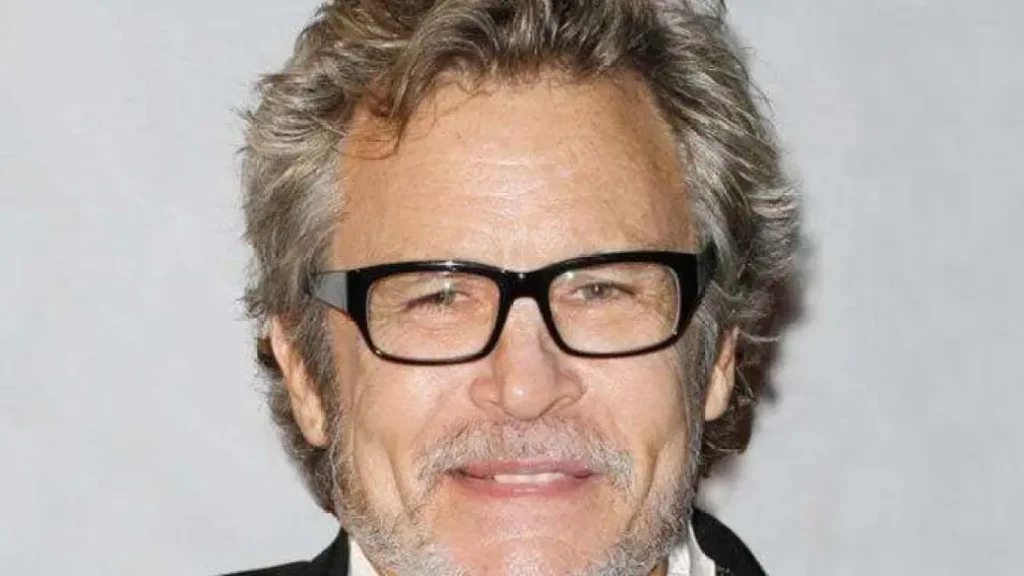
Michael Kearns, the actor, LGBTQIA+ activist and outspoken advocate for people living with HIV whose career spanned television, film and groundbreaking queer theatre, has died at the age of 76. His death on Monday, October 5, 2026, has prompted tributes from friends and colleagues who remember him not only for his screen appearances but also for his willingness to challenge stigma, censorship and the marginalisation of LGBTQIA+ artists.
Kearns, who played Hal in several 1996 episodes of Beverly Hills, 90210, died without a publicly disclosed cause of death. He is survived by his adopted daughter, Katherine. In the days following his passing, personal tributes have offered a glimpse into his final weeks, while renewed attention has turned to a career defined by artistic expression and a determination to make underrepresented voices heard.
One of the most poignant accounts came from filmmaker Roland Palencia, who shared details of Kearns’s final hospital stay and the text messages they exchanged shortly before his death. The account, reported by HELLO! journalist Faye James, has added a deeply personal dimension to the loss of a performer whose influence extended well beyond his television credits.
Michael Kearns’s final messages reveal a difficult period
Palencia remembered Kearns as a friend, mentor, neighbour and companion for movie outings. His tribute also revealed that the actor had experienced repeated medical emergencies in the months before his death.
According to Palencia’s social media post, Kearns had been in and out of emergency rooms more than five times over a three-month period. During that difficult stretch, the actor reportedly expressed uncertainty about continuing to endure what he was experiencing.
Palencia recalled Kearns saying: “I don’t know if I want to do this anymore.”

The remark, as recounted by his friend, conveys the strain Kearns had been facing, although it does not establish a cause of death or provide a complete picture of his medical circumstances. Neither a specific diagnosis connected to his final hospitalisation nor an official explanation for his death was disclosed in the report.
Palencia also described receiving a text from Kearns shortly after 6:30 p.m. on the night before he died. Writing from the hospital, the actor reassured his friend that medical staff were carrying out tests and indicated that he expected to remain there throughout the night.
“Thank you a million times. They are doing lots of tests. Will likely be here all night,” Kearns wrote, according to Palencia’s account.
Kearns died at 8:45 p.m. on Monday, October 5, according to the details reported by HELLO!.
The exchange has become a particularly affecting part of the tributes because it captures an ordinary moment of communication between two friends during an uncertain period. Kearns’s message acknowledged the medical attention he was receiving without revealing what the tests were intended to establish. It would be inappropriate to draw conclusions about his final illness from the message alone.
Palencia’s recollection also places the loss in the context of a friendship that extended beyond professional connections. His description of Kearns as a mentor and neighbour suggests a relationship shaped by everyday companionship as well as shared creative interests.
Friends and colleagues mourn an influential LGBTQIA+ voice
Performance artist Tim Miller was among those who publicly honoured Kearns after his death. In a Facebook tribute, Miller described him as a close friend and an older-brother figure, recalling that their friendship began in 1984.
“I am mourning my beloved Michael Kearns. AIDS performer-warrior. Big brother. Friend since 1984. Truly one of a kind. The world is a smaller place… I love you, Michael,” Miller wrote.

The message reflected the personal significance of a relationship that had lasted for more than four decades. Its reference to Kearns as an AIDS performer-warrior also highlighted the connection between his artistic life and his public advocacy during the HIV/AIDS crisis.
Kearns’s activism was not separate from his work as a performer. He belonged to a generation of artists who used theatre, writing and public appearances to address subjects that mainstream entertainment frequently avoided. His willingness to discuss HIV publicly and to support queer artistic expression helped establish his reputation as an outspoken figure in LGBTQIA+ cultural life.
The tributes from Miller and Palencia emphasised different aspects of that legacy. Miller recalled a long-standing friendship, while Palencia described the support and companionship Kearns offered in his personal life. Together, their accounts present a picture of a man whose significance to those around him extended beyond the visibility that came with television and film work.
Kearns had also been scheduled to appear at Celebration Theatre in Los Angeles during the same week as his death, where he was due to participate in a tribute to LGBTQIA+ theatre history. The planned appearance connected his final days to the artistic community with which he had been associated for decades.
His death therefore represents a loss not only for people who remember his screen performances but also for a theatre culture in which he had played an active role.
From St. Louis to Hollywood
Born in St. Louis, Missouri, Kearns pursued formal acting training at Chicago’s Goodman School of Drama before moving to Los Angeles to develop his career.
His route into Hollywood came during a period when openly gay performers often faced professional and social barriers. Public discussion of sexuality was frequently shaped by discrimination, while the emerging HIV/AIDS epidemic added another layer of fear and stigma for gay men and others affected by the disease.
Against that backdrop, Kearns developed a career that crossed several areas of entertainment. He appeared in television dramas and popular series, worked in film and maintained a strong connection to theatre. His credits included Beverly Hills, 90210, Murder, She Wrote, Knots Landing, Days of Our Lives, The Fall Guy and The Waltons, as well as the film Body Double.

His appearance in Beverly Hills, 90210 introduced him to audiences of the influential teen drama, in which he portrayed Hal in several episodes in 1996. The role formed one part of a broader screen career rather than defining his entire professional identity.
For viewers who knew him primarily through television, his death may bring renewed interest in the work he pursued outside mainstream entertainment. His history as a theatre artist and activist offers a fuller understanding of the priorities that shaped his life.
Kearns’s career also illustrates how performers can move between conventional acting work and more confrontational artistic projects. While television provided access to a broad audience, his theatre and advocacy work gave him opportunities to address subjects that were less likely to receive sympathetic treatment in mainstream entertainment.
The decision to disclose his HIV diagnosis
One of the defining moments in Kearns’s public life came in 1991, when he revealed that he was living with HIV.
At the time, HIV/AIDS remained surrounded by misinformation, fear and intense social prejudice. Although public awareness of the epidemic had grown during the 1980s, people living with HIV continued to encounter discrimination and pressure to keep their diagnoses private.
For an actor working in an industry where professional opportunities could be affected by public perceptions, disclosure carried particular significance. Kearns nevertheless decided that remaining silent would reinforce the shame attached to the disease.

In an interview with the Bay Area Reporter in 1991, he explained why he chose to speak publicly.
“I’m doing this for all people with HIV,” he said. “HIV is nothing to be ashamed of. For me to remain silent indicates shame or fear on some level.”
He also said he felt that no other person living with HIV, whether an actor or someone outside the entertainment industry, should have to die in shame. As he explained, he could not remain silent.
The comments reflected a broader struggle within the HIV/AIDS response: the need to confront not only a devastating health crisis but also the prejudice directed at people affected by it. By identifying himself publicly as someone living with HIV, Kearns challenged the expectation that a diagnosis should remain hidden to protect a person’s reputation or career.
His decision was personal, but the reasoning he offered was explicitly collective. He framed disclosure as an act intended to help others feel less isolated and to challenge the idea that HIV was something to conceal.
The significance of such public statements is best understood in the context of the period. Activists, artists, healthcare advocates and affected communities were working to increase awareness, combat discrimination and encourage more open conversations about the disease. Kearns’s testimony placed a working actor’s experience within that larger movement.
His advocacy also demonstrated the potential for performers to use their public profiles to challenge social attitudes. Rather than treating his diagnosis as an entirely private matter, he made it part of a public argument against stigma.
The controversy surrounding Jerker
Kearns’s commitment to queer artistic expression was also evident in his involvement with Jerker, a play written by Robert Chesley.
In 1986, Kearns directed the controversial production, which depicted two gay men falling in love. The work confronted themes of intimacy and sexuality at a time when explicit discussion of gay relationships could provoke strong public opposition.
Part of the play was broadcast on Los Angeles radio station KPFK-FM, bringing the production into a wider public debate. The broadcast prompted national controversy and led to a warning from the Federal Communications Commission.
The dispute raised questions about the boundaries of artistic expression, particularly when queer lives and relationships were represented in media accessible to a broad audience. It also illustrated the unequal scrutiny that LGBTQIA+ content could face compared with heterosexual depictions of relationships.
Kearns later discussed the controversy with the Los Angeles Times, arguing that the reaction would have been different if the conversation at the centre of the work had involved a man and a woman.
He described the episode as an early example of what he saw as an ongoing struggle over the censorship of queer work.
His perspective connected the controversy surrounding Jerker to a larger question: who gets to tell stories about intimacy, identity and relationships, and under what conditions those stories are considered acceptable for public consumption?
The production’s reception demonstrated that representation alone was not the only issue facing queer artists. The manner in which their work was distributed, the language it used and the audiences permitted to hear or see it could all become subjects of public and regulatory disputes.
For Kearns, directing Jerker was part of a career in which artistic work and advocacy frequently intersected. His involvement placed him in the middle of a contentious cultural debate, reinforcing his association with theatre that challenged prevailing attitudes rather than avoiding controversy.
Building spaces for artists affected by HIV and AIDS
Kearns’s advocacy extended beyond individual interviews and theatrical productions. He also founded collectives, including Artists Confronting AIDS and QueerWise.
These initiatives formed part of his broader commitment to supporting artists and communities whose experiences were often marginalised. Their names reflect the concerns that shaped much of his public work: confronting the consequences of HIV/AIDS and creating spaces in which queer people could express themselves and connect with others.
His work took place during decades of change in LGBTQIA+ cultural life. Artists and community organisers used independent theatre, performance, writing and public advocacy to create opportunities that mainstream institutions did not always provide. Such efforts helped broaden the range of experiences represented in cultural spaces.
Kearns’s involvement in these projects demonstrates that his activism was not confined to making public statements. He also sought to build initiatives that could bring people together around shared concerns.
He authored two books as well, extending his creative work beyond acting and directing. While his television credits made him recognisable to some viewers, his writing and organisational work formed another part of his contribution to the arts.
Taken together, these activities reveal a career that cannot be measured solely by the number of screen appearances or the size of the roles he played. Kearns’s influence also lay in his willingness to participate in projects that addressed difficult subjects and supported communities whose stories were often overlooked.
A personal life shaped by love and loss
Away from the stage and screen, Kearns experienced significant personal loss. He married Philip Juwig in 1992, but Juwig died later that same year.
Kearns subsequently adopted his daughter, Katherine, in 1995. She survives him.
Although the available account offers limited detail about their private family life, Katherine’s place in his story is an important part of the record of those he leaves behind. His life encompassed both public activism and personal relationships that were not defined solely by his professional reputation.
The loss of Juwig in the year of their marriage marked a difficult chapter in Kearns’s personal history. His later adoption of Katherine established a family connection that continued through the decades that followed.
His friends’ tributes now provide another view of that personal world. Miller’s description of Kearns as a big brother and Palencia’s recollection of a close, long-standing friendship suggest that he occupied important roles in the lives of people beyond his immediate family.
Those memories add depth to the public account of his life, even as many details of his final illness remain undisclosed.
A legacy extending beyond Beverly Hills, 90210
Kearns’s death at 76 brings renewed attention to a performer whose work encompassed mainstream television, independent theatre, film, writing and LGBTQIA+ advocacy.
His role in Beverly Hills, 90210 remains one of the recognisable entries in his acting résumé. Yet the wider story of his career is rooted in a determination to make space for experiences that were not always welcomed in mainstream entertainment.
His public disclosure of his HIV diagnosis in 1991 challenged stigma at a time when fear and misinformation continued to shape public attitudes. His direction of Jerker placed queer relationships at the centre of a national debate over broadcasting and censorship. His involvement in Artists Confronting AIDS and QueerWise reflected a sustained interest in building community around artistic expression and shared experience.
These achievements belong to different parts of his life, but they are linked by a consistent willingness to confront subjects that others might have preferred to leave unspoken.
The full extent of Kearns’s influence cannot be established through individual tributes alone, and the response to his death should not obscure the distinct contributions of the wider activist and artistic communities in which he worked. Nevertheless, the recollections shared by his friends, alongside his own recorded statements, offer clear evidence of the values he publicly championed.
For those who knew him personally, his death means the loss of a friend, mentor and companion. For audiences familiar with his acting, it offers an opportunity to discover a career that extended far beyond a single television role. For people who remember the HIV/AIDS crisis and the battles over queer representation, his history reflects the importance of speaking openly when silence can reinforce discrimination.
Kearns had been due to participate in a celebration of LGBTQIA+ theatre history in Los Angeles during the week of his death. The planned appearance now stands as a poignant reminder of his enduring connection to the artistic community.
As friends mourn him, their accounts preserve not only the details of his final days but also the personal relationships that sustained him throughout his life. His last hospital text, as shared by Palencia, offers a brief glimpse of that final chapter. His longer legacy, however, rests in decades of acting, creative work and advocacy that helped challenge the stigma surrounding HIV and made queer experiences more visible.
Michael Kearns is survived by his daughter, Katherine. No cause of death has been publicly disclosed.
Source attribution: This feature is based on reporting by Faye James for HELLO!, alongside the original social media tributes by performance artist Tim Miller and filmmaker Roland Palencia, Kearns’s 1991 interview with the Bay Area Reporter, and his later comments to the Los Angeles Times about the Jerker controversy.
The post Michael Kearns, Beverly Hills, 90210 Actor, Dies at 76 as Friend Reveals Final Hospital Text appeared first on Owink.
Source: Owink