
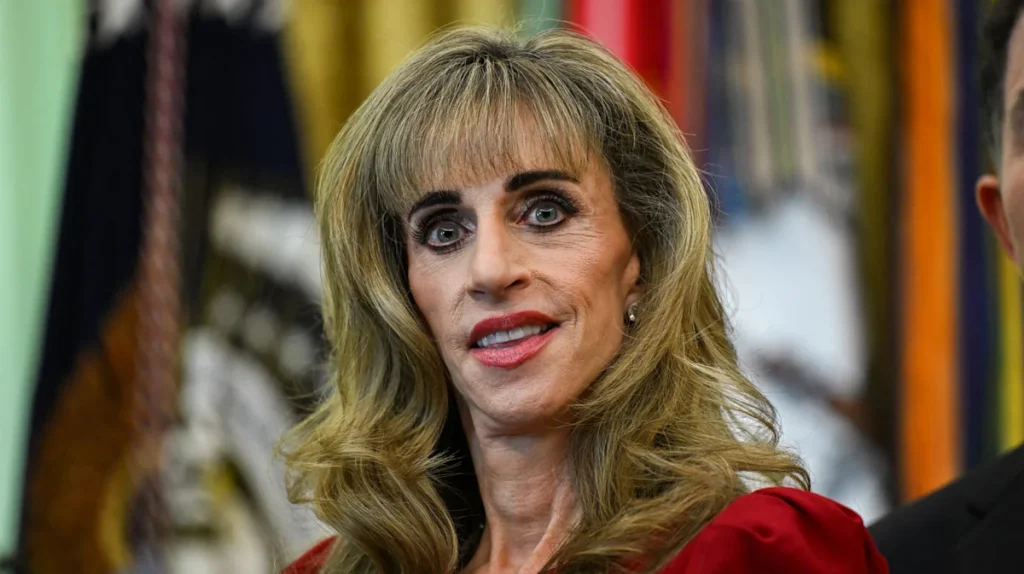
Susan Dell has spent decades building a life alongside one of the world’s most recognizable technology entrepreneurs, but her own story extends far beyond her marriage to Dell Technologies founder Michael Dell. From her early career in fashion and real estate to raising four children and helping direct billions of dollars toward charitable causes, Susan has established a public profile rooted in family, philanthropy and a long-standing commitment to improving children’s futures.
The couple have returned to the spotlight following their reported $6.25 billion commitment to Trump’s proposed children’s investment accounts, announced at the White House. The contribution has renewed interest in Susan’s life, her relationship with Michael and the philanthropic work that has become a defining feature of their partnership.
In a report published on October 9, 2026, HELLO! writer Faye James explored the couple’s relationship, tracing their romance from a blind date in Austin, Texas, to a marriage that has lasted nearly four decades. Their story offers a glimpse into how two people with different professional beginnings built a family and a philanthropic enterprise alongside the growth of a major technology business.
A blind date that changed their lives
Susan and Michael Dell met in 1988, when Susan had recently relocated to Austin to pursue opportunities in real estate. Their introduction came through one of her clients, who arranged a lunch that brought the two together.
At the time, Michael was already establishing himself as a young entrepreneur. Four years earlier, while studying at the University of Texas at Austin, he had founded a computer business known as PC’s Limited. The company would later become Dell Computer Corporation, laying the foundation for the technology empire associated with his name.

Susan’s recollections of their first meeting suggest that Michael stood out for reasons that had little to do with his growing business ambitions.
Speaking to Texas Monthly in an interview cited by James in HELLO!, Susan recalled that many men she had dated tended to talk extensively about themselves and attempt to impress her. Michael, she said, was different.
“He was the nicest guy I’d ever met,” she told the publication, adding that she had always known she would marry the greatest guy in the world.
Her account presents their first meeting as a personal connection rather than a relationship built around business status or financial success. Although Michael’s company was already developing, the qualities Susan remembered were his manner and the impression he made on her.
The timing also placed their relationship at an important point in Michael’s career. Dell’s direct-sales approach to personal computers was helping establish the company in a rapidly developing technology market. As the business expanded, his personal life was beginning a new chapter as well.
Their relationship developed quickly enough that they married the following year.
Building a marriage and raising four children
Susan and Michael married in 1989 in a ceremony that honored their Jewish traditions. Their marriage would become one of the longest-running partnerships among prominent figures in the technology industry.
Together, they welcomed four children: Alexa, Kira, Juliette and Zachary. While Michael’s professional life involved building and leading a major technology company, the couple also developed a family life in Austin, the city where they had met.

Their home, a sprawling estate known as “The Castle,” reflected the scale of the family’s resources. According to James’s report, the property features eight bedrooms, 13 bathrooms, several swimming pools and a tennis court.
The estate has become part of the public picture of the Dell family’s life, but the more consequential aspect of their partnership has been the way they have combined family responsibilities with philanthropic work.
Raising four children while managing substantial professional and charitable commitments creates a complicated balance for any family. For the Dells, their interest in children’s opportunities has also extended beyond their own household, eventually becoming central to their foundation’s work.
Their family life has remained comparatively private despite Michael’s international business profile. Susan, meanwhile, has developed her own professional and charitable identity, allowing her public role to extend beyond that of a technology executive’s spouse.
Susan Dell’s career beyond her husband’s technology empire
Before becoming widely associated with philanthropy, Susan pursued a career in fashion design and worked in real estate. Those experiences formed part of her professional life before and during the early years of her relationship with Michael.

Her background is an important part of understanding her later public role. Although her husband’s success made the Dell name internationally recognizable, Susan’s interests have included creative work, business and the practical challenges faced by families and communities.
Over time, philanthropy became a major focus of her work. Rather than limiting her involvement to ceremonial appearances or occasional charitable donations, she joined Michael in establishing an organization intended to support long-term improvements in people’s lives.
That transition helped shape the couple’s shared public identity. Michael is widely known for building a global technology company, while Susan has become increasingly associated with initiatives involving children, education, health and economic opportunity.
Her story also illustrates how the partners in high-profile business families can develop distinct professional roles while working toward common goals. Susan’s charitable activities have given her a platform of her own, particularly in Texas, where the foundation’s work has included responding to the needs of communities affected by natural disasters.
The Michael & Susan Dell Foundation: A long-term commitment to children
In 1999, Susan and Michael co-founded the Michael & Susan Dell Foundation, establishing a formal structure for their philanthropic ambitions.
The organization focuses on expanding access to education, medical care and economic mobility, with particular attention to children. Its work reflects a broad view of opportunity: young people need not only financial resources but also access to the institutions and support systems that can help them develop their abilities.

According to the foundation’s website, the organization has given away a reported $10 billion since its establishment in 1999. That figure places the couple’s philanthropic activities on a substantial scale and demonstrates the extent to which charitable giving has become part of their public legacy.
The foundation’s stated areas of interest also connect closely with the couple’s recent involvement in children’s investment accounts. Education, health and financial opportunity are distinct challenges, but they can influence one another throughout a child’s life.
Access to medical care, for example, can affect a family’s financial stability, while educational opportunities can shape a young person’s future employment prospects. Initiatives aimed at improving economic mobility seek to address the conditions that can prevent individuals and families from advancing.
The foundation’s approach therefore represents a long-term commitment rather than a focus on a single cause. Its work has helped establish philanthropy as a central component of the Dell family’s activities alongside the commercial success of Dell Technologies.
For Susan, that work has also created a lasting public role beyond her fashion background and marriage.
Recognition in Texas after Hurricane Harvey
Susan’s philanthropic contributions received further recognition in 2019, when she was inducted into the Texas Women’s Hall of Fame.
James’s HELLO! report links the recognition to the foundation’s efforts to help people in Texas following Hurricane Harvey. The storm, which struck the Texas Gulf Coast in August 2017, caused widespread flooding and significant damage, creating extensive needs for affected families and communities.
Disasters of that scale can leave consequences long after the immediate emergency has passed. Families may need help recovering housing, restoring financial stability and ensuring that children can continue their education. Recovery can be especially difficult for households with limited resources.
The Dell foundation’s involvement in helping Texans affected by Harvey formed part of the charitable work associated with Susan’s recognition.
Her induction placed her among a group of prominent women that included Olympic gymnast Simone Biles and former first lady Laura Bush. The recognition highlighted her contribution to philanthropy and the role of charitable organizations in responding to major community needs.
It also underscored the difference between the public image of wealth and the practical work required to direct resources toward people facing difficult circumstances. Large donations can attract attention, but the broader impact of philanthropy depends on how support reaches communities and addresses their needs.
For Susan, the Hall of Fame recognition added another dimension to a career increasingly associated with charitable initiatives and public service.
Why the $6.25 billion Trump Accounts commitment has brought Susan Dell into the spotlight
The Dells’ latest major philanthropic announcement has renewed attention on their family and charitable priorities.
According to James’s October 9, 2026, report for HELLO!, Susan and Michael pledged $6.25 billion to Trump’s proposed Trump Accounts, described in the article as investment accounts for children under the age of 18 in the United States.
Susan appeared at the White House on Wednesday to discuss the initiative and the response the couple said they had received from families.
“Over the past month, as our contribution has reached millions of children’s accounts, Michael and I have heard from so many parents and kids and grandparents with these beautiful letters that have truly moved us,” she said at the press conference.
Her remarks placed the emphasis on the families and children who, she said, had responded to the accounts. Rather than discussing the contribution solely in terms of its monetary value, Susan described the hopes that young people had shared with the couple.
“Children have told us that they want to become entrepreneurs. They want to become nurses, doctors, engineers. They want to build their own company someday,” she said.
The examples covered a range of ambitions, from starting businesses to pursuing careers in medicine and engineering. They also echoed the foundation’s longstanding interest in children’s futures and economic mobility.
Susan continued by emphasizing the importance of encouragement alongside financial resources.
“These things are so wonderful and so important. It’s not just the money that matters. That does matter, but knowing someone believes in you and your future, that matters just as much,” she said.
Her message framed the initiative as an investment in young people’s expectations of what they might accomplish, not simply an exercise in transferring money into accounts.
She closed with a direct message to children across the country, saying the accounts were for them and encouraging them to dream big.
The contribution is notable for its scale, but the details of its implementation and the eventual outcomes for participating children are important to distinguish from the announcement itself. A pledge, the distribution of funds and the long-term financial results of an investment program are separate matters. The announcement alone does not establish what balances individual children will ultimately accumulate or how much those accounts will influence their lives.
Those questions will depend on the program’s rules, the investment arrangements and the circumstances of the families involved.
Nevertheless, the pledge has placed Susan in a more prominent public role, with her own remarks helping communicate the couple’s stated reasons for supporting the initiative.
The connection between philanthropy and children’s financial futures
The Trump Accounts announcement fits within a broader discussion about how children can gain access to financial resources and how early investments might affect their opportunities later in life.
An investment account can provide a mechanism for setting aside money over time. Depending on its structure, contributions, investment performance, fees, withdrawal rules and the length of time funds remain invested can all influence its eventual value.
For children, a long investment horizon can be an important consideration. However, the existence of an account does not automatically remove the barriers that families face in education, healthcare, housing or employment. Financial assets are one potential source of support, not a substitute for every other form of assistance.
That distinction helps explain why the Dells’ foundation has focused on several areas rather than treating economic opportunity as a single issue.
Their philanthropic record, as described by the foundation and James’s reporting, encompasses education, healthcare and economic mobility. The children’s account commitment introduces another aspect of that broader interest: providing young people with a financial foundation that could support future ambitions.
It remains important not to conflate the foundation’s existing programs with the Trump Accounts initiative. They are separate efforts, and the precise relationship between their funding, administration and outcomes should be assessed using the relevant program details.
Still, Susan’s public remarks reveal a consistent theme in the way she describes the couple’s charitable priorities. She has emphasized the importance of believing in children and helping them imagine a future that includes opportunities currently beyond their reach.
Whether an investment account ultimately makes a measurable difference will depend on its design and how children can use the resources available to them. Its significance may vary considerably between households.
For families with limited savings, even modest financial resources can potentially help with future expenses. For others, the value may lie in building financial awareness or creating a foundation for longer-term planning. These are possible benefits rather than guaranteed outcomes, and the results will need to be evaluated over time.
A partnership shaped by business, family and giving
Nearly four decades after their blind date, Susan and Michael Dell have built a partnership that spans family life, business success and large-scale philanthropy.
Their story began before Michael’s company became the global enterprise now associated with his name. Susan met him when she was establishing herself in Austin, and their marriage in 1989 preceded the creation of their foundation by a decade.
Since then, their public lives have developed along connected but distinct paths. Michael’s career has been defined by technology and entrepreneurship, while Susan has built a substantial role in philanthropy and charitable initiatives.
Their four children have remained central to their family life, while their work through the Michael & Susan Dell Foundation has extended their interest in children’s futures to communities around the world.
The foundation’s reported $10 billion in giving since 1999 provides one measure of the scale of that work. Susan’s induction into the Texas Women’s Hall of Fame in 2019 offers another indication of the recognition she has received for her philanthropic activities.
The latest $6.25 billion commitment has brought those themes back into public view. At the White House, Susan spoke about children’s aspirations and the importance of adults showing confidence in their futures.
Her message reflects a philosophy in which financial resources are valuable but do not tell the whole story. Support, access to opportunity and the ability to imagine a different future can also shape how young people approach their lives.
The long-term impact of the Trump Accounts initiative remains to be seen. Its eventual significance will depend on the way the program operates and the benefits children receive over time.
What is already clear from the Dells’ public history is that philanthropy has become a defining part of their partnership. For Susan, the latest announcement has once again brought attention to a life that began far from the center of the technology industry and developed into a career focused on family, charitable giving and the opportunities available to the next generation.
Their relationship may have begun with an arranged lunch in Austin, but the public legacy they have built together now extends well beyond that first meeting.
The post Susan and Michael Dell: Inside Their 37-Year Marriage, Family Life and Philanthropic Legacy appeared first on Owink.
Source: Owink