If you think rising temperatures and changing precipitation patterns caused by the climate crisis will shift the tourism sector from the Mediterranean and Southern Aegean coasts to the Eastern Black Sea, you are mistaken. Expectations like “the population will increase in the Black Sea and a tourism boom will occur” are currently mere assumptions regarding the outcomes of the climate crisis.
Prof. Dr. Murat Türkeş, who conducts studies at the Boğaziçi University Center for Climate Change and Policy Studies and the Department of Physics, says, “The relatively abundant rainfall of the Eastern Black Sea does not automatically make it a safe migration region,” and paints a striking picture of future Turkey.
The map of future: Poverty

However, according to Prof. Dr. Murat Türkeş, reading this future solely through temperature maps is a major misconception.
Türkeş emphasizes that water availability, sources of livelihood, disaster risks, housing, and infrastructure services must be evaluated as a whole along with temperature in future settlements.
Stating that cool weather alone will not constitute a security guarantee, the scientist predicts that the climate crisis in Turkey will directly determine where and under what conditions people can live.
Noting that temperature is not the sole cause of climate crisis-related migration, Türkeş recalls that drought, crop loss, and water scarcity collapse rural life, while floods and fires lead to sudden displacement.
According to Prof. Dr. Türkeş, this process will further deepen social inequalities when combined with loss of income, unemployment, indebtedness, and problems in accessing public services. High-income families will be able to adapt to their current locations, while the poorest segments may be trapped in risky areas without even finding the means to move.
Migrants and ‘cool’ havens
According to projections by Prof. Dr. Murat Türkeş and his team, a distinct internal migration wave will form toward the Aegean, Marmara, Mediterranean, and Black Sea regions, originating not only from Eastern and Southeastern Anatolia, but also from Central Anatolia and Inner Western Anatolia.
However, Türkeş points out that this movement will occur not purely in search of cool weather, but through efforts to access jobs and services. Stating that the economic attractiveness of a recipient city does not mean it is exempt from climate hazards, the famous climate scientist says people may also flock to cities experiencing floods, extreme temperatures, or water shortages for the sake of a livelihood.
Clarifying the concept of ‘relative suitability,’ Türkeş states that suitable parts of Northeastern Anatolia, inland and high-altitude districts of Muğla, the plateaus of Aydın, and the surroundings of Çanakkale can be seen as more suitable compared to coastal plains.
Yet, according to Türkeş, the biggest risk begins right here: Opening a plateau or green area that is cool today to uncontrolled construction will exhaust water resources to the point of depletion, rapidly destroying that region’s climate advantage.
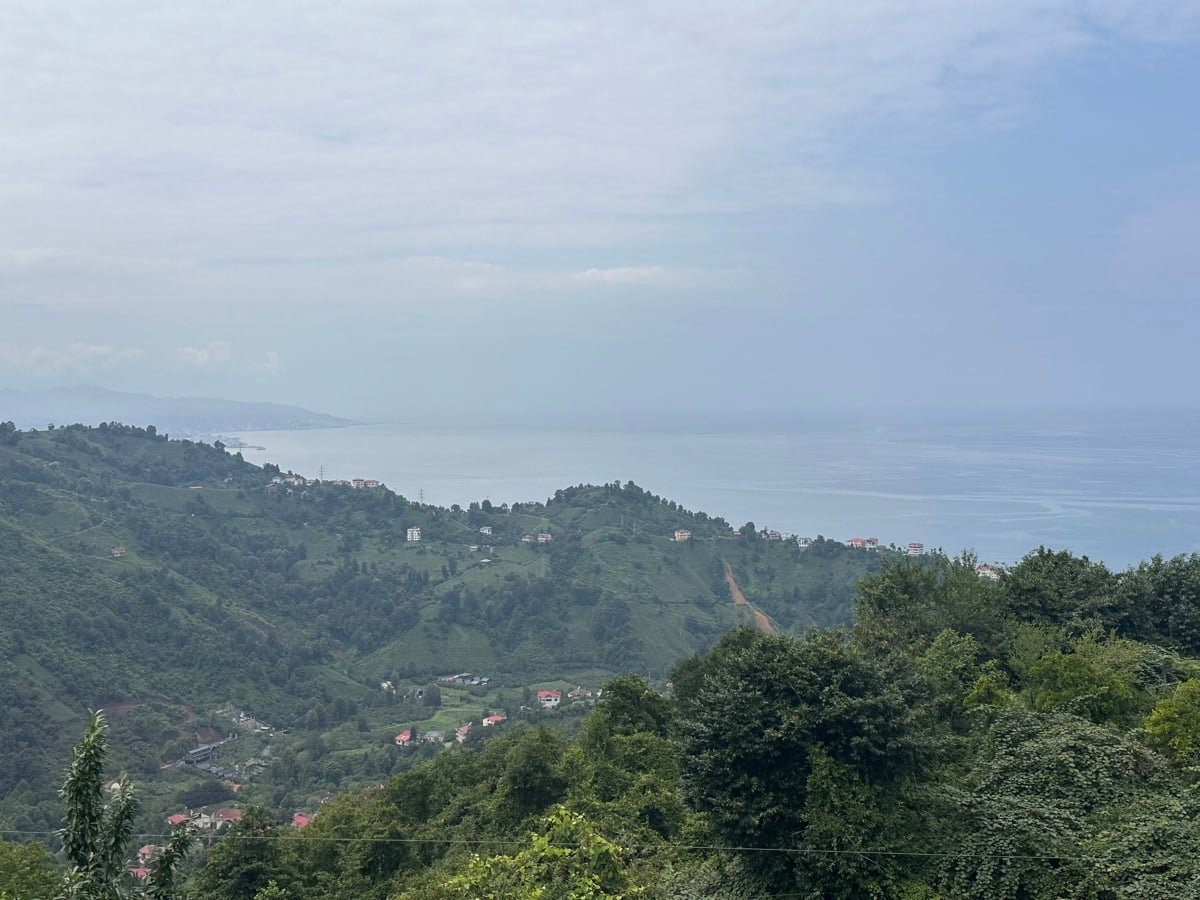
Speaking specifically about the Eastern Black Sea, Türkeş also notes that steep slopes, flood beds, deforestation, and high humidity levels will prevent sweating and put the human body under oppressive stress, meaning the region is not an ‘automatic haven’ as believed.
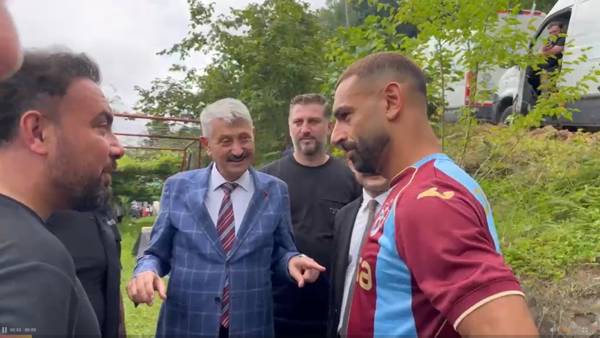
Mayor offers Mohamed Salah ‘climate change-proof’ land in Trabzon
6 August 2026
Collapse in agriculture and urban crisis risk
Projecting into the future of water and food security, Prof. Dr. Türkeş stresses that the water deficit will reach a vital level in the Konya Closed Basin, Central and Southeastern Anatolia, and the Aegean-Mediterranean plains.
Türkeş says, “In particular, the high-altitude and inland sections of the Muğla region and the high plateaus of Aydın may be more favorable options in terms of thermal comfort in the future compared to hot coastal plains. Our 2025 study with Yurtseven shows that semi-arid steppe and summer-dry, very hot Mediterranean climates are expanding. The 2041–2070 and 2071–2099 projections foresee the elevation of climate zones under very high emissions through warming and drying.”
He also reminds that the severe evaporation demand created by warming is enough to dry out the soil even if precipitation does not decrease.
According to Türkeş, small producers being crushed by rising irrigation costs and indebtedness will bring the food chain to a breaking point, while shifting production to the north or to higher altitudes will not always suffice to create new agricultural areas.
In parallel, predicting that recipient cities will face infrastructure crises, Prof. Dr. Türkeş notes that inadequacies in drinking water, transportation, health, and social housing will trigger unplanned growth. Emphasizing that municipalities must urgently match zoning plans with basin water budgets, Türkeş underlines that heat action plans, green infrastructure, and urban transformation are essential.
COP31 and Turkey
Stating that the way to protect future living spaces goes through concrete steps to be taken today, Türkeş points to the COP31 Climate Summit to be held in Antalya.
According to Prof. Dr. Murat Türkeş, Turkey urgently needs to implement a just transition program that does not create new fossil fuel dependencies and clarifies a coal phase-out schedule.
For Türkeş, real success will be measured not by the grandeur of summits, but by how much emissions are reduced and to what extent human vulnerability is lessened.
Emphasizing that the purpose in the climate crisis is not to drive people into forced migrations, but to ensure they lead a safe, healthy, and dignified life where they live, Türkeş calls on Turkey to act in the light of scientific data without losing time.
This article was produced with financial support from the Heinrich Böll Stiftung Turkey Office. The article is the sole responsibility of the IPS Communication Foundation/bianet and does not reflect the views of the Heinrich Böll Stiftung.
(EMK/CA/VK)
Sources
1. Türkeş, M., Tekin, M. K. ve Salli, D. (2026). Theoretical and conceptual evaluation of climate-related displacement and mobility. The Anthropocene Review. https://doi.org/10.1177/20530196261434015
2. Türkeş, M. ve Yurtseven, N. (2025). Observed and projected geographical and temporal changes in the Köppen- Geiger climate types in Türkiye. Theoretical and Applied Climatology, 156, 154. https://doi.org/10.1007/s00704-024-05346-2
3. Yurtseven, N. ve Türkeş, M. (2026). A comprehensive assessment of drought dynamics in Türkiye. International Journal of Climatology, e70541. https://doi.org/10.1002/joc.70541
4. IPCC (2022). Climate Change 2022: Impacts, Adaptation and Vulnerability. Bölüm 13 ve Akdeniz bölümü CCP4. https://www.ipcc.ch/report/ar6/wg2/
5. Türkeş’in AA Yeşil Hat açıklamaları: “İklim felaketleri nedeniyle artan göçler yasal düzenlemeleri acil hale getiriyor” (17.06.2026); “İklim dirençli gıda ve su güvenliği girişimine Türkiye öncü olabilir” (22.09.2026).
6. Tekin, M. K. (2023). Küresel İklim Değişiminin Göçler Üzerine Etkileri ve Türkiye’ye Dair Öngörüler. Doktora tezi, Van Yüzüncü Yıl Üniversitesi. Tez no 840442.
7. UNFCCC (2026). COP31 konferans bilgileri. https://unfccc.int/cop31
8. Türkeş, M. (2020). İklim değişikliğinin fiziksel bilim temeli II: Dünyada ve Türkiye’de gözlenen ve öngörülen iklim değişiklikleri ve değişkenliği. Toplum ve Hekim, 35(1), 3–31.
9. Türkeş, M. (2020). İklim değişikliğinin tarımsal üretim ve gıda güvenliğine etkileri: Bilimsel bir değerlendirme. Ege Coğrafya Dergisi, 29(1), 125–149.
10. Türkeş, M. (2024). Klimatoloji ve Meteoroloji. 3. basım, iklim değişikliği ve sıcak hava dalgaları bölümleri.
11. Türkeş, M. (2026). COP31, İklim Diplomasisinde Yükümlülükler ve Sözlerden Uygulamaya Geçiş İçin Yeni Bir Eşik Olabilir mi? İktisat ve Toplum, çevrimiçi yazı.
12. Türkeş, M., Turp, M. T., An, N., Öztürk, T. ve Kurnaz, M. L. (2020). Impacts of Climate Change on Precipitation Climatology and Variability in Turkey. Water Resources of Turkey, 467–491. https://doi.org/10.1007/978-3-030-11729-0_14
13. Tekin, M. K. ve Deniz, O. (2025). İklim Değişikliği Kaynaklı Göç Potansiyeli: Türkiye Üzerine Çok Boyutlu Bir Alan Araştırması. Coğrafi Bilimler Dergisi, 23(1), 236–263. https://doi.org/10.33688/aucbd.1517859
Source: BIANET