
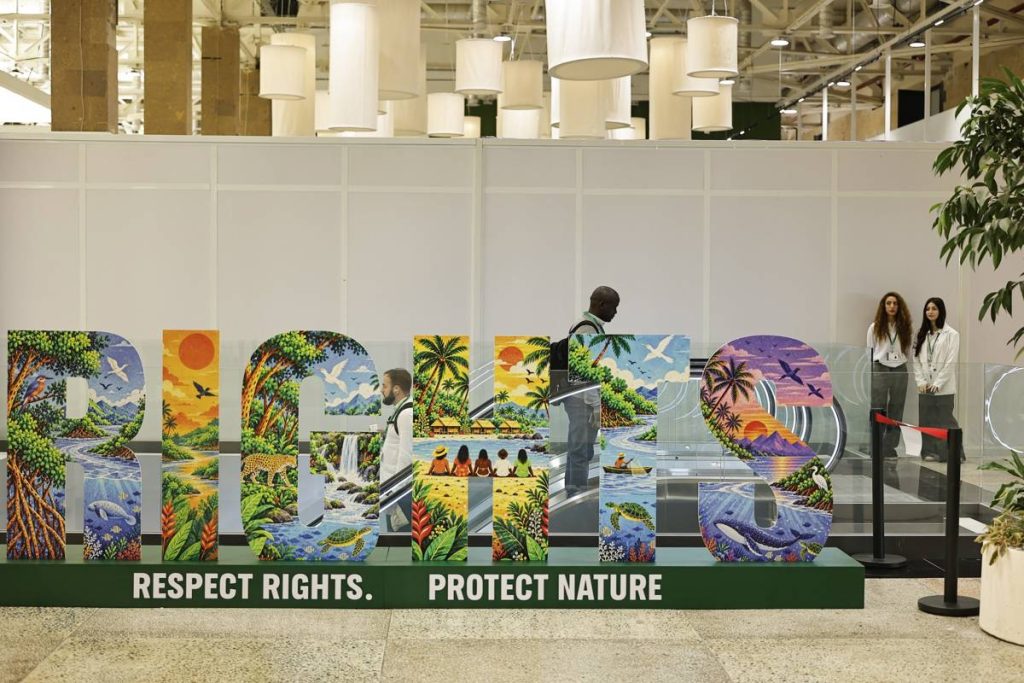
Turkey and Armenia share a border, the Aras and Arpaçay rivers and two biodiversity hotspots, yet no formal diplomatic relations. Scientists and biodiversity experts from the two countries warned that ecological problems do not end at the border and said that joint collaboration could benefit both countries.
The 33-year border closure between Turkey and Armenia has historically made collaboration difficult across a variety of sectors, including environmental protections, where both countries share similar interests due to shared geography.
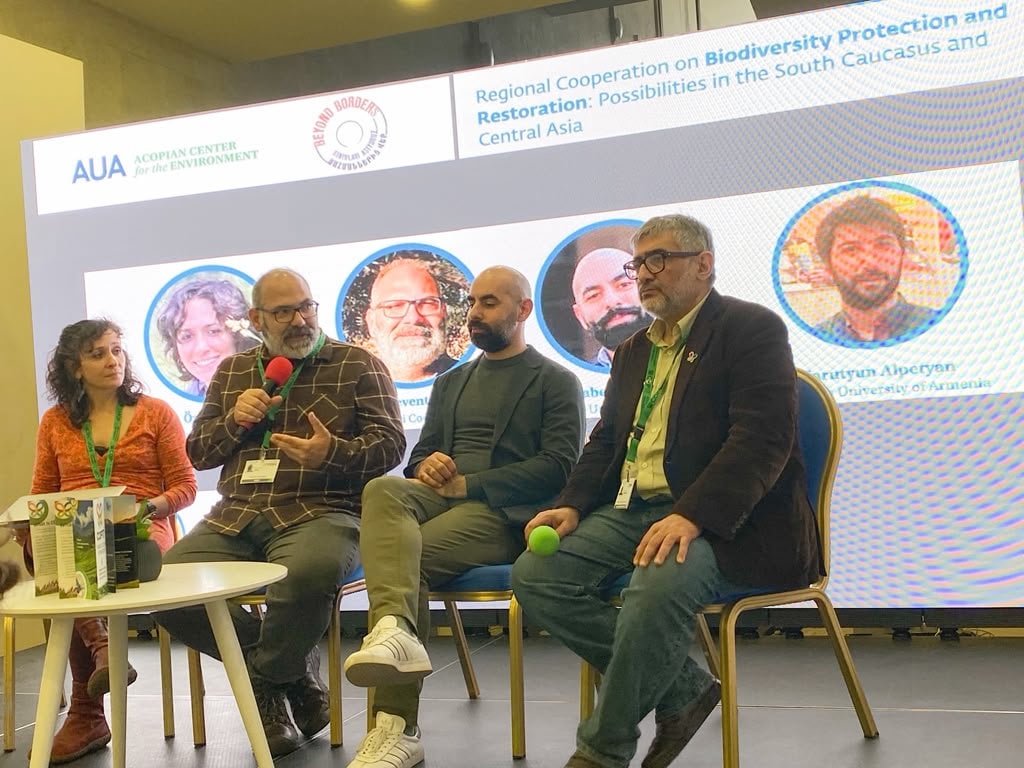
Scientists from both countries spoke at a COP17 panel in Yerevan, Armenia, titled “Regional cooperation on biodiversity protection and restoration: Possibilities in the South Caucasus and Central Asia.”
The talk discussed opportunities for joint collaboration among countries such as Turkey, Armenia and Georgia for the goal of biodiversity protection. Panelists noted opportunities for partnership on topics such as river management, data sharing and the study of shared biodiversity hotspots.
Human activites’ impact over groundwater
The Hrant Dink Foundation sponsored several environmental experts from Turkey to attend COP17.
One of these experts, who also spoke on the panel, was conservation scientist and conservation policy expert Itri Levent Erkol. Erkol said he attended in hopes of understanding how we can achieve a transboundary conservation scheme between Armenia and Turkey.
Erkol told bianet that river systems are among the most vulnerable in terms of climate change, thus necessitating that both Turkey and Armenia institute better transboundary management of the river system, including its subbasins and watersheds.
There is not much data sharing on water extraction from the Aras and Arpaçay rivers between the two countries and historically the rivers have been a cause of both diplomacy and tension between the two countries. They do hold some watersharing agreements inherited from the Soviet era. However, some critics have argued that Turkey has pursued a relatively unilateral water policy, ignoring the needs of downstream countries.
“We need to better understand how these human activities have an impact over the groundwater, because the river systems are also supporting the groundwater systems, and if they collapse we lose all the resilience of the landscape at the regional level,” Erkol said.
Erkol believes a better monitoring and evaluation scheme is needed to understand future risks posed by climate change and changes in land use. Scientists need to understand the needs of the rivers, their carrying capacities and how much water is being extracted from both the Armenian and Turkish sides, he said.
Call for collaboration
Another Hrant Dink Foundation COP17 attendee, İstanbul Technical University doctoral student Yeliz Ergöl, also noted the importance of information sharing between researchers across the border.
“We have joint programs with other countries to do collaborative research, so why not have one with Armenia and Turkey,” Ergöl said.
Ergöl also noted the need for government support in this regard.
“I think the academia, the researchers, in the university are already doing something together but I think that there has to be support from the government as well … of course the border [is] one of the biggest problems,” she said. “The collaborations between two countries are limited, but also more funding and more support is needed for researchers to do their analysis and research in the area together.”
Shared biodiversity
Garabet Kazanjian, professor at the American University of Armenia, said that Turkey and Armenia share significant overlap in species and climate, thus there could be significant exchange and lessons learned from each side of the borders. He said that scientists could replicate pilot projects done on one side of the border on the other.
Shared biodiversity hotspots were also a key point in the panel. Turkey and Armenia share the Caucasus and Irano-Anatolian hotspots. According to Erkol, the Caucasus hotspot simultaneously consists of many endemic plant species, but is one of the most degraded areas in the world.
Erkol believes that a good starting point for collaboration would be on biodiversity hotspots to better understand the shared species between the two countries. He said that nowadays species-by-species action plans are not as effective. Landscape and habitat level approaches provide a stronger understanding of the environment.
Ultimately, in addition to the opportunity to tackle global biodiversity concerns, the summit presented a unique opportunity for Turkish scientists to meet and collaborate with their Armenian counterparts. Istanbul University-Cerrahpaşa Professor Simay Kırca said that she enjoyed the opportunity to connect with Armenian colleagues
“It’s been great because the more we communicate the more we understand that we are dealing with similar demons, but also we share the same values, share very interesting and diverse cultural backgrounds as well … It’s incredibly easy to communicate actually because we understand each other,” Kırca said.
“Biodiversity knows no borders … it’s incredibly fluent and connected,” said Kırca. “Coming together makes it easy to connect the dots between the countries.” (İK/VK)
Source: BIANET