
Kadir Kaan Özçelik was among those killed in the Nov 9 explosion at the factory in Aliağa, İzmir. He had been working there for about three months after previously completing two summer internships with the company.
His sister, Şevval Özçelik, told bianet that her brother had accepted the job because he believed working at HABAŞ would strengthen his résumé.
About six weeks before the fatal explosion, Kadir Kaan Özçelik suffered burns to his hands at work, she said. Although the burns were serious enough to affect the use of his hands, he did not want the incident recorded as a workplace accident.
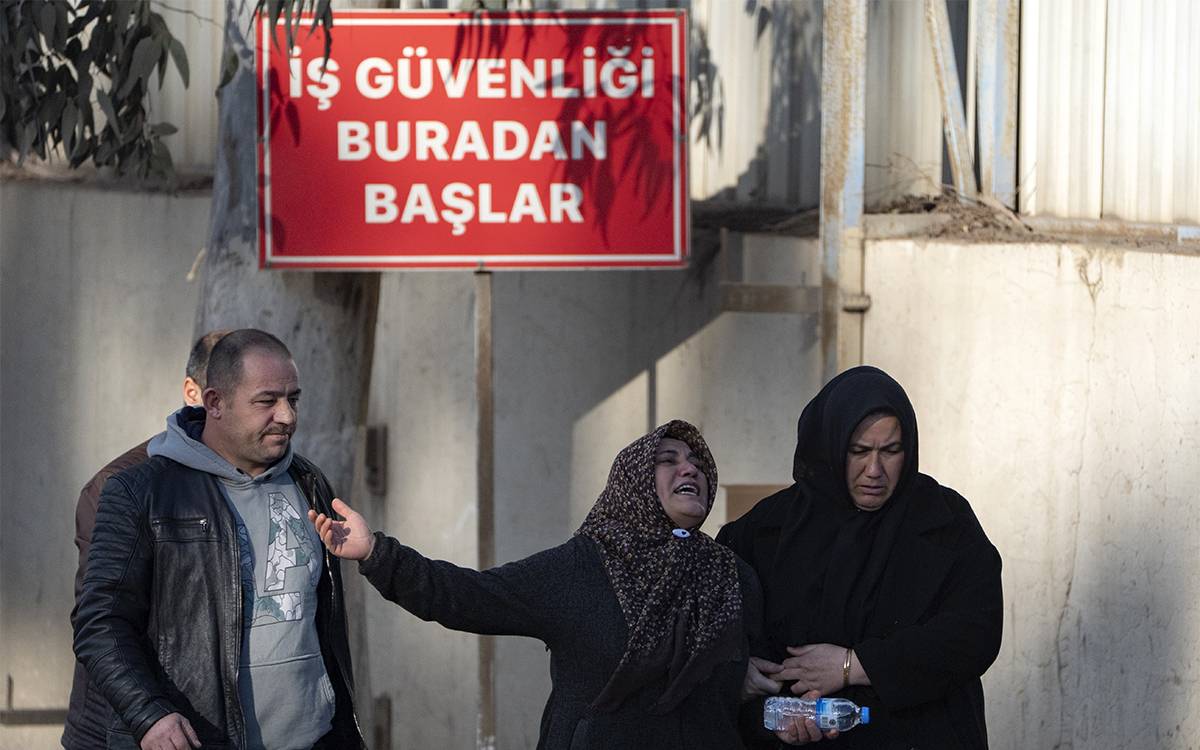
HABAŞ’s own report had documented a rise in workplace accidents
10 November 2026
“When we asked him why, he said people working there, or people partly responsible for the area, had told him things like, ‘If you have this recorded as a workplace accident, they will give you trouble, you won’t be able to find a job, they will fire you, you will struggle, and it will stain your résumé,'” she said.
Özçelik said her brother wanted to avoid problems because he was trying to support his family and pay for her private tutoring.
She said he had repeatedly spoken to family members and friends about serious safety problems at the factory.
“My brother died for 40,000 liras,” she said, adding that he worked in the machinery maintenance department. According to Özçelik, employees sometimes worked from 9 am until midnight on maintenance days instead of their usual 9 am to 5 pm schedule, without receiving overtime pay.
Özçelik also questioned whether the publicly reported death toll fully reflected the number of people killed.
“While I was waiting for my brother’s body, waiting outside the factory and going from hospital to hospital, I saw many people, many families, looking for their loved ones,” she said.
At the time of the explosion, Özçelik was taking a practice exam at a private tutoring center. Her parents learned about the blast and went directly to the factory.
“We searched until 7 or 8 in the evening, crying and dragging ourselves around, asking, ‘Is my brother under the rubble? Is he in a hospital?'” she said. “They hid from us who had died. They did not even make an effort to give us their names.”
She recalled asking a person responsible at the scene for a list of the dead and missing.
“We said, ‘Where is the list of the dead? Where is the list of the missing? Give us the list.’ The man said mockingly, ‘Find them, make those lists already,’ even though he was the person who was supposed to do it,” she said.
After the family learned of Kadir Kaan Özçelik’s death, they were directed to the Şirinyer Forensic Medicine Institute.
Özçelik said families were repeatedly told that severe burns were making DNA comparisons difficult and that announcements promised within half an hour were not made on time.
“Neither my mother nor I could see my brother’s body,” she said. “In the end, we could only see his hair. That was what we were deemed worthy of. My father asked someone he knew for help, and we were only able to get a limited look.”
Özçelik said she wanted those responsible to receive meaningful punishment rather than short prison terms.
“The dead cannot defend their own rights, that is our duty,” she said. “My brother is dead. I cannot bring him back. Even if I secure his rights, I will not gain anything. I will still be left with what I lost.”
She said she did not want other siblings or parents to experience the same loss.
“I don’t want anyone to have to settle for seeing their brother’s burned hair,” she said. “I want this to end, or at least to decrease, and I want those responsible to receive sufficient punishment. I don’t want them to spend three or five months in prison just for a media show and then be released.”
Özçelik, who will turn 19 on Nov 16, said her brother had been planning to buy her a birthday present.
“I had borrowed money from him. He told me, ‘I’m going to buy you a birthday present anyway. This can be on top of it,'” she said. “He gave me his last spending money and went to heaven.”
She said her brother had also wanted to grow his hair, lose weight and achieve the physique he wanted through fitness.
“He was sacrificed to someone else’s pursuit of profit,” she said.
Özçelik said one of her brother’s greatest wishes was for women and young girls in Turkey to be able to build careers and become financially independent, rather than having to depend on people who might hurt them.
“This is my second year after graduation, and my brother was paying for my tutoring center,” she said. “I will still study. I will go back to my tutoring center when I recover. But I no longer have a brother who will pay my tuition.”
This article was translated into English using an AI tool.
Source: BIANET