
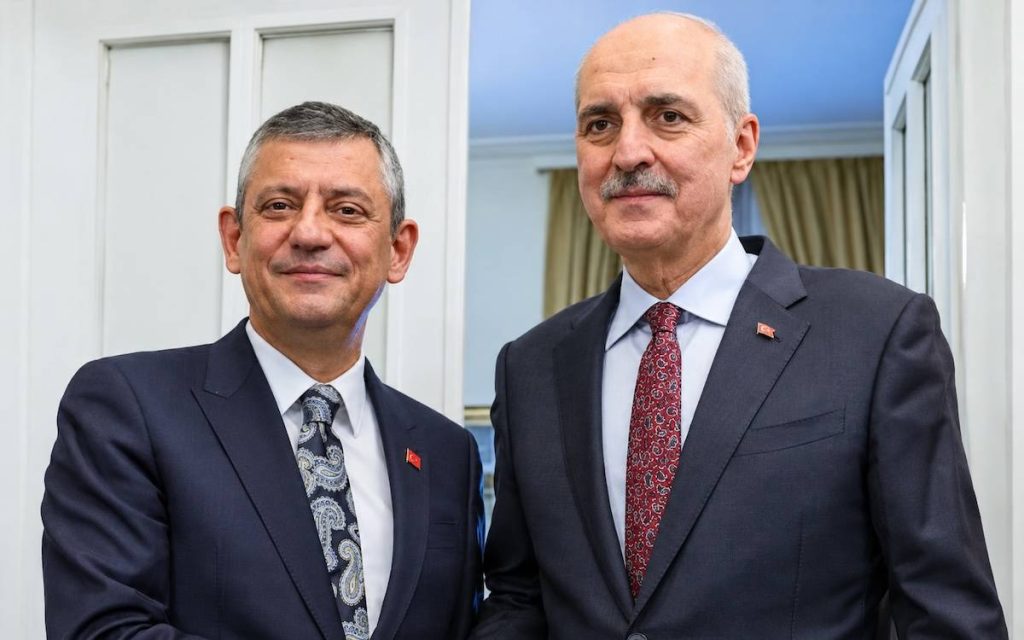
New Party (YENİ Parti) Chair Özgür Özel’s announcement that his party would not appoint lawmakers to a proposed parliamentary monitoring commission has sparked a political dispute over how Turkey’s peace process should proceed.
President Recep Tayyip Erdoğan criticized those refusing to participate in the process on Nov 19, while representatives of the pro-Kurdish Peoples’ Equality and Democracy (DEM) Party urged the main opposition to remain involved in negotiations.
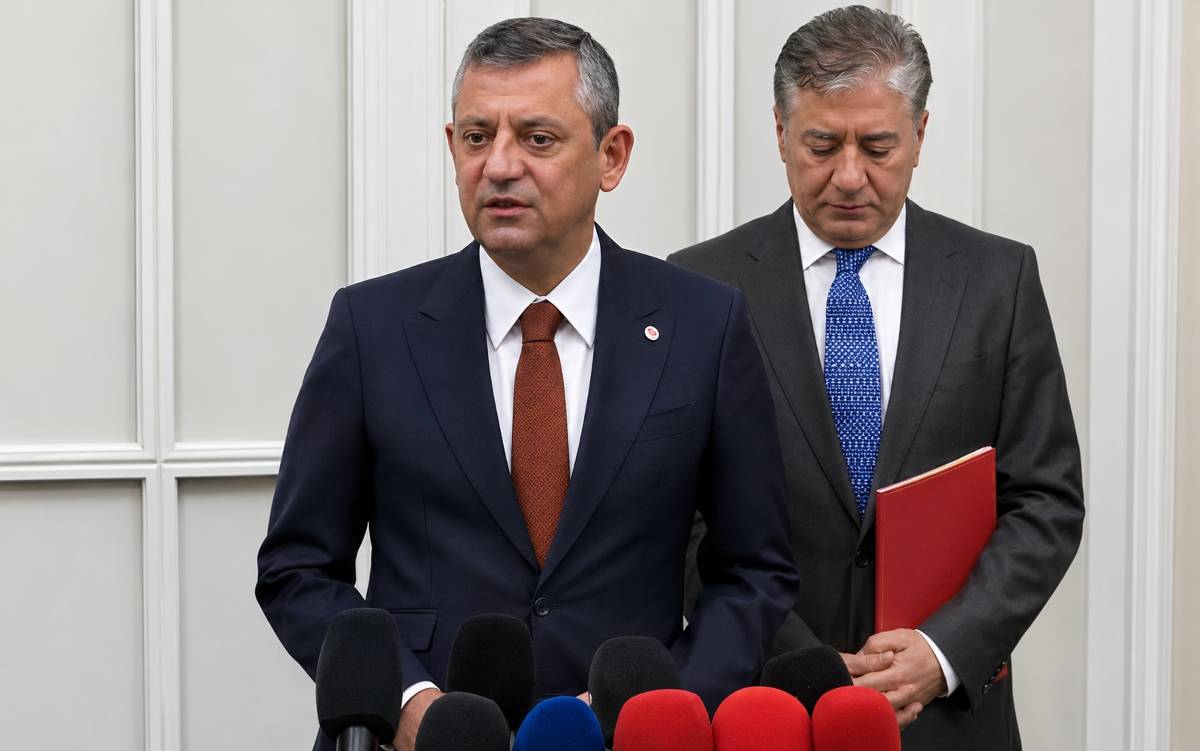
Özgür Özel rejects disarmament monitoring commission over unmet democratization pledges
19 November 2026
DEM spokesperson: “Weakens the democratic foundation”
The first response to Özel’s decision came from the DEM Party. Party spokesperson Ayşegül Doğan expressed concern over his remarks at a press conference at party headquarters.
“The peace and democratic society process can succeed only if concrete democratic reforms are introduced that build trust. For us, this is not even open to debate.
“Unfortunately, the criticisms voiced by New Party Chair Özgür Özel risk weakening the democratic foundation of the process. We therefore regard these statements as a position that could undermine that foundation.”
The opposition Republican People’s Party (CHP), led by Kemal Kılıçdaroğlu, announced that it would participate in the commission. Parliament Speaker Numan Kurtulmuş, meanwhile, said he had not yet received official responses from the parties.
The dispute extends beyond participation in the commission. It also concerns how an agreement reached by an earlier parliamentary commission on disarmament and democratization should be implemented.
Özel: “We have not abandoned the path to peace”
Following a meeting with Kurtulmuş on Nov 18, Özel announced his decision, saying, “We are not taking part in this.”
Addressing those calling on his party to participate, Özel said:
“Those who want us to be involved in this must first honor the promises they made to this country before history.”
Responding to T24 columnist Murat Sabuncu’s question about whether the decision represented a departure from his party’s peace policy, Özel reaffirmed his position on Nov 19.
“We have not abandoned the path to peace. The government has abandoned the path to democracy. That is what should be discussed.”
Özel said his party had supported disarmament from the outset but maintained that democratization must proceed alongside it.
He cited the continued appointment of government trustees to municipalities, the failure to implement Constitutional Court and European Court of Human Rights (ECtHR) rulings, the imprisonment of journalists and the appointment of trustees to television channels as reasons for his decision.
Özel said his party stood by its endorsement of the previous commission’s report, while accusing the government of failing to fulfill its democratization commitments.
He stressed that refusing to join the monitoring commission did not mean abandoning the goal of social peace.
CHP: “We stand by our signature and our vote”
CHP Deputy Parliamentary Group Chair Sevda Erdan Kılıç outlined her party’s position while answering reporters’ questions following a press conference in parliament.
“We put our signature on that law and voted for it. We stand by both our signature and our vote.”
Kılıç confirmed that the CHP would appoint one lawmaker to the monitoring commission.
The decision marks a divergence between the CHP, which supported the previous parliamentary commission’s report and the framework law, and Özel’s YENİ Parti over participation in the new commission.
Erdoğan: “Those evading responsibility will be held accountable”
President and ruling Justice and Development Party (AKP) Chair Recep Tayyip Erdoğan criticized those refusing to participate in the process during his party’s Expanded Provincial Chairs Meeting on Nov 19, without naming Özel.
“Those who evade responsibility on such an issue, take instructions from others and use absurd arguments to dodge the question will, I say this clearly, be held accountable by the people.”
Erdoğan described the “Terror-Free Turkey” initiative as a strategic state project and called on political parties to support it.
However, his speech did not separately address Özel’s specific objections concerning government-appointed trustees, court rulings and the democratization recommendations of the previous commission.
Temelli: “Staying out of negotiations weakens the struggle for democracy”
DEM Party Deputy Parliamentary Group Chair Sezai Temelli told Diren Yurtsever of Yeni Yaşam that his party had not expected YENİ Parti’s decision.
Temelli argued that the struggles for peace and democratization could not be separated.
“Staying out of negotiations today also means undermining and weakening the struggle for democracy.”
Temelli also criticized the government’s approach to the process, saying it reduced the issue to disarmament alone.
However, he argued that delays in democratization should be a reason to continue the struggle in parliament rather than withdraw from negotiations.
Sakık: “You have a responsibility to history”
DEM Party lawmaker Sırrı Sakık, representing Ağrı, delivered a stronger criticism of YENİ Parti during a parliamentary session.
“The main opposition party must be part of this process. You cannot bear witness to history by remaining outside it. You have a responsibility to history.”
Sakık recalled the Kurdish political movement’s support for the opposition in previous elections, the Social Democratic Populist Party’s (SHP) report on the Kurdish issue, and the CHP’s 2023 protocol with Ümit Özdağ.
He said resolving the Kurdish issue on the basis of equal citizenship required legislative and constitutional changes.
Sakık described participation in the commission as part of the main opposition’s historical responsibility.
Hatimoğulları: “Do not confine peace to your own interests”
DEM Party Co-Chair Tülay Hatimoğulları addressed both the government and opposition during a meeting with neighborhood and village heads in Adana.
“None of you should confine this process narrowly to your own interests or approach it in this way for your own benefit.”
Hatimoğulları described the cessation of deaths in the conflict as an important achievement.
However, she said detentions, arrests and anti-democratic practices were having a negative impact on the peace process.
Kurtulmuş: “No official response yet”
Parliament Speaker Numan Kurtulmuş said following his visits to political parties that Özel’s announcement did not constitute a formal notification.
“I have not been given a clear answer in any of our meetings. I go by official correspondence.”
Kurtulmuş said the number of members of the new commission had not yet been determined and that it could be smaller than the previous 50-member commission.
He explained that the commission’s primary responsibilities would be to monitor the executive branch’s work on disarmament on behalf of parliament, facilitate communication between the legislative and executive branches, and inform the public about developments.
İYİ Party also refuses to participate, but for different reasons
Nationalist Good (İYİ) Party Chair Müsavat Dervişoğlu announced his party’s decision following a meeting with Kurtulmuş on Nov 17.
“As the İYİ Party, we informed him that we would not participate in the monitoring commission to be established. But we also stated that we would follow all of the commission’s work.”
The İYİ Party had also opposed the previous commission and the framework law.
YENİ Parti, by contrast, cites the failure to implement the democratization provisions of a report it previously supported.
The two parties’ decisions not to participate therefore stem from different political positions.
Central dispute: What will the commission monitor?
Özel’s objection centers on what he describes as the failure to implement the democratization recommendations in Chapter 7 of the previous commission’s report, while steps are being taken to monitor disarmament under Chapter 6.
DEM Party representatives also acknowledge the need for democratization but argue that these demands should be pursued within the negotiation process.
The CHP, meanwhile, supports participating in the commission established under the framework law it helped pass.
This article was translated into English using an AI tool.
Source: BIANET