
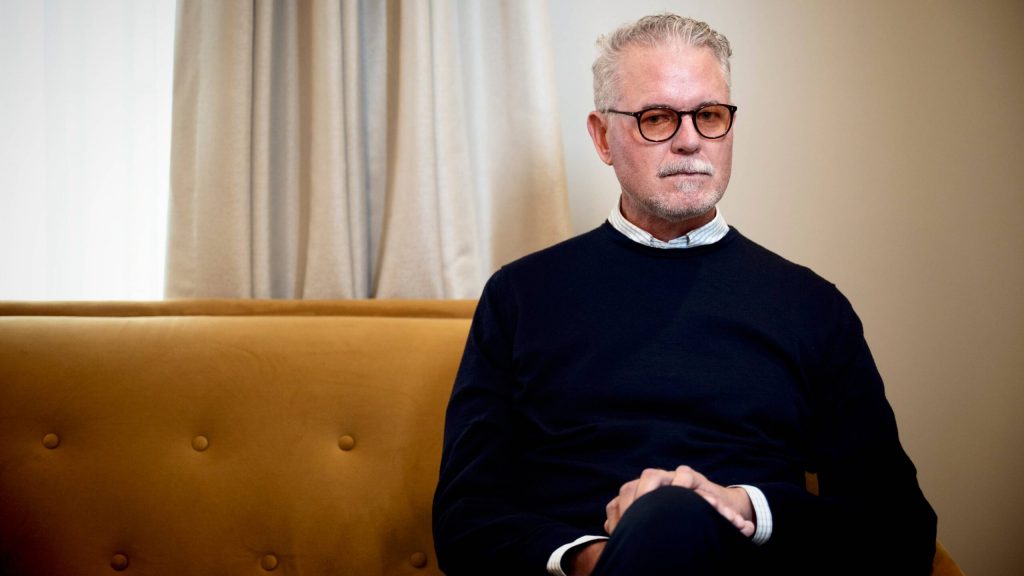
Eric Dane’s forthcoming memoir offers an intimate account of the moment his battle with amyotrophic lateral sclerosis (ALS) changed one of his most cherished traditions with his daughter Billie, transforming a familiar embrace after a ballet performance into a deeply emotional memory of love, loss and the enduring bond between father and child.
In an excerpt from My Book of Days: A Memoir in Moments, published by People and reported by Faye James for HELLO!, the late Grey’s Anatomy and Euphoria actor recalled attending his daughter’s December 2025 production of The Nutcracker. By then, the progressive neurological disease had significantly affected the use of his arms, leaving him unable to wrap them around Billie as he had done after performances in the past.
“Billie, I’m so sorry. I’m so sorry I can’t wrap my arms around you,” Dane wrote, describing the painful realization that he could no longer offer his daughter the familiar hug.
Rather than allowing the moment to be defined solely by what his illness had taken away, the actor recalled how Billie responded by embracing him instead. The two cried together, sharing a moment of vulnerability that became one of the memoir’s most moving recollections.
For Dane, the encounter also carried a sense of possibility. He imagined that the moment might mark the beginning of a new tradition with his daughter, one shaped by the circumstances of his illness but sustained by the affection between them.
The memory captures a central theme of his final writings: even as ALS changed the physical realities of his life, his relationship with his daughters remained at the heart of his experience.
A father’s memories preserved for his daughters
Dane’s memoir, My Book of Days: A Memoir in Moments, is scheduled for publication on November 3 by The Open Field. Rather than presenting his life solely as a chronological account of a Hollywood career, the book brings together significant moments that shaped his personal and professional journey.
According to the details reported by HELLO!, the memoir explores his early ambitions in Hollywood, his recovery from addiction and the perspective he developed following his ALS diagnosis. It also considers the future his daughters would face after his death, with passages intended to give them a way to revisit their father’s thoughts as they grow older.

That purpose gives the account of Billie’s ballet performance particular significance. The incident is not simply a recollection of a difficult day; it is also an example of the kind of personal memory Dane chose to preserve for his children.
The memoir’s focus on individual moments allows readers to encounter the actor through experiences that extend beyond his public image. For audiences who knew him through television, his account of an ordinary family ritual interrupted by illness offers a more personal perspective on the man behind his best-known roles.
Fatherhood, in this telling, is expressed through small gestures as much as through major milestones. A hug after a daughter’s performance may seem routine, but its importance becomes clearer when illness makes that gesture impossible. Dane’s recollection preserves both the sadness of that change and the emotional closeness that remained.
The book also documents the way a life shaped by ambition, professional achievement and personal challenges was reframed by a serious diagnosis. Its reflections on the future suggest that Dane was concerned not only with recording his own experiences but also with leaving his daughters a personal account of how he understood them.
From Hollywood breakthrough to a defining television role
Dane built a career that brought him into the homes of millions of television viewers, but one of his most recognisable characters emerged from a role that was not initially intended to become a lasting part of a series.

His appearance as Dr Mark Sloan in Grey’s Anatomy in 2006 was originally planned as a guest role. The character, whose confidence and complicated relationships helped make him memorable, developed into a defining part of Dane’s career.
The transition from guest performer to an established presence on a popular television drama illustrates how a single opportunity can change an actor’s professional trajectory. Mark Sloan became closely associated with Dane, introducing him to a broad audience and helping establish his place in the ensemble of the long-running medical series.
Dane later reached another generation of viewers through Euphoria, demonstrating the continuing reach of a career that crossed different television eras and audiences.
Yet the memoir’s personal recollections place those achievements alongside experiences that cannot be measured through screen time or professional recognition. The story of Billie’s ballet performance brings attention to a different dimension of his life, one in which his most meaningful role was not played before a camera.
The contrast is significant without diminishing his work as an actor. His career provided the public with characters and performances, while his memoir offers a record of the family relationships that shaped his private life.
Living with ALS and confronting the loss of physical independence
Dane publicly announced his ALS diagnosis in April 2025. Amyotrophic lateral sclerosis, also known as motor neurone disease in some countries, is a progressive neurological condition that affects the nerve cells responsible for controlling voluntary muscles. As the disease advances, people can experience increasing difficulty with movement and other essential physical functions.
The condition can affect individuals differently, and the pace and pattern of progression vary. In Dane’s account of the December 2025 performance, however, the impact on his arms had become significant enough to prevent him from giving Billie the embrace she expected.

That detail makes the memory particularly affecting because it describes the consequences of illness through a familiar human experience rather than through medical terminology. The inability to complete a simple gesture communicates the way a progressive disease can alter everyday interactions with the people closest to someone.
For families living with serious illness, such changes can carry emotional weight beyond their immediate physical implications. Shared routines often provide continuity and reassurance, especially during periods of uncertainty. When a routine becomes impossible, family members may have to find other ways to express the same affection.
Dane’s recollection of Billie embracing him instead illustrates that adjustment. The exchange did not restore his ability to hug her, but it allowed the moment to remain an expression of closeness rather than becoming only a reminder of his limitations.
His reflections also fit into the broader role that personal testimony can play in raising awareness of ALS. Accounts from people living with the disease can help audiences understand its effects on relationships and daily life, dimensions that statistics and clinical descriptions alone may not fully convey.
Following his diagnosis, Dane became an advocate for ALS awareness and research. A statement issued by his representative after his death recognised his determination to make a difference for others facing the illness.
The memoir therefore carries both a personal and a wider significance: it preserves his own experience while forming part of a public conversation about a condition that affects patients, relatives and caregivers.
Rebecca Gayheart and the family that remained central to his life
Dane shared his two daughters, Billie and her younger sister Georgia, with actress Rebecca Gayheart. The couple married in October 2004, and their family remained an important part of the story surrounding the actor’s final months.
Gayheart filed for divorce in 2018. In March 2025, shortly before Dane publicly disclosed his ALS diagnosis, she requested that the divorce petition be dismissed. The timeline is part of the publicly reported account of their relationship, although it does not, by itself, establish every reason behind their decisions.

Following Dane’s death on February 19, 2026, at the age of 53, his representative confirmed that he had spent his final days with friends, Gayheart and their daughters.
That statement offered a glimpse of the people surrounding him at the end of his life without reducing the complexity of family relationships to a single description. It also placed his daughters at the centre of the story of his final days, consistent with the importance he gave them in his memoir and his recorded farewell.
The ballet memory adds another layer to that picture. Gayheart’s place in the family’s history and the girls’ relationship with their father form part of the personal circumstances through which Dane’s illness unfolded. The published account, however, does not suggest that every private detail of the family’s experience is known.
What is clear from the memoir excerpt is that Dane wanted to preserve the emotional reality of his relationship with Billie, including a moment in which physical limitations prevented him from expressing affection in his customary way.
A recorded farewell intended for Billie and Georgia
The memoir is not the only record Dane left for his daughters. In November 2025, he recorded an interview with Brad Falchuk for Netflix’s Famous Last Words, a programme designed to release the conversation after the subject’s death.
At the conclusion of the interview, Falchuk left Dane alone so he could address Billie and Georgia directly. The resulting message combined recollections of family beach holidays with advice about how the girls might approach the years ahead.
Dane encouraged them to live in the present, discover a passion, choose supportive friends and meet difficult circumstances with determination. The advice reflected a father’s attempt to communicate values he hoped would remain useful to his daughters after he was no longer there to guide them in person.
The interview was released on February 20, 2026, one day after his death. Its posthumous release gave viewers an opportunity to hear Dane speak in his own words about the people and experiences that mattered most to him.
His closing message was direct and deeply personal: “Billie and Georgia, you are my heart. You are my everything. Good night. I love you. Those are my last words.”
The words provide a striking connection between the recorded interview and the memoir. In both, Dane’s attention turns away from the demands of public life and toward the future of his daughters. The interview gives them a final spoken message, while the book preserves written reflections they can return to over time.
Together, the two projects form a record of his efforts to remain present in his children’s lives even as he confronted the prospect of leaving them.
Turning painful memories into a lasting legacy
Dane’s account of the Nutcracker performance stands out because it does not attempt to conceal the sadness of the experience. His apology to Billie acknowledges the physical change brought about by ALS, while her response demonstrates that the relationship between them was not defined by what he could no longer do.
The possibility of a new tradition offers a gentle counterpoint to the loss. It does not erase the difficulty of the moment or suggest that illness can be overcome through optimism alone. Instead, it reflects an adjustment made within the reality of a progressive disease.
That distinction is important to the meaning of the memoir. The book does not present Dane’s experiences solely as a sequence of professional successes or as a story defined by his final illness. Its structure, built around significant days and moments, allows joy, regret, achievement and vulnerability to exist alongside one another.
For Billie and Georgia, the published recollections may provide a way to encounter aspects of their father’s life that they were too young to understand fully when those experiences occurred. As they grow older, the memories can offer additional context for his choices, his struggles and the values he hoped to pass on.
For readers, the account offers a portrait of a father navigating the loss of physical abilities while trying to preserve the closeness he shared with his children. Its emotional force lies not in an elaborate farewell but in a brief exchange between a father and daughter after a ballet performance.
Dane’s career gave him a public legacy through characters that continue to be associated with his name. His memoir and final recorded interview add a more private dimension to that legacy, preserving his reflections on family, adversity and the importance of the people who surround us.
The embrace Billie gave him in place of the hug he could no longer offer remains at the centre of that story. It is a memory of physical loss, but also one of connection: a moment in which a familiar tradition changed, while the affection behind it endured.
The post Eric Dane Memoir Reveals Heartbreaking Moment With Daughter Billie After ALS Diagnosis appeared first on Owink.
Source: Owink