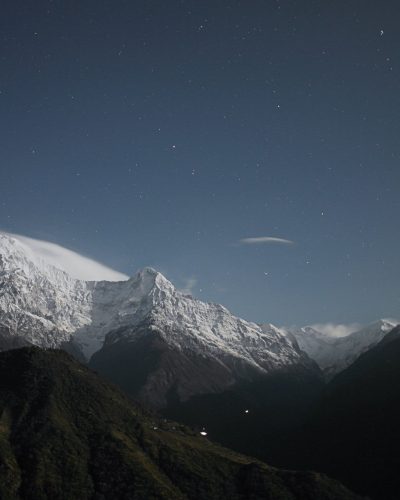

Date: July 9–10, 2025 – Qandil Mountains…
Every date etched into the forehead of the Kurdish people finds its echo in the body of a mountain. These echoes sometimes become laments, sometimes uprisings; but today, in Qandil, the mountains become the walking heart of a people. And that heart now beats slowly but resolutely.
We are in Qandil. As the sun strikes the mountain’s side, the valley stands before us like a heavy burden. The air here is not just cool because it’s morning, the landscape is not just naturally beautiful; even time speaks with history here. Every stone carries a language. Every tree grows leaning against a name.
Together with my journalist colleagues, Ciwan Tunç, Amara Harun, Deniz Gafur, Roger Westan, and Nujiyan Isyan, we are witnessing and recording each moment of the guerrillas’ preparation. But we are not merely observing, writing, or documenting. What we see here today cannot only be recorded; it must be felt and carried. This is not a report. This is a trace. We are witnessing the moment when a people take their fate into their own hands.
There is a hidden language under every stone, a name carved into every tree trunk. This mountain is not just territory; it is memory speaking silently through paths walked, oaths taken, and comrades lost. What you step on is no longer just soil, it is the back of history, the burden of a people.
Now, time flows differently on this mountain. Every moment carries not only the present, but also the past and the future. Thirty guerrillas who joined the Peace and Democratic Society Group will leave this valley tomorrow [11 July] to burn their weapons. Each of them has spent years embodying the guerrilla identity; now they are preparing for a different march. This journey is not only toward the plains. It is also toward the next chapter of history.
There is calm activity in the camp, no rush, no confusion. Everything flows with the discipline internalized over years. On the morning of 9 July, the guerrillas watch the first video message from Leader Apo [Abdullah Öcalan] to be released in 26 years. But their eyes are not on the screen; in that moment, each one of them sees their people. This is not just watching, it is remembering, reaffirming, and charting a direction.
That sound is not merely that of a leader’s voice; it is the place where history begins speaking again to the people. Every expression on their faces means the appropriation of an idea. This moment is not about a camp in the mountains, it is about a doorway opening in the political conscience of a people.
Today, the Kurdish people are making a decision, not to descend from the mountains but to redefine the struggle in the plains, not to abandon arms but to build with words, not to end the fight but to transform it. This is no ordinary transition. This is the ideological evolution of a 50-year resistance.
Tomorrow, 11 July, when the weapons are burned, it will not simply be an act. It will be a handshake with history.
By evening, preparations are nearly complete. There is no tension, no dramatized farewell in the camp. Everyone knows what they’re doing. Years of organized life make even this moment feel routine.
The guerrillas carry out final checks. Some tighten their packs, others joke with comrades, giving playful shoulder bumps. Joy and discipline coexist. This is not a departure; it’s a step toward joining a new form of struggle.
No one believes this will be their last time crossing this valley. “We’ll be back,” one says with a smile. A reply quickly follows: “But not with weapons. We will be carrying something else.” Everyone smiles, but no one feels lighter. Because every step here leaves a mark not only on the ground but on history.
No gaze is fixed on the past. Every face is focused on today. These people are not returning from war, they are walking toward a new form of struggle. The direction of this walk is not just out of the mountains or into a ceremony. It is a walk where a people carries its body onto the political stage.
Every guerrilla in this group has engraved the language, discipline, and aesthetics of the mountain into their being over the years. Now, with that same consciousness, they step in another direction. Weapons are no longer on their backs, ideas are on their shoulders.
We approach them. The conversations are short, clear, and direct. No one is weighing their decisions anymore. The choice has long been made. When a woman guerrilla says, “We are walking with a historic mission,” it is not individual resolve, it is the organized conscience of a people.
Preparation is complete. The guerrillas line up. There is a palpable intensity, different from the usual rhythm of the camp. The decision is clear, but emotions are not absent. This march is not just the completion of a mission, it is the transformation of a life, a shared idea, into a new form.
Few words are needed. But in every look, every embrace, every hand on a shoulder, there is a feeling forged in organizational loyalty. Nothing is ending, but something is shifting. This is not just the moment of action, it is a collective recording of time lived together.
HPG Commanders Amed Malazgirt and Seyîdxan Dersim bid farewell to each guerrilla. The embraces are brief, but they carry weight. It is not the person walking, it is a consciousness entrusted with a mission. Those staying behind also know: this is not a retreat — it is the relocation of an organizational position.
The Qandil valley is left behind. But what remains is not emptiness, it is a continuing organization and a struggle with continuity. Every step taken is not part of the past, but part of an organized future.
Morning of 11 July — Outside the cave of Şikefta Casenê, above the village of Surdaş in Sulaymaniyah’s Dukan district.
The guerrilla group from Qandil has arrived in the designated area. Each has spent years on the mountain path. But today, those years are not merely a past, ey are the foundation of a new phase. This is not a withdrawal, t is an organized, open, strategic transition.
And then comes the most symbolic moment of the action.
After a statement is made, the guerrillas place their weapons into a cauldron. But this is not a casual act. Every move is deliberate, neither rushed nor theatrical.
The weapons are not thrown away like burdens but placed as expressions of organizational responsibility. Each is treated not just as metal, but as a piece of history. Kalashnikovs, BKCs, rocket launchers, each one is carefully laid down. No one hurls or discards them.
There is a gaze, a posture, a transfer. In this act, there is no war, there is organizational awareness, people’s dignity, and political grace. This is not discarding a weapon, it is respectfully placing the final link of a completed chapter.
The fire is lit.
As the flames touch the metal, bodies do not flinch. Eyes are on the fire, but minds are elsewhere, in the future, because what’s burning is not just iron, it is the weight of a mode of struggle. That weight will now be carried in a new form. There are no dramatic gestures, no overstatements, no symbolic theatrics. Because the guerrillas are not performing here.
What’s happening here is the self-organization of a people’s will, shifting from the aesthetics of war to the aesthetics of politics. The flames rise. And the guerrillas do not turn to say final words to the fire. Because this is not a farewell, this is the first stop of a journey that will continue on another ground.
Today, in front of the Casenê cave, not just a decision was declared, a people’s stance before history was proclaimed. These mountains were not only a space of defense for Kurds, they were places where thought, memory, and identity matured. And now, the will shaped in these mountains shows it is ready to speak in another language, a language whose address has been defined by Leader Apo’s call.
The Kurdish people have grown not with what they lost in this struggle, but with what they never gave up. And today, they have declared their readiness to transform that struggle, not in the mountain’s shadow, but under the sun of politics and with the people’s will.
The guerrillas are returning. But they no longer carry weapons. They carry a political burden on behalf of the people. That burden bears both the legacy of decades of resistance and the will to rebuild in the coming years.
These mountains are still theirs. But this time, shaped by Leader Apo’s call, they will speak not with the mountain’s language, but with the people’s.
Because this is the new form of struggle: to build with words, transform through politics, and construct with the people.
And the fire lit today illuminates not only the weapons of the past, but also the path to the future.
For Kurds, fire was never just about burning; it was about igniting a language, rebuilding a people. What rises from this flame is the political will of a people who have reckoned with their ashes. That will is now setting out, not to descend from the mountain, but to make the plains as free as the mountain.
Source: ANF News