
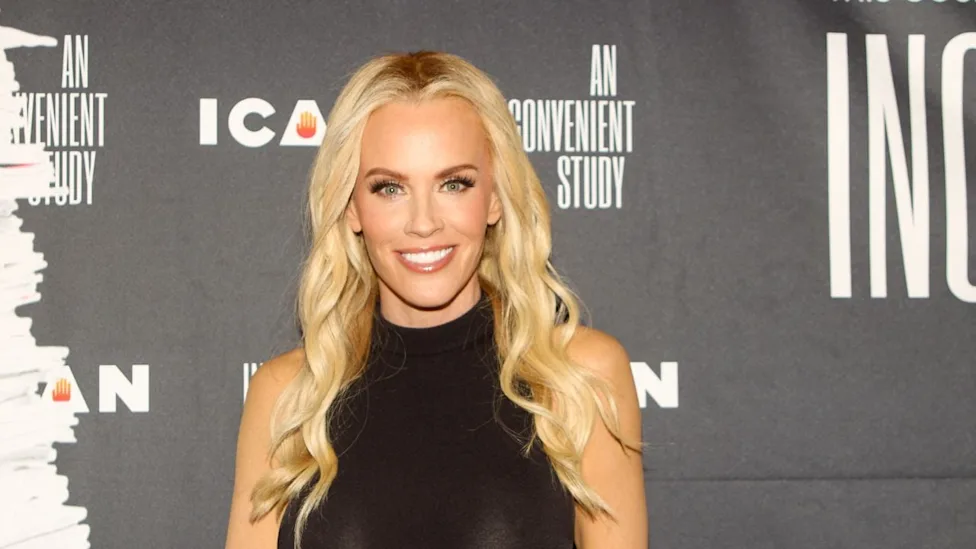
Jenny McCarthy has offered a candid explanation for why she is not ready to part ways with her breast implants, despite openly describing herself as someone who is particularly cautious about potential toxins and environmental exposures. The television personality, who has frequently spoken about health concerns and her experiences with suspected environmental poisoning, acknowledged that her decision to keep her implants might appear contradictory to people familiar with her views.
During a recent episode of The Jenny McCarthy Wahlberg Show, the 54-year-old discussed her cosmetic surgery history with renowned plastic surgeon Dr. Terry Dubrow. Their conversation touched on her previous breast procedures, her preference for maintaining a particular appearance and the health difficulties she has experienced following what she believes was prolonged exposure to mold.
McCarthy’s comments offered an unusually personal look at the balance she is attempting to strike between her concerns about potentially harmful substances and her continued interest in cosmetic procedures.
Jenny McCarthy acknowledges the contradiction surrounding her implants
Speaking on November 3, 2026, McCarthy addressed the criticism she sometimes receives for having silicone breast implants while describing herself as someone who is particularly wary of toxins.
She acknowledged that people have questioned how the implants fit with her public statements about avoiding potentially harmful substances.
“You know I’m toxic-phobic, a lot of people make fun of me like, ‘Oh, but you’ve got implants,’” she said during the podcast.

Rather than dismissing the criticism, McCarthy conceded that there was some validity to the observation.
“‘Yeah, touché. You are correct,” she continued, before explaining that she might eventually reconsider her decision.
The television personality suggested that removing her implants could become something she wants to do later in life. For now, however, she is not prepared to give up the appearance they provide, particularly when it comes to wearing certain outfits.
Her explanation highlighted a distinction between her general concerns about environmental toxins and her personal decisions about cosmetic enhancement. Although she recognises the apparent inconsistency, she has not indicated that she considers removing her implants an immediate priority.
McCarthy also made it clear that she remains comfortable with her current appearance, even while acknowledging that her preferences could change as she gets older.
Why she is not ready to remove her breast implants
The conversation became more humorous when McCarthy discussed the possibility of undergoing another change in breast size.
She revealed that she had previously gone down “dramatically” in size, suggesting that she has already made adjustments to her appearance over the years.
However, she joked that she was not prepared to embrace a completely different look.

“But I am not ready for zucchini titties. I’m just not there yet,” she quipped.
The remark reflected her light-hearted approach to a subject that can otherwise involve complicated questions about body image, ageing and cosmetic surgery.
McCarthy’s comments also illustrated how personal decisions about implants can involve considerations beyond medical advice. For some patients, the decision to remove or replace implants is influenced by changing aesthetic preferences, lifestyle considerations and their individual assessment of potential risks.
In McCarthy’s case, her willingness to discuss the issue publicly suggests that she understands why people might question her choices, even if she is not ready to change them.
Dr. Terry Dubrow’s longstanding relationship with McCarthy
A significant part of the discussion involved Dr. Terry Dubrow, the plastic surgeon who has been responsible for several of McCarthy’s cosmetic procedures.
Dubrow is widely recognised through his television appearances and work in cosmetic surgery. He has also become familiar to audiences through his explanations of aesthetic procedures and the considerations involved in surgical decisions.
McCarthy described him as someone who had been looking after her breast surgery needs for a considerable period.
“Terry’s been doing my boobs for a very, very long time,” she said.

She explained that Dubrow performed her first breast reduction in the early 2000s and subsequently carried out a breast lift.
Their longstanding professional relationship provided additional context for the discussion, particularly as the conversation moved from cosmetic preferences to McCarthy’s concerns about her recent health problems.
The surgeon was also able to address one of the questions surrounding her implants: whether they could have contributed to the symptoms she associates with mycotoxin poisoning.
According to the discussion reported by HELLO! Magazine, Dubrow did not believe the implants were responsible for her poisoning. He also recalled that the previous pair he removed had looked “fine” when he examined them.
His assessment was specific to the implants he had handled. It should not be interpreted as a general medical conclusion that implants cannot cause complications or that every patient’s experience will be the same.
Motiva implants and the wider discussion about silicone
McCarthy’s current breast implants are from Motiva, a manufacturer of breast implants whose products have been subject to regulatory developments in the United States.
The implants discussed in the report were described as having received FDA approval in 2024. They are primarily made from medical-grade silicone.
Silicone has a longstanding place in cosmetic and reconstructive surgery, particularly in breast augmentation. However, the presence of medical-grade silicone does not mean that every implant is entirely without risk.

As with other implanted medical devices, considerations can include the possibility of rupture, capsular contracture, changes in appearance and the need for future monitoring or additional procedures.
The distinction between medical-grade silicone and everyday industrial silicone is also important. Materials developed for medical applications are subject to specific manufacturing and regulatory requirements.
Nevertheless, patients considering breast implants are generally advised to discuss the potential benefits, limitations and long-term responsibilities with appropriately qualified medical professionals.
For McCarthy, the question appears to be less about an immediate intention to remove her implants and more about whether her personal priorities might eventually change.
Her comments have brought renewed attention to the sometimes complicated relationship between cosmetic surgery and public discussions about health-conscious lifestyles.
Mold poisoning diagnosis brought a new set of health concerns
The discussion about implants came against the backdrop of McCarthy’s recent account of a difficult health experience involving mycotoxin poisoning.
Mycotoxins are toxic substances produced by certain types of fungi and molds. Exposure can occur through contaminated food or environmental sources, depending on the particular toxin and circumstances.
McCarthy believes her health problems developed after she spent time in an old dressing room that had an ageing air-conditioning system.
Describing the environment, she referred to the equipment as having been installed in an era when air conditioning from the 1950s was commonplace.
She has suggested that exposure to mold in that setting contributed to the health problems she subsequently experienced.
It is important to distinguish her personal account from an independently established medical finding about the precise source of her illness. The circumstances she describes represent her understanding of what happened, rather than proof that the dressing room was definitively responsible.
Nevertheless, the experience has become a significant part of her recent public conversations about health, environmental exposure and the challenges of recovering from prolonged illness.
Her discussion with Dubrow also demonstrated that she continues to consider whether different aspects of her medical history could be connected, even when her surgeon does not believe her breast implants played a role.
Nine mouth surgeries and a prolonged battle with infection
One of the most difficult aspects of McCarthy’s reported health ordeal involved a recurring infection affecting her mouth.
According to previous coverage by HELLO! Magazine, she underwent nine separate mouth surgeries during 2025 after experiencing persistent problems.
The infection reportedly became severe enough to contribute to several of her teeth falling out.
The repeated procedures represented a substantial physical burden, particularly as they occurred within a wider period of health concerns that McCarthy has associated with mold exposure.
Her experience also brought attention to the emotional consequences of undergoing repeated medical interventions.
McCarthy has spoken about the distress caused by the infection, the surgeries and the uncertainty surrounding her recovery. She has previously described the experience as something that affected her sense of security and her confidence about her surroundings.
For someone who had been accustomed to maintaining a busy public profile, dealing with recurring medical problems and extensive dental treatment represented a major disruption.
The experience appears to have influenced how she now approaches everyday environments, particularly places where she suspects mold could be present.
McCarthy says the experience has left her feeling traumatised
Beyond the physical consequences, McCarthy has described the psychological impact of her health problems as particularly difficult.
She believes she has developed symptoms resembling post-traumatic stress disorder following the ordeal.
Speaking about the experience, she explained that she does not feel she has reached the stage of being able to look back on it as something that has passed.
“They talk about people with mold poisoning having PTSD. I’m still in the traumatic part. I’m not even in the ‘post’ part yet,” she said.
She also described becoming increasingly alert to possible signs of mold in her surroundings.
“I can detect mold, honestly, like a mold dog,” she added.
Her remarks suggest that the experience has affected her relationship with ordinary living spaces. Places that might previously have seemed unremarkable have become potential sources of anxiety.
It is worth noting that McCarthy’s description of PTSD reflects her personal understanding of her emotional state. Her comments do not establish a formal psychiatric diagnosis.
Her experience nevertheless illustrates how prolonged illness, repeated medical procedures and uncertainty about environmental exposure can become emotionally exhausting.
Living in a tent despite professional mold removal
McCarthy’s concerns have also extended to her home.
According to her recent accounts, she arranged for specialists to remove mold from the property, but the work has not been enough to restore her confidence in sleeping there.
Instead, she has been living in a tent.
The unusual arrangement reflects the extent to which her reported health experience has affected her sense of safety.
In a recent podcast appearance, she explained that she had become increasingly uncomfortable with the idea of sleeping in unfamiliar or potentially contaminated environments.
“I’m paranoid now about basically sleeping anywhere,” she said.
She also made comments about concerns involving rain in California, chemtrails and sprinklers.
Her reference to chemtrails is particularly important to place in context. Chemtrails are associated with a debunked conspiracy theory claiming that aircraft contrails contain chemicals deliberately released by governments. Ordinary aircraft contrails are formed when water vapour from aircraft exhaust condenses and freezes in cold atmospheric conditions.
There is no credible scientific evidence supporting the claim that governments are secretly spraying toxic chemicals through commercial aircraft contrails.
McCarthy’s remarks illustrate the extent of her expressed environmental concerns, but they should not be mistaken for scientifically established explanations of environmental hazards.
Her decision to live in a tent, meanwhile, demonstrates how difficult it has reportedly become for her to feel comfortable in conventional indoor spaces following her health ordeal.
Her history of controversial health statements
McCarthy’s latest comments also come against a longer history of public debate surrounding her views on health and medicine.
She has been a prominent figure in discussions about vaccination and autism, attracting considerable attention for statements connecting her son’s autism diagnosis to childhood immunisations.
Over the years, she has faced criticism from medical professionals and public health advocates for promoting a connection that has been repeatedly rejected by scientific research.
One study that helped popularise the disputed vaccine-autism claim was later found to be fraudulent and retracted. Extensive subsequent research has found no credible evidence that vaccines cause autism.
McCarthy has rejected the description of herself as an anti-vaccine advocate, instead describing her position as being “pro-safe vaccine.”
That distinction has not ended the controversy surrounding her public statements, particularly given the influence her celebrity status has had on conversations about vaccination.
Her approach to health has also included promoting or discussing therapies and explanations that have not always been supported by established medical evidence.
The contrast between her public health positions and her decision to retain silicone implants has therefore attracted attention beyond the cosmetic surgery discussion itself.
Her recent comments appear to acknowledge at least some of the contradictions people have identified, even as she maintains her personal preferences.
Cosmetic surgery, ageing and changing priorities
McCarthy’s discussion with Dubrow touches on a broader issue facing people who undergo cosmetic procedures: the relationship between aesthetic choices and changing attitudes towards ageing.
Breast implants are not necessarily permanent devices that can be ignored indefinitely. Patients may eventually need further assessments, replacement procedures or removal, depending on their circumstances and the condition of the implants.
Some choose to remove implants because their aesthetic preferences have changed. Others reconsider them because of complications, medical advice or a desire to avoid additional surgery.
For McCarthy, the decision appears to involve a combination of personal appearance and the practical demands of her public-facing career.
Her reference to dresses suggests that she still values the silhouette her implants provide, even while acknowledging that she might eventually prefer a different appearance.
This is not confirmation that she intends to keep them permanently, nor is it evidence that she has scheduled their removal.
Instead, her comments indicate that she is comfortable postponing that decision.
Her conversation also highlights why discussions about cosmetic surgery can become more complicated when individuals publicly express strong concerns about environmental or medical risks.
People can hold different priorities across different areas of their lives, and acknowledging a contradiction does not necessarily mean they are ready to change their behaviour.
A personal decision amid continuing health concerns
For now, McCarthy appears to be maintaining her position on breast implants while continuing to speak openly about the health problems she believes have transformed her everyday life.
Her conversation with Dubrow addressed two subjects that might initially seem unrelated: cosmetic surgery and suspected environmental poisoning.
Yet both have become part of a wider discussion about her relationship with her body, her health and her confidence in the environments around her.
Dubrow’s view that her implants were not responsible for the poisoning provided one point of medical perspective during the discussion, although it did not resolve the wider questions surrounding McCarthy’s reported symptoms.
Her experiences with recurring infections, repeated surgeries and concerns about mold have clearly shaped the way she talks about health.
At the same time, she has made no suggestion that she is ready to abandon the cosmetic results she has maintained through years of procedures.
Her latest remarks reveal a willingness to recognise the apparent inconsistency between her public image as someone who is wary of toxins and her personal decision to retain silicone breast implants.
Whether that decision changes in the future remains to be seen. For the moment, McCarthy seems content to leave the possibility of removal for another stage of her life.
The post Jenny McCarthy Defends Her Breast Implants Despite Her Concerns About Toxic Exposure and Mold Poisoning appeared first on Owink.
Source: Owink