
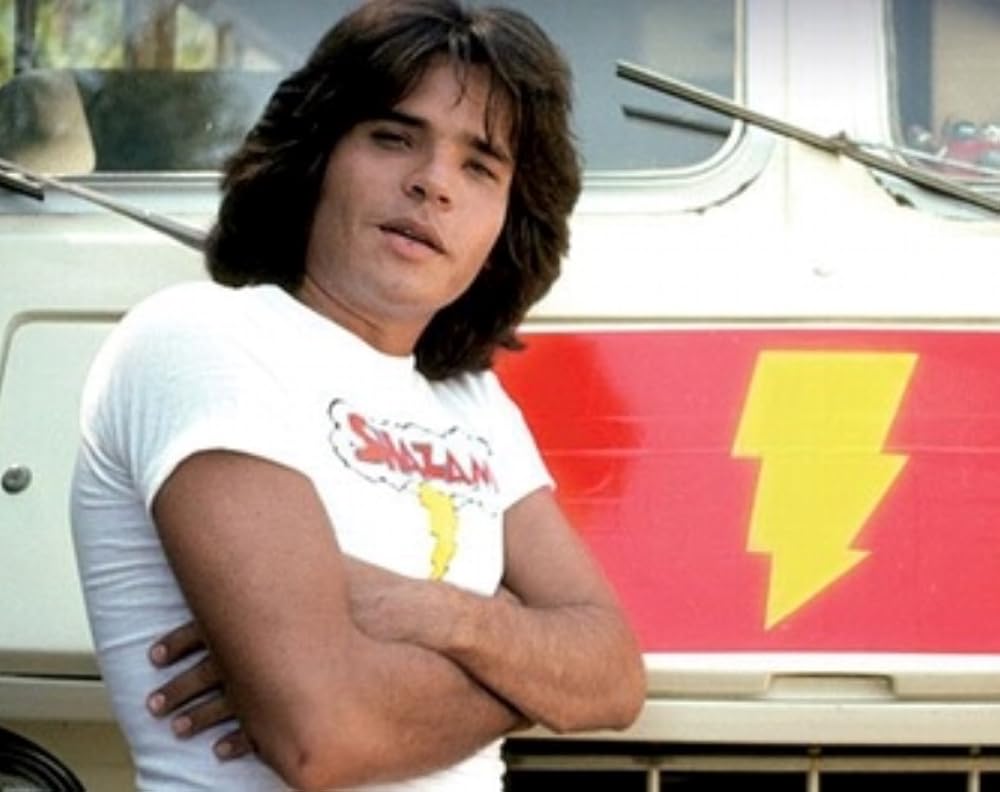
Michael Gray, the actor best remembered for playing Billy Batson in the 1970s television series Shazam!, has died at the age of 75, bringing renewed attention to the performer whose brief period as a television star left a lasting impression on generations of viewers.
Gray died of natural causes on October 16, 2026. He is survived by his wife, Stacy Benon Gray, whom he married in 1994, and his stepchildren, Ryan and Laurel Cooper. Although he eventually stepped away from Hollywood and pursued a quieter working life, his association with the beloved superhero series remained an enduring part of his public identity.
For many fans who grew up watching Saturday-morning television, Gray will always be remembered as Billy Batson, the young protagonist who could transform into the superhero Captain Marvel by uttering a single word: “Shazam!” His death marks the passing of an actor whose most recognizable role continued to connect him with audiences long after his television career had ended.
Michael Gray and the television success of Shazam!
Born and raised in Miami Beach, Florida, Gray began building his acting career in the early 1970s. His breakthrough came with the 1972 television series The Little People, followed by an appearance on the popular sitcom The Brady Bunch in 1973, where he played the boyfriend of Marcia Brady.
Those early roles helped establish Gray as a young television performer, but it was Shazam! that brought him his greatest recognition.

The live-action superhero series premiered in 1974 and ran for three seasons, with Gray playing Billy Batson. The character was an orphan boy who received the extraordinary ability to transform into Captain Marvel by speaking the magical word “Shazam!” The premise combined superhero adventure with a youthful central character, making the series a distinctive entry in the television landscape of the era.
Gray’s portrayal placed him at the center of a story built around transformation, responsibility and the appeal of an ordinary boy gaining extraordinary powers. For young viewers, Billy Batson offered an accessible point of entry into the superhero genre, while the transformation into Captain Marvel supplied the fantasy and spectacle that made the concept memorable.
The role also placed Gray within a changing period for superhero entertainment. Comic-book characters were increasingly finding audiences beyond printed pages, and television adaptations introduced familiar heroic ideas to households that might not regularly follow comic books. Shazam! became part of that wider history, helping establish a screen legacy that would continue to resonate with fans long after its original broadcast run.
The role of Captain Marvel was initially played by Jackson Bostwick before John Davey took over. Gray’s Billy Batson remained the central human character connecting the show’s adventures to its audience.
A demanding role that became a lasting memory
Although Gray was young when he joined Shazam!, he later described the experience as both exciting and demanding. Speaking during a comic-con panel, he recalled that he had not been familiar with the character or the story when he was first cast.

“I didn’t know the character or the story when I was initially cast, so I had to be a quick study,” Gray said, describing the production as “fun and exhausting, challenging and thrilling, all at once.”
His recollections offered a glimpse into the work behind a role that audiences often remember primarily for its superhero premise. Learning an unfamiliar character, adapting to a television production schedule and carrying a prominent part in a series required a commitment that Gray remembered with enthusiasm.
He also highlighted the significance of the programme’s place in Saturday-morning television. Although the distinction between Saturday-morning programming and prime-time television did not diminish his enjoyment of the work, he found the series’ position among the early live-action shows presented in that viewing slot particularly exciting.
“It truly was a thrilling show to work,” he recalled.
His comments suggest that the experience was not simply a career opportunity but also a formative period in his life as a performer. Even after leaving the entertainment industry, Gray continued to speak warmly about the series and the challenges it presented.
Fellow cast members remember a welcoming colleague
Gray’s influence extended beyond his performance, according to John Davey, who succeeded Jackson Bostwick as Captain Marvel.
In a statement included in HELLO! magazine’s report on Gray’s death, Davey remembered being warmly welcomed when he joined the production.
“From my very first day on Shazam!, Mike and Les [Tremayne] welcomed me like a king,” Davey said.

He described Gray as a kind and affectionate person with a strong sense of humour, adding that his fellow actor enjoyed performing in the series and maintained a connection with its audience in later years.
“He was a wonderful man – I don’t think he ever stopped smiling,” Davey said.
The recollection offers a personal perspective on a television production remembered by fans for its superhero adventures. While Gray’s public legacy is closely tied to Billy Batson, Davey’s tribute also draws attention to the relationships formed behind the scenes and the warmth that colleagues associated with him.
Davey further recalled that Gray enjoyed attending comic conventions in recent years, where he could meet viewers who had followed his work decades earlier. These appearances allowed the former actor to revisit a defining chapter of his career without returning to the full demands of Hollywood production.
Leaving Hollywood for a different life
Gray’s professional path took an unusual turn after Shazam! ended its original run. Rather than continuing to pursue the visibility and opportunities associated with television stardom, he stepped away from Hollywood during the 1970s.
The pressures of being a teen idol were a factor in that decision, according to the account published by HELLO! magazine. His subsequent working life included a variety of jobs, demonstrating a willingness to build a career outside the entertainment industry.

In an earlier interview preserved by the Internet Archive from Comic Book Resources, Gray described working in different occupations before settling into a more conventional routine.
“I had odd jobs here and there, and then I found a lady, got married and ran a flower shop for many years,” he said.
He eventually left the flower business after finding that the long hours and limited financial returns were difficult to sustain.
“After too many hours working and not enough money, I quit that too,” Gray explained, adding that he had subsequently found employment at a men’s clothing store he regarded as one of the country’s best.
“It’s a job, and I enjoy it,” he said.
His account provides a practical explanation of life after television fame. The end of a successful acting role does not necessarily lead to another prominent screen opportunity, and Gray’s experience illustrates how a performer can move between careers while maintaining a connection to an earlier public identity.
It would be misleading to suggest that leaving Hollywood erased his contribution to television. Instead, his story shows how professional identity and public recognition can follow different paths: an actor may leave the industry, but a memorable role can remain familiar to audiences long after the performer has moved on.
Family life beyond the spotlight
Gray’s life outside Hollywood also included a long-term marriage and a family role that became central to his personal history.
He married Stacy Benon Gray in 1994 and became a stepfather to her children, Ryan and Laurel Cooper. They are among the family members he leaves behind following his death.
While public accounts of Gray’s life often focus on Shazam!, his own descriptions of his later years indicate that his working life extended well beyond the television industry. His marriage, family responsibilities and employment outside acting formed a different chapter from the one in which he became known to viewers.
The available reporting does not provide extensive details about his private life, and his family’s experience of his death remains personal. What is clear is that his identity was not limited to his time on screen, even as that period continued to define how many members of the public recognised him.
A cameo that connected the original series to a new generation
Although Gray had largely left Hollywood behind, his association with Shazam! was not confined to memories of the 1970s. In 2023, he made a cameo appearance in Shazam! Fury of the Gods, bringing a connection to the original television series into a modern film adaptation of the superhero concept.
The appearance provided a reminder of the character’s long history across different eras of entertainment. For viewers familiar with the original programme, Gray’s presence offered a link to the television version that had introduced them to Billy Batson. For newer audiences, it reflected the broader cultural life of a superhero property that had continued beyond its original format.
The cameo also underscored an important distinction in Gray’s career: although he chose a different professional path after his early success, he remained associated with the role that had made him recognisable. His return to the screen did not reverse his decision to step away from Hollywood, but it gave the long-running connection between actor and character another moment of visibility.
The enduring relationship between Michael Gray and his fans
In later years, comic conventions became an important way for Gray to reconnect with people who remembered Shazam! from childhood. His appearances allowed fans to speak with the actor whose portrayal of Billy Batson had accompanied an earlier stage of their lives.
In an interview with Fanboy Planet, Gray described the emotional significance of these encounters. He said that people regularly approached him to explain what the show had meant to them and how it had influenced their lives.
“I meet people [every day] who say, ‘You have no idea what you did for me as a child,’” Gray recalled. Some told him that the programme had helped them through difficult periods, while others said it had contributed to the people they became as adults.
“And that’s a nice feeling,” he said. “I didn’t know the show had that much strength and power back then.”
The comments reveal a dimension of television fame that is difficult to measure through ratings or the length of an acting career. A programme may occupy only a few years of a performer’s life, yet remain part of a viewer’s memories for decades. For fans who encountered Shazam! when they were young, Gray’s performance became associated with the excitement of discovering superheroes on television and the personal memories attached to that experience.
His continued participation in fan events suggests that he valued these connections. According to Davey’s tribute, Gray enjoyed meeting and talking with convention attendees, making those appearances an opportunity to engage directly with the audience that had sustained interest in his best-known work.
A legacy that outlasted his years in Hollywood
Michael Gray’s acting career followed a path that differed from the conventional trajectory of a television star. He achieved widespread recognition at a young age, stepped away from Hollywood after the conclusion of Shazam! and built a working life that included retail and running a flower shop. Yet the role that brought him fame continued to generate interest decades later.
His death at 75 closes a chapter in the history of a series that helped bring a comic-book superhero to television audiences in the 1970s. The programme’s central transformation — a young boy becoming a powerful hero — was a fantasy designed for entertainment, but its enduring appeal depended in part on the human character at its centre.
Gray supplied that connection as Billy Batson. His later reflections, his appearances at conventions and his 2023 cameo all demonstrated that the character remained meaningful to audiences long after the original series ended.
For the people who watched Shazam! during its original run, his death may bring back memories of Saturday mornings and a television era when a single spoken word could signal the arrival of a superhero. For newer viewers discovering the programme’s history, Gray’s story offers a reminder that an actor’s legacy cannot always be measured by the length of a career or the number of subsequent screen appearances.
Michael Gray ultimately chose a life beyond the Hollywood spotlight, but he never entirely left behind the role that had introduced him to generations of viewers. Through the enduring popularity of Shazam! and the memories shared by its fans, his work as Billy Batson remains a lasting part of his legacy.
The post Michael Gray, Shazam! Star Who Played Billy Batson, Dies at 75 After Leaving Hollywood appeared first on Owink.
Source: Owink