
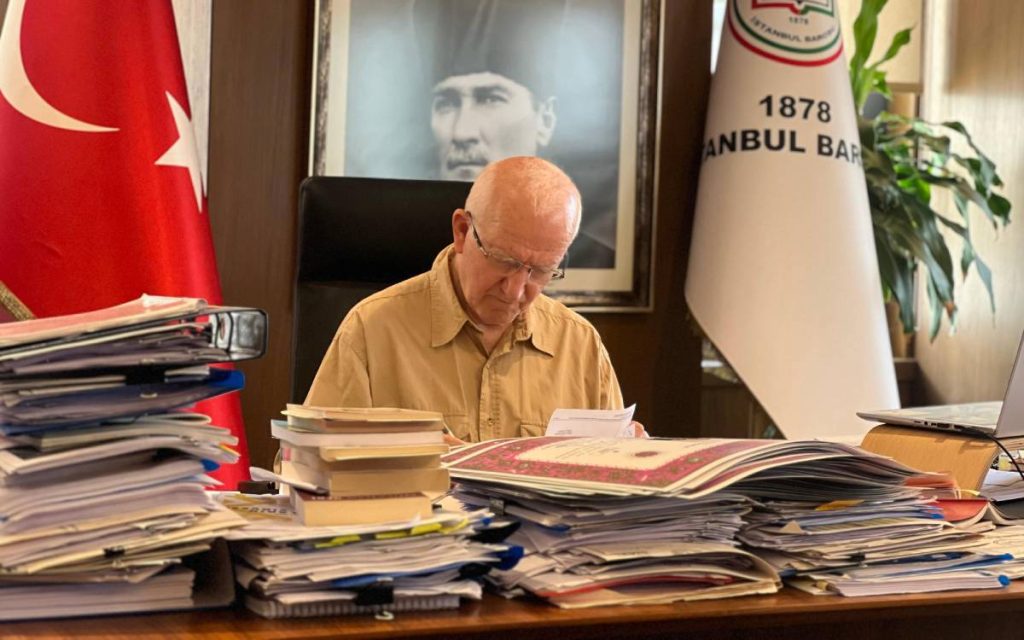
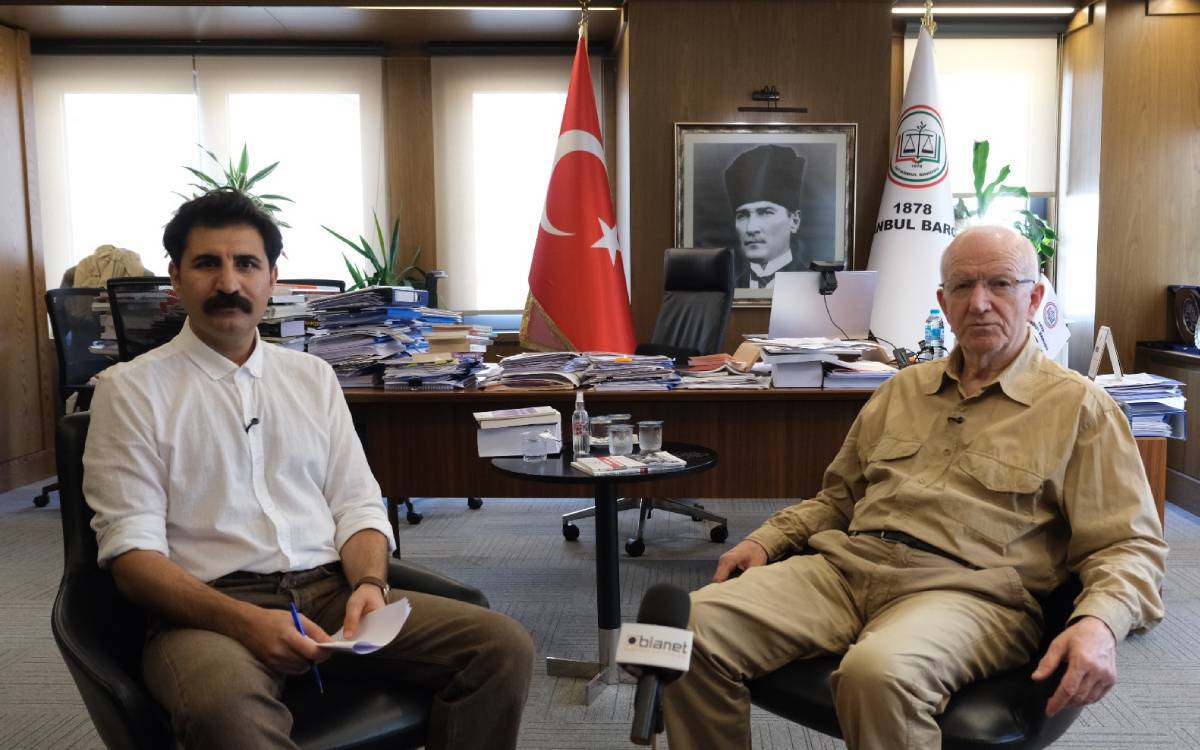
İstanbul Bar Association Chair and prominent constitutional law scholar Prof. İbrahim Kaboğlu spoke to bianet about the “Strengthening National Solidarity and Social Integration” bill, which was passed on Aug 11 by a large majority vote in parliament.
Kaboğlu argued that it was more of an amnesty legislation than a legal framework outlining the peace process:
“What has been enacted here is an amnesty. It is not a general amnesty, but technically speaking, it is an amnesty aimed at a specific category. So technically it is already an amnesty, but a discriminatory one. It is discriminatory in terms of the category of offenses and discriminatory in terms of time. It is an undeclared, de facto amnesty.”
“I cannot describe this as a law. What we have is a political intention dressed up as legislation. I am trying to use measured language because I do not want to discredit or dismiss the will that emerged from a broad consensus.”
The law provides the first legal basis for the Kurdish peace initiative launched in Oct 2024. It allows proceedings and ongoing cases involving the Kurdistan Workers’ Party (PKK) to be suspended for five to 10 years, provided the group is confirmed to have laid down its arms. Killings committed as part of the PKK’s activities and people sentenced to life imprisonment before 2005 are excluded from the law.
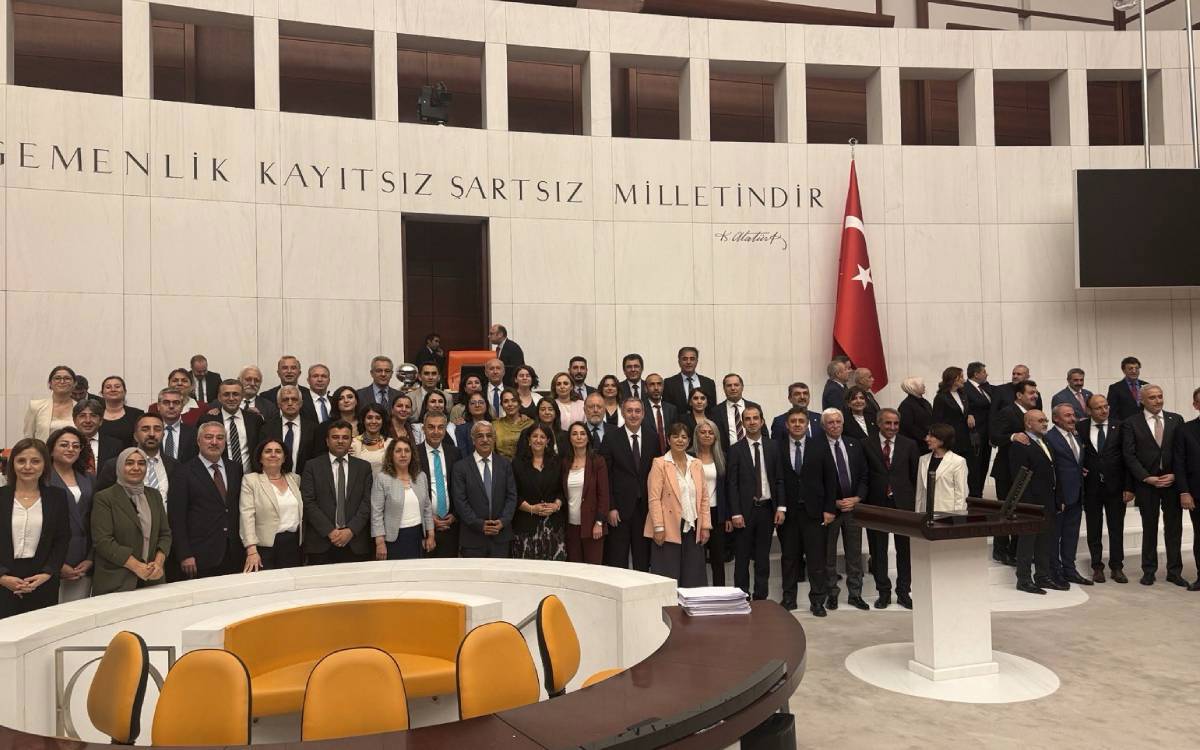
Parliament passes bill suspending sentences for PKK members
11 August 2026
‘All sides have agreed on the term “terrorism”‘
Kaboğlu pointed out that the law effectively establishes the PKK as a “terrorist” group:
“Is the PKK a terrorist organization or not? This law has now formally established that it is. From now on, no one will use, or be able to use, different terms. Were they guerrillas, militia members, militants? There is no need for that anymore because all sides have reached agreement on the concept and the word ‘terrorism,’ and they have now enshrined that in law.”
Verification procedures ‘problematic’
Kaboğlu criticized the requirement that the verification mechanism be tied to the National Security Council (MGK), saying the arrangement was technically problematic.
“The National Security Council is being granted a status beyond its constitutional position, with the law saying that it will make a decision. But the National Security Council does not make decisions. It makes recommendations to the president. In the past, it made recommendations to the government; today, it makes recommendations to the president. There are technical problems of this kind, serious problems.”
Under the law, state intelligence agencies will assess whether the PKK has laid down its arms, while the National Security Council will have the authority to provide final confirmation of the disarmament.
The MGK consists of the president, the vice president, the justice, interior, defense and foreign ministers, as well as the chief of general staff and the commanders of the armed forces.
Does the law cover the Academics for Peace?
Kaboğlu said the framework law does not cover the academics who signed a “Peace Declaration” in 2016 calling for an end to the urban conflict going on in the country’s Kurdish regions at the time. Hundreds of academics stood trial on “terror propaganda” charges and lost their positions after the declaration was released.
“The issue concerning the Academics for Peace is very clear, very straightforward and very simple. A faculty member expresses support for a prepared statement, a peace petition, 10 years ago. There is not even a signature anywhere, just an expression of consent. And the consequences do not stop with that person being dismissed from the university. Their entire family life and the rest of their life are cast into darkness.
“We were invited to parliament last year, but I did not go. They spoke of a ‘terror-free Turkey,’ but they did not say, ‘Turkey should be governed by the rule of law.’ If politicians who want a country free of terrorism also want a Turkey governed by law, only then can the goal of a terror-free Turkey succeed. But they never once spoke of the law.”
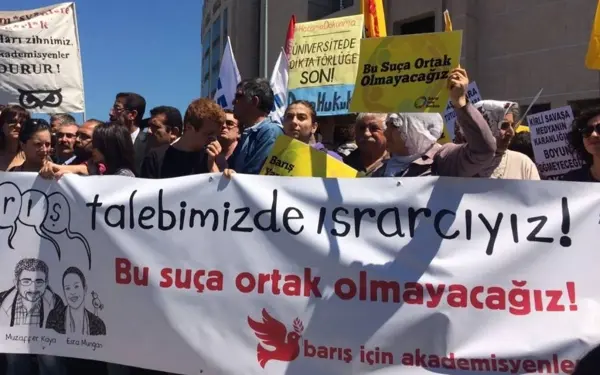
A call for justice and accountability for the Academics for Peace
8 January 2026
Demirtaş’s imprisonment
Regarding Kurdish political leader Selahattin Demirtaş, who has been imprisoned since 2016, Kaboğlu said he would not be in prison if the judgments of the European Court of Human Rights had been implemented.
“So asking whether Demirtaş is covered by this law could cast doubt on the legitimacy of his case. In other words, putting Demirtaş in the same category could lead us astray. Your next question would then be: What about Osman Kavala? The rulings concerning Osman Kavala, Can Atalay and Tayfun Kahraman are very clear examples. There are Constitutional Court rulings, and there are also European Court of Human Rights judgments.
“No legislative or constitutional amendment was needed in any of these cases. Simply enforcing the existing laws and the constitution would have been enough. But no such political will emerged. That is why you can talk about a terror-free Turkey, but you cannot talk about a Turkey governed by the rule of law.”
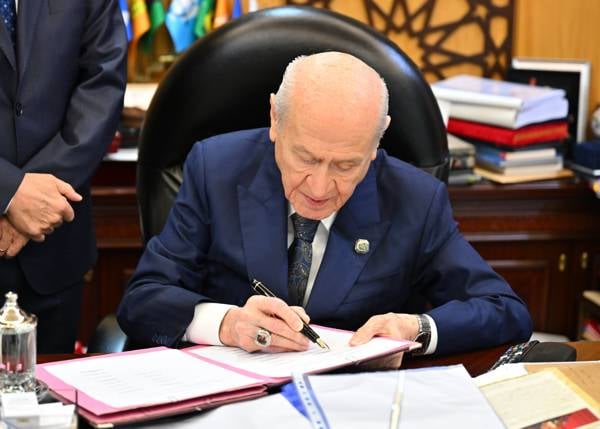
Bahçeli calls for release of Öcalan, Demirtaş as ‘Kurdish peace law’ heads to parliament
5 August 2026
(FY/EB/VK)
Source: BIANET