
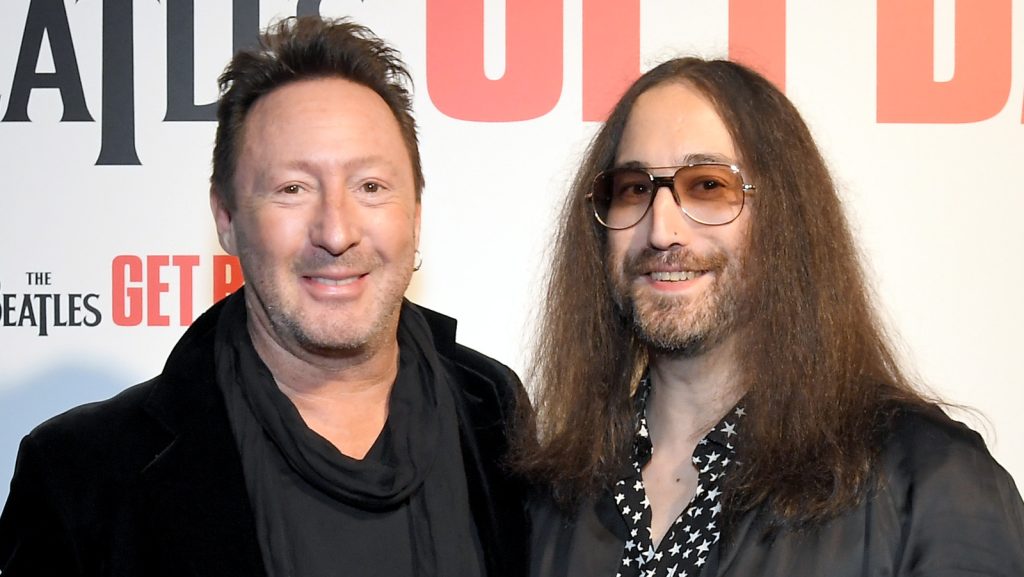
Sean Lennon has addressed a long-running misconception about how his late father, Beatles legend John Lennon, divided his estate between his two sons, offering a personal clarification that also sheds light on the relationship he shares with his older brother, Julian Lennon.
In a post on X on Monday, Sean stated that he and Julian inherited essentially equal amounts from their father, challenging the suggestion that one brother received the bulk of the estate while the other was left with comparatively little. His comments revisit a sensitive chapter in the Lennon family’s history, one shaped by a complicated father-son relationship, a lengthy inheritance dispute and decades of public speculation about the family’s private affairs.
The clarification came shortly after Sean shared a photograph of himself spending time with Julian. In the accompanying message, he described having a great birthday with his brother, tagging Julian in the post. The seemingly affectionate update prompted a discussion about the brothers’ inheritance, leading Sean to respond directly to a commenter who characterized the division of John Lennon’s wealth as deeply unequal.
“Julian and I inherited the same amount from our dad. Our trusts were equal. Although his was slightly more, but negligibly so,” Sean wrote.
His response offered a straightforward correction to the claim while drawing attention to an important distinction: although Julian’s inheritance had been the subject of a prolonged legal dispute, Sean’s account is that the brothers ultimately received trusts of virtually identical value.
The exchange, reported by Faye James for HELLO!, provides a fresh look at a family story that has often been discussed through the lens of John Lennon’s complicated personal life and his enduring cultural legacy.
Sean Lennon challenges a familiar narrative about the family estate
John Lennon, who rose to worldwide fame as a member of The Beatles before establishing a successful solo career, was killed outside his New York City apartment on December 8, 1980. He was 40 years old.
His death abruptly ended a career that had transformed popular music and left behind an estate encompassing the financial and commercial legacy of one of the most influential musicians of the 20th century. His two sons, Julian and Sean, were at very different stages of their lives when they lost their father.
Julian, John’s elder son with his first wife, Cynthia Lennon, was born in 1963. Sean, born in 1975 to John and his second wife, Yoko Ono, was five years old when his father was killed. Julian was 17.

Those differences in age, alongside the brothers’ contrasting childhood experiences and the family circumstances surrounding John’s death, have contributed to the public interest in how his estate was handled.
After John’s death, Yoko Ono assumed control of his estate. Julian, who had experienced a strained relationship with his father during childhood, subsequently pursued a legal claim concerning his inheritance. His dispute with the estate continued for 16 years before a settlement was reached in 1996.
The history of that litigation has frequently shaped public perceptions of the financial relationship between John’s two sons. The suggestion that Julian received substantially less than Sean has persisted in discussions about the family, but Sean’s recent statement disputes the idea that the brothers’ trusts were materially different in value.
His comments do not erase the history of Julian’s legal battle. Instead, they distinguish between the dispute surrounding Julian’s inheritance and the eventual amounts the brothers received, as Sean describes them.
The statement is also a personal account rather than a detailed financial disclosure. Sean did not publish the monetary value of either trust or provide documentation outlining the estate’s distribution. His remarks therefore clarify his understanding of the brothers’ inheritance without establishing a complete public accounting of John Lennon’s estate.
Julian Lennon’s legal battle lasted 16 years
The inheritance dispute is inseparable from the circumstances of Julian’s childhood and his relationship with his father.
Julian was born during John’s first marriage to Cynthia Lennon, whom John married in 1962. Their marriage ended in divorce in 1968, when Julian was five years old. John’s subsequent relationship and marriage to Yoko Ono became a defining part of his personal life, while his relationship with Julian became increasingly distant.
Julian has spoken openly about the emotional impact of that separation. In an interview with The Guardian, he described how his father’s departure affected him and his mother.

“Suddenly my dad literally disappeared off the face of the planet. At least, that’s how it seemed to me,” Julian recalled.
He also spoke about the feeling that he and Cynthia had been left behind as John’s relationship with Yoko became central to his life.
Julian told The Guardian that there was a period of approximately 10 years during which he and his father barely spoke. He recalled feeling angry about the way John had left the family, describing a relationship marked by distance and unresolved emotions.
According to Julian, it was Cynthia’s encouragement that helped reopen communication between father and son. He credited his mother with wanting him to maintain a relationship with John, despite the difficulties she had experienced herself.
That background helps explain why questions surrounding Julian’s inheritance have carried significance beyond the financial value of the estate. For him, the circumstances surrounding his father’s death and the subsequent handling of the estate came after years of a complicated relationship.
The legal proceedings continued until a settlement was reached in 1996. While the existence and duration of the dispute are established parts of the family’s history, Sean’s recent comments indicate that he does not regard the brothers’ eventual inheritances as substantially unequal.
It is important to separate those two issues. A lengthy legal dispute can concern the terms of a will, the administration of an estate or the rights of an individual beneficiary without necessarily demonstrating that the final financial outcome for two beneficiaries was dramatically different.
The details of Julian’s settlement and the precise value of the brothers’ trusts have not been supplied in Sean’s latest post. His intervention addresses the claim of unequal inheritance rather than providing a comprehensive explanation of the legal arrangements.
A relationship that developed beyond the inheritance controversy
For Sean and Julian, the public discussion about their father’s estate has existed alongside a relationship that Sean describes as consistently affectionate.
The brothers grew up in different households and were separated by a 12-year age gap. Julian had already experienced years of childhood with John before Sean was born, while Sean’s memories of his father were necessarily shaped by the much shorter period they spent together.
Despite those differences, Sean has repeatedly spoken about the influence Julian had on his early life.

In an interview with Vanity Fair, Sean described his older brother as a childhood hero. Julian was not simply a relative with a famous surname; he was also a musician whose achievements helped shape Sean’s own interest in music.
“Julian and I have always been close. He was my hero when I was young,” Sean told the magazine.
He explained that Julian taught him to play guitar and had achieved a number-one record when Sean was a tween. Seeing his older brother succeed as a musician became one of the influences that encouraged Sean to pursue music himself.
The account provides a different perspective on a family often portrayed through its most difficult moments. The brothers shared a father whose life and career were extraordinary, but they also developed a personal connection that Sean says should not be reduced to the history of the estate.
Sean has also pushed back against recurring suggestions that the brothers have been at odds with one another.
In his Vanity Fair interview, he compared persistent assumptions about a feud between himself and Julian to the familiar claim that Yoko Ono was responsible for The Beatles breaking up. His point was that public narratives can survive even when those involved repeatedly challenge them.
He noted that photographs of the brothers spending time together, laughing and enjoying one another’s company had not prevented people from suggesting that they should maintain a closer relationship.
Sean’s response was emphatic: he and Julian already spend time together, and he loves his brother.
The birthday photograph that preceded his recent X post offered a visible example of that relationship. Rather than presenting a family estrangement, the image showed the brothers together and prompted Sean to make clear that the popular account of their inheritance did not reflect his understanding of the facts.
Taken together, the photograph and his statement underline a distinction between the family’s documented history of conflict surrounding the estate and the relationship the brothers have built for themselves.
How John Lennon’s legacy continues to shape his sons’ lives
John Lennon’s death did not end public interest in his family. His music, political views, artistic partnerships and personal history have continued to attract attention, ensuring that even private aspects of the Lennons’ lives can become subjects of wider cultural discussion.
For Julian and Sean, that attention has meant growing up with a shared family name associated with both enormous cultural influence and persistent public scrutiny.
Julian’s experiences with his father were shaped by John’s first marriage, the divorce from Cynthia and the long period of limited contact that followed. Sean, meanwhile, was born into John and Yoko’s later family life and was still a young child when his father died.
Their experiences were therefore different, even though both lost John at an early age.
Julian later established his own career as a musician and photographer, while Sean pursued music and other creative work. Both have continued to engage with the artistic legacy associated with their father, but neither brother’s identity is limited to his relationship with John Lennon.
Sean’s recollections of Julian’s influence are particularly revealing in this context. His older brother was among the people who encouraged his musical development, demonstrating that the family relationship has also been a source of personal inspiration.
The inheritance controversy, by contrast, is a reminder of how legal and financial matters can become entangled with emotional histories. For observers, the existence of a 16-year dispute may suggest a continuing division between the brothers. Sean’s account challenges that interpretation by distinguishing Julian’s legal proceedings from the final distribution of their trusts.
That does not mean every question about the estate has been answered. Without published figures or a detailed account of the settlement, it would be premature to draw broader conclusions about the financial arrangements. What Sean has made clear is that, in his view, the difference between the trusts was negligible rather than substantial.
His remarks also demonstrate the limits of interpreting a family relationship through its most public controversies. The legal dispute is part of the historical record, but it does not, by itself, establish the nature of the brothers’ present-day bond.
The difference between public perception and family experience
The continued discussion surrounding John Lennon’s estate illustrates how an established narrative can become difficult to dislodge, particularly when it involves a globally recognized figure.
Julian’s prolonged inheritance battle is a matter of public record, as is the settlement reached in 1996. Those events have often been cited in accounts of his relationship with his father and the administration of the estate after John’s death.
However, the suggestion that Sean received substantially more than Julian is not consistent with Sean’s latest public explanation. He says their trusts were equal, with Julian’s being only marginally larger.
The distinction matters because the brothers’ experiences cannot be fully understood through a single financial comparison. Julian’s estrangement from his father, his subsequent legal action and his eventual settlement form one part of the story. Sean’s childhood with John and Yoko, his admiration for Julian and his account of their relationship form another.
Neither brother’s experience should be assumed to mirror the other’s simply because they share the same father.
Sean’s response also highlights the difference between the public’s interest in a famous family and the family members’ own understanding of their relationships. For years, questions about inheritance and the suggestion of estrangement have circulated alongside the brothers’ public appearances together. Sean has made clear that he does not accept the assumption that the two are in conflict.
His statement does not settle every historical question surrounding John Lennon’s estate, nor does it replace the need for documentary evidence when assessing the precise financial arrangements. It does, however, provide a direct account from one of the beneficiaries and challenges a familiar interpretation of the brothers’ inheritance.
A brotherly bond beyond the headlines
More than four decades after John Lennon’s death, his sons continue to navigate a legacy that encompasses music, family history and public fascination.
Julian’s difficult relationship with his father and the lengthy inheritance dispute remain important parts of that history. Sean’s recent comments add another dimension, offering his perspective on the eventual division of the estate and rejecting the idea that the brothers’ inheritances were dramatically unequal.
His recollections of Julian as a childhood hero, along with the birthday photograph they shared, also reinforce a more personal aspect of their story: Sean regards his older brother as an important influence and has repeatedly rejected claims that their relationship is defined by conflict.
For readers familiar with the history of John Lennon’s family, the clarification provides a useful distinction between the legal battle that followed the musician’s death and the relationship his sons have developed in the years since.
The precise financial details of the estate remain outside the scope of Sean’s latest statement. What is clear from his comments is that he disputes the idea that one brother inherited most of their father’s wealth while the other was left with only a small share.
And on the question of their relationship, Sean’s message is equally direct. Despite the assumptions that continue to surround the Lennon family, he says that he and Julian have always been close.
The post Sean Lennon Reveals the Truth About John Lennon’s Inheritance for Sons Julian and Sean appeared first on Owink.
Source: Owink