
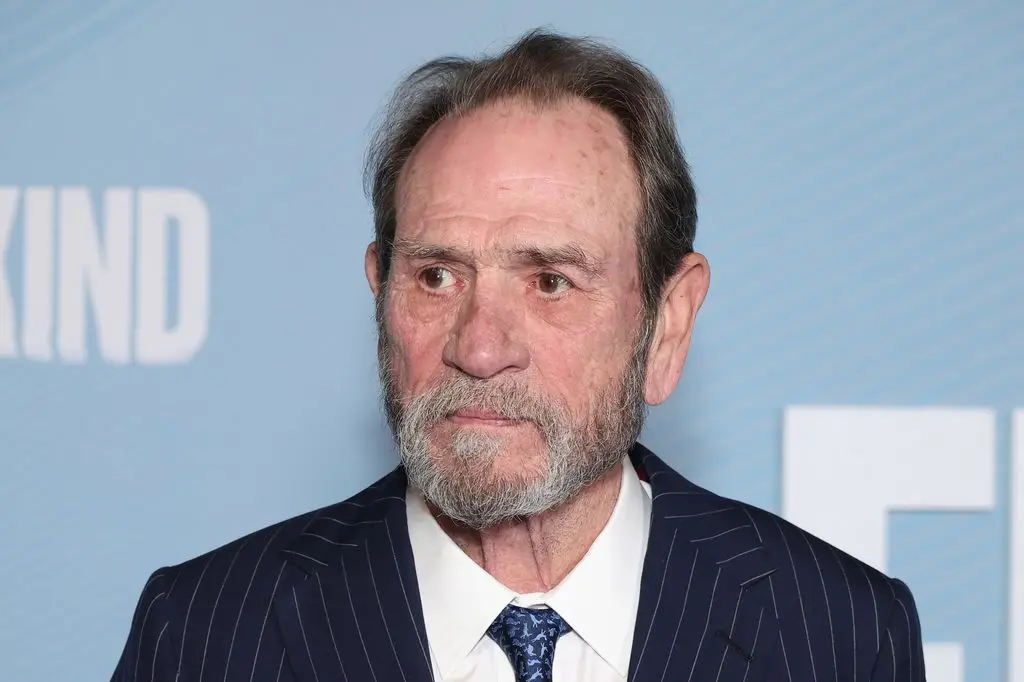
Tommy Lee Jones reaches his 80th birthday having spent more than five decades moving between television, theater and film, building a career that has taken him from a young actor playing a soap-opera doctor to one of Hollywood’s most recognizable and decorated performers.
Born on September 15, 1946, in San Saba, Texas, Jones began his professional acting career in New York after graduating from Harvard in 1969. His first Broadway appearance came that year in A Patriot for Me, followed by his film debut in Love Story in 1970.
But the role that first brought him sustained public attention was not in a major motion picture. It was on daytime television.
From Harvard to daytime television
In 1971, Jones joined One Life to Live as Dr. Mark Toland, a character who was initially presented as a polished, handsome bachelor. Jones remained with the soap opera until 1975, gaining valuable television experience while the character’s increasingly dramatic storylines became a defining part of his early career.
HELLO! magazine, in its retrospective on Jones, recalled the actor’s later description of the increasingly outrageous material written for Mark Toland. His character’s story eventually became far removed from the suave doctor introduced to viewers at the beginning of the decade.

The soap-opera years were important for another reason: they gave Jones an early opportunity to establish the screen presence that would become a hallmark of his later work. Long before The Fugitive, Men in Black or No Country for Old Men, he was learning how to hold an audience’s attention through a television format built around recurring characters and rapidly changing dramatic circumstances.
His early film work continued alongside television. After Love Story, he appeared in movies including Jackson County Jail, Rolling Thunder, The Betsy and Eyes of Laura Mars during the 1970s. HELLO! also notes that Jones married actress Kate Lardner in 1971; the marriage ended in 1978.
The transition from television actor to established film performer was gradual rather than instantaneous. Jones spent years taking on supporting and leading roles without yet possessing the blockbuster profile that would eventually define his public image.
The 1980s established his dramatic credentials
The following decade began to change that trajectory.
Jones received a Golden Globe nomination for his performance in Coal Miner’s Daughter, the 1980 biographical drama starring Sissy Spacek. More importantly, television gave him opportunities to demonstrate the depth and intensity that would become central to his reputation.

In 1983, he won the Primetime Emmy for his performance in The Executioner’s Song. He later received another Emmy nomination for Lonesome Dove, the acclaimed 1989 television miniseries based on Larry McMurtry’s novel.
Those projects helped broaden the perception of Jones beyond the handsome young performer who had first attracted daytime-TV audiences. His career was increasingly associated with serious dramatic material, complex characters and an understated intensity.
The transformation was especially significant because Jones was not following the conventional path of a young Hollywood star rapidly moving from one leading role to another. Instead, his reputation accumulated over years of television, theater and film work.
That slow-building credibility would become crucial in the decade that followed.
The 1990s changed everything
If the 1970s introduced Tommy Lee Jones to television audiences and the 1980s established his dramatic credentials, the 1990s turned him into a major movie star.
The decade brought a remarkable run of films, including JFK, The Fugitive, Cobb, Batman Forever and Men in Black. The roles were varied, but they shared a quality that increasingly became associated with Jones: authority without excessive theatricality.

His performance as U.S. Marshal Samuel Gerard in The Fugitive became the defining achievement of the period. At the 1994 Academy Awards, Jones won the Oscar for Best Supporting Actor for the role. The Academy’s official record confirms the victory, with The Fugitive receiving seven nominations and Jones taking the supporting-actor prize.
The Oscar represented more than an individual career milestone. It formalized the industry’s recognition of an actor who had spent more than two decades moving through different forms of screen work.
His earlier work in JFK had already earned him an Academy Award nomination for supporting actor. The Academy records show Jones among the nominees for the 1992 ceremony for his performance in Oliver Stone’s film.
By the middle of the decade, Jones could move comfortably between serious historical dramas, thrillers, action films and broad studio entertainment.
That range became particularly visible with Men in Black, in which he played Agent K opposite Will Smith. The film added a different dimension to his public image, pairing his restrained delivery and stern screen presence with a science-fiction comedy built around a much lighter tone.
The result was an unusual combination: Jones could be an awards-season dramatic actor in one project and a major studio franchise star in another.
From leading man to character icon
The transformation described by HELLO! as Jones’s movement from soap-opera heartthrob toward one of Hollywood’s respected veteran actors was not simply a matter of age.
It was also a shift in the kinds of roles audiences expected him to play.
The young Mark Toland had been designed in part around conventional television-star qualities: handsome, sophisticated and romantic. Later Jones characters were increasingly defined by experience, authority and ambiguity.

His appearance became part of that evolution. The youthful looks that had helped establish him on daytime television gave way to the weathered, commanding presence that directors repeatedly used in dramas and thrillers.
Yet Jones did not disappear from commercial filmmaking as his career progressed.
His filmography continued to include major studio productions, while he also pursued more demanding dramatic projects. The combination helped make his career unusually durable: he was able to move between prestige cinema and mainstream entertainment without being confined permanently to either.
A quieter relationship with Hollywood
The 2000s brought another change.
Although Jones continued to work, he became less interested in the celebrity culture surrounding Hollywood. In a 2006 interview with Texas Monthly, quoted by HELLO!, he described his preference for spending time at his Texas ranch rather than living the conventional Los Angeles lifestyle.
Jones spoke about a private existence centered on friends, family, cattle and polo. His description offered a revealing contrast with the increasingly public profile that had accompanied his Hollywood success.
The retreat did not mean an end to serious acting work.
Instead, the middle of the decade brought another important phase in his career. His work in films such as The Three Burials of Melquiades Estrada and No Country for Old Men reinforced his standing as an actor whose presence could anchor difficult material.
At the 2008 Academy Awards, Jones was nominated for Best Actor for In the Valley of Elah. The Academy’s official record lists him among the nominees alongside Daniel Day-Lewis, George Clooney, Johnny Depp and Viggo Mortensen.
That nomination was significant because it demonstrated that his career had not simply transitioned into supporting roles as he aged. Jones was still capable of receiving recognition in a leading category more than three decades after his soap-opera breakthrough.
No Country for Old Men provided another reminder of the breadth of his work. The film received eight Oscar nominations at the 2008 ceremony and won four, including Best Picture, Directing and Adapted Screenplay.
Jones himself was not the supporting-actor winner that year—the Oscar went to Javier Bardem—but he was part of a cast and film that became one of the major critical and awards successes of its era.
A career built on reinvention
One of the clearest threads running through Jones’s career is reinvention.
He began in theater. He moved into film. He established himself in daytime television. He developed a reputation in serious television drama. He became an Oscar-winning film actor. Then came blockbuster franchises and another generation of prestige productions.
His résumé also shows that success did not arrive at one particular moment and then remain static.
The Oscar for The Fugitive came in the middle of his career rather than at the beginning. His later nomination for In the Valley of Elah demonstrated that recognition continued well after his biggest commercial breakthrough. The Academy’s records also document his 2008 lead-actor nomination, while his earlier nomination for JFK illustrates how his awards profile had developed before his Oscar win.
That longevity is particularly striking when viewed against the different eras of Hollywood through which Jones has worked.
He began professionally in the late 1960s, when Broadway and network television were important gateways for actors. He entered the film business during the era of Love Story and the New Hollywood movement, became a recognizable television performer in the 1970s, established himself through prestige television in the 1980s, and entered the blockbuster era as a major supporting and leading actor in the 1990s.
He subsequently worked through the franchise-heavy studio landscape of the 2000s and beyond.
Few performers have maintained that kind of continuity across such different periods of the entertainment industry.
Personal life and a period of profound loss
Away from his professional achievements, Jones’s life has also included major personal changes.
He married Kimberlea Cloughley in 1981, and the couple had two children, Austin and Victoria, before divorcing in 1996. Jones later married photographer Dawn Laurel in 2001, according to Biography.com.
His family life has also included profound loss.
HELLO! reported that Jones’s daughter Victoria died in January 2026 at the age of 34 following what the publication described as an accidental drug overdose. Jones and his family released a statement expressing appreciation for condolences and asking for privacy.
Victoria had followed her father into acting, with credits including Men in Black II, One Tree Hill and The Three Burials of Melquiades Estrada. HELLO! also reported on her history of addiction and legal difficulties in 2025.
Those details form a painful contrast with the celebratory nature of an 80th birthday retrospective. For Jones, the milestone arrives not simply as an occasion to revisit professional achievements, but during a year marked by the loss of a child.
Eight decades, five-plus of them on screen
Jones’s career is difficult to reduce to a single defining image.
For one generation, he was the handsome young doctor Mark Toland on One Life to Live. For another, he was the relentless U.S. marshal in The Fugitive. Audiences who grew up in the 1990s may know him as Agent K in Men in Black, while later viewers encountered him in films such as No Country for Old Men, Lincoln and In the Valley of Elah.
The Academy’s records alone show how widely his work has ranged: an Oscar-winning supporting performance in The Fugitive, nominations for JFK and In the Valley of Elah, and an extensive film career that has continued across decades.
HELLO!’s retrospective captures the broad arc of that transformation, from a young soap-opera performer to an actor whose name became synonymous with authority, restraint and longevity.
At 80, Jones’s career is therefore less a story of a single breakthrough than of sustained reinvention. The actor who once played a glamorous daytime bachelor eventually became an Oscar winner, a franchise star and a fixture of serious American cinema.
His professional journey has crossed theater, television and film, while his personal life has moved through marriage, family, private retreat and profound grief.
What remains most striking is the span itself. More than five decades after he first appeared professionally, Tommy Lee Jones has become part of the fabric of several generations of American screen acting—a career that began with a young Texan stepping onto a Broadway stage and eventually reached the highest levels of Hollywood recognition.
The post Tommy Lee Jones at 80: From Soap Opera Heartthrob to Oscar-Winning Hollywood Veteran appeared first on Owink.
Source: Owink